Veneer Plaster – Overview and Repair Techniques

The Big Sheets

Conventional plaster application changed radically in the 1960s and 1970s. Veneer plaster systems were developed at that time. Drywall was being substituted for plaster at that time as well.

Drywall offered a different approach to quickly achieve a finished wall surface. The 4' x 8' and 4' x 12' panels of drywall could be rapidly applied to framing members. A standard sized room could be ready for finishing in an hour or two.

During the 1950s, conventional plaster systems required the installation of "gypsum lath." These were smaller (16" x 48") pieces of material which looked, at first blush, like typical drywall.

However, these smaller pieces of gypsum plaster lath actually were covered with a special paper which absorbed the water in a special manner so as not to harm the inner gypsum core. The paper was also manufactured in such a way as to provide an excellent surface for the plaster to grab on to.

CLICK HERE to get FREE & FAST BIDS from local Contractors who can install your new plaster wall.

The traditional two coat plaster system (brown coat/white coat) was applied over this gypsum plaster lath system. However, it was quite labor intensive to nail on these smaller pieces of gypsum lath. It made sense to switch to larger pieces of gypsum lath and develop a one coat plaster system.

Veneer Plaster Systems

Although drywall was rapidly becoming popular, drywall did not have the overall performance characteristics of conventional plaster. Plaster surfaces offered better joint concealment, fewer nail pops, a hard monolithic surface which could be easily decorated, and plaster was more quickly finished than drywall.

Also, the joint compounds used to finish drywall, even after they dried, could be easily dissolved by water. Water applied to the surface of a traditional plaster wall for short lengths of time did not harm the plaster in any way. Veneer plaster systems changed this. They took the best qualities of the two systems and combined them.


Avoid costly mistakes in your next plaster job from my Drywall / Plaster Installation Checklist. I offer a 100% Money Back Guarantee.


Veneer plaster systems use a gypsum core panel as the base for the plaster coat. This panel has a gypsum core very similar to drywall. However, the paper used to cover the gypsum core is different from regular drywall.

It is a special multi-ply paper. The top ply has the capability to readily absorb water and provide a good bonding surface for the plaster coat. The bottom ply, however, is water resistant. This ply protects the inner gypsum core from being softened by the water in the wet plaster.

Some manufacturers use a special blue paper on this gypsum panel. Plasterers often refer to it as "blue board." Special plasters were developed which allowed a one step finishing process. This plaster is applied in a thin coat directly over the gypsum panel.

The plaster thickness usually ranges between 1/16th to 3/32nd of an inch. Conventional plasters were often 1/2 inch thick.

Advantages of Veneer Plaster

Veneer plaster finishes offer two distinct advantages over drywall - dust and money. Dust is kept to a minimum with these products. The veneer plaster is applied in a wet state and troweled to a smooth surface. No sanding is required.

A one step veneer plaster can cut up to 75 percent off of a similar drywall finishing production time. After the gypsum wall panels are hung, a one coat veneer system requires one step.

A similar drywall job requires four finishing processes. The last step of a drywall job, as many people know, involves the creation of massive quantities of dust.

Certain plasters offer tremendous durability. Some achieve compressive strengths of up to 3,000 pounds per square inch. This strength rivals that of some concrete mixtures! Drywall can not make similar claims.

Plaster wall systems offer greater decorating flexibility as well. Wall coverings can be applied to plaster as easily as they can be applied to drywall. However, plaster systems allow you to readily remove the wall coverings in the future without damaging the wall surface.

The paper covering of drywall is often damaged, or partially removed when wall coverings are stripped from drywall.

Veneer plaster is affordable. Often it costs just 25 percent more than a drywall finish. While this may seem like a large differential, it is, in fact, not.

This upgrade may only add one-half of one percent to the overall cost of a construction project. When you consider the long term durability that veneer plaster systems offer, it is a tremendous value.

Tips on Residential Plaster Patching

Plaster is a hydration product, just like concrete. When you add water to dry plaster mix, you begin an irreversible chemical and crystallization process.The water and air content of the mix is critical. Timing is important, as the plaster has to be "finished" at just the right time. It is not a job for the rookie.

However, several manufacturers have developed different plaster products. They are fast setting plaster compounds. These products are dry powders. You add water to them and they begin to crystallize or "set" just like plaster.

They are available with different "set" times. Some of these compounds, however, are sandable. They allow you to do quick repairs to surfaces in a one-step operation similar to plaster. You can teach yourself some basic plastering techniques by working with these materials.
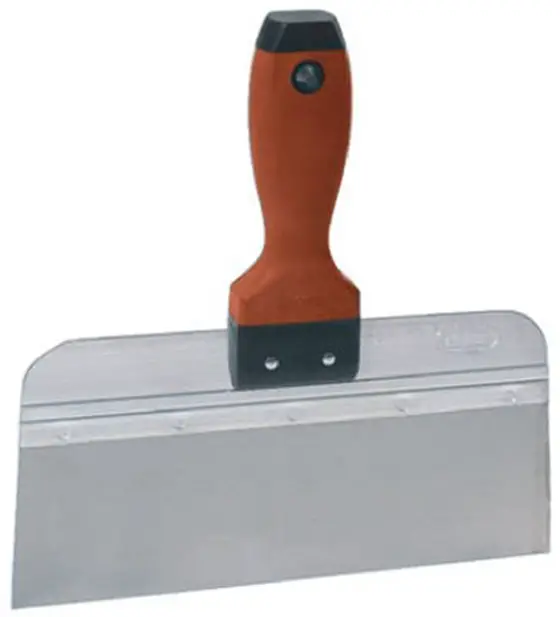
 Taping Knife

CLICK THE IMAGE to get a Durable Taping Knife for Drywall and Plaster projects.

As they begin to 'set' or crystallize, you can trowel them to a smooth finish, just as you would plaster. Or, if you are unable to achieve a smooth finish, you can sand them after they dry completely (assuming you used a sandable compound!).

If you live in an older home with a conventional plaster wall and ceiling system, you should consider using these compounds to patch your plaster. Premixed vinyl joint compounds do not always bond well to the sandy plaster base coats.

The quick set joint compounds, because of the crystallization process, actually grab to the old plaster much better. As the crystals in these compounds begin to grow, they interlock in the rough, sandy texture of the fractured plaster.

Once you have applied the quick set joint compound, you can always skim over the patched area and existing plaster with a ready mixed compound to fill any small nicks or scratches.

CLICK HERE to get FREE & FAST BIDS from local Plaster Contractors who can repair your plaster wall.

Plaster Crack Failed Repairs

Most older homes that have cracked plaster are constructed using wood framing materials. In certain climates, these framing members react seasonally to changes in humidity. During warmer more humid months, the framing members absorb moisture from the air and expand.

During winter months, the wood dries out and contracts. The houses actually develop stress points or joints where the energy of this movement is released in a visual form that we see. This same movement can also be a result of soils which expand and contract due to changes in moisture.

Repairing these cracks, which move on a regular basis, is somewhat difficult. You must tape over these cracks with a paper or mesh tape. Simply filling the crack with patching plaster will not work. As long as the cracks move even a small amount, the paper tape in most cases will hide the movement of the crack.

Patching the cracks is just like taping a regular drywall joint. You need to feather the joint to hide the tape as in a standard drywall butt joint.

Fixing Plaster Cracks

Cracks are simple to repair. You will need a four, six and 10 inch flexible drywall taping knife and/or broad knife. A drywall mud pan or flat plaster's hawk will be necessary as well. These two things hold the plaster so you can work with it.
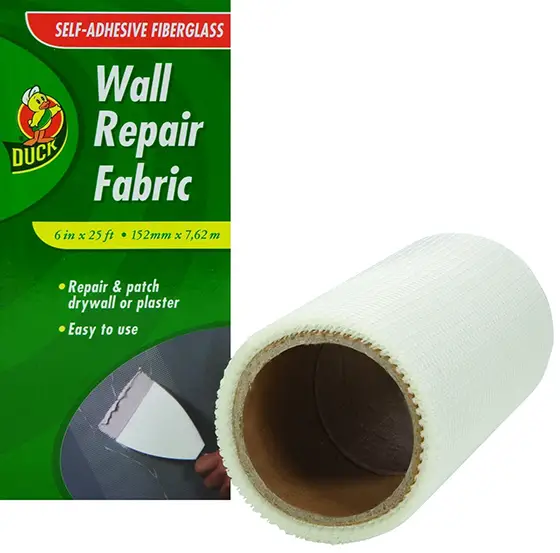
wall repair fabric

CLICK THE IMAGE to get a fiberglass repair fabric that will help eliminate cracks in your plaster walls.

Start the repair process by removing all loose plaster. Mix up some joint compound. Mix until all lumps have disappeared. Precut pieces of paper or fiberglass tape to cover the cracks. If the crack is curved (many are!), then you will need several smaller pieces to make the curve.

Apply a 1/8 inch thick layer of joint compound over the crack with your four inch knife. Embed the tape into the wet compound. Drag the knife across the tape and remove half of the compound you applied. If you remove too much, the tape will blister on the second coat! If you leave too much, you will have a giant hump!

Once the compound has set up (becomes hard), you can apply a second coat to hide the tape. I like to use the six inch knife for this job. I also use the 10 inch knife as well. You are trying to add just an additional 1/16th inch over the top of the tape. The larger length knife allows you to taper the compound so the hump is disguised.

When this coat hardens, you can apply the third and final coat. Before you do this, it may pay to scrape off any high spots or use a ceramic tile rubber grout float to smooth out high and low spots. Slightly wet the dried or hardened joint compound and glide the rubber float over the patch. With just the right touch, you will get ultra smooth results.
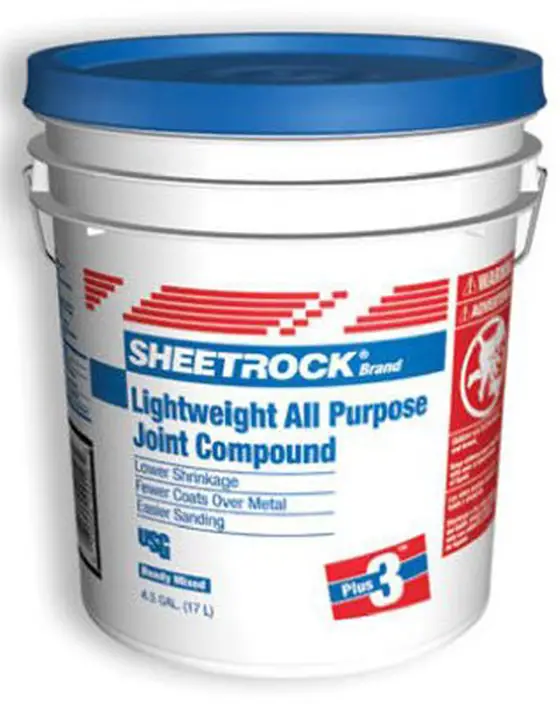
joint compound tub

An essential part of finishing your repair on cracked plaster or drywall CLICK THE IMAGE to get All Purpose Joint Compound.

Patching Plaster Holes

If the lath board is still in place behind the hole, your repair is easy. Simply remove loose plaster and dust, wet the area to be repaired and fill with the setting joint compound. Do not use premixed joint compound for these repairs. These simply do not bond well to the sandy base plaster or wood lath.

If there is nothing behind the hole but air, you need to create a base for the plaster to stick to. There are many ways to do this. Let's say the hole is two inches in diameter. I would cut a one inch wide piece of wood that is six inches long. I would then tie a 16 inch long piece of string around the middle.

Apply a liberal amount of construction adhesive to each end of the stick. Smear the glue on the wide face. Insert the stick into the hole so that the glued side faces you. Position the stick so it spans the hole equally.

Pull on it with the string so that it comes into contact with the back of the wall that is being repaired. Use the string to hold it in place. The glue should readily stick. After several hours, you should be able to proceed with the patching process.

Manufacturers of Veneer Plaster Products

  • Flexi-Wall Systems
  • Georgia-Pacific Gypsum
  • National Gypsum Company
  • USG Corporation

Veneer Plaster Technical Information

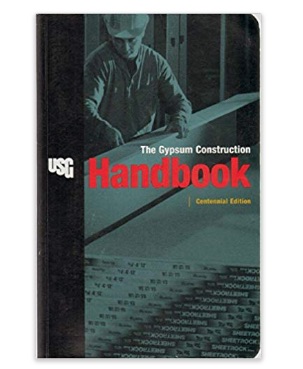
If you would really like to find out more about the different veneer plaster systems which are available and which one might work best for you, contact USG Corporation (http://www.usg.com). They have an excellent book which is loaded with information about plaster and drywall systems. The book is actually geared to the construction industry, however, it is very understandable for the average homeowner. It is called the Gypsum Construction Handbook.

CLICK HERE to get FREE & FAST BIDS from local Contractors who can install your new plaster wall.

Column B38
Drywall Finishing Tips

sheetrock light joint compound

Mixing the Compound

Probably the biggest mistake I see amateurs make is applying the joint compound straight from the bucket. Professionals always add a slight amount of water and use a drill or hand operated mixing tool to whip the compound into a creamy mix. It should have the consistency of cake icing. It should be very smooth. Often the easiest way to mix is to have a spare five gallon bucket. Open the new container and scoop half of the unblended compound into the spare clean bucket. This will make mixing very easy. Only mix half at a time, in case you add too much water. The addition of too much water will cause serious problems. The compound will lose its strength and durability characteristics.

Drywall Taping

When taping, do not scrape too much compound from beneath the tape. Blisters will develop if you do this. Believe me, you will know when you put on your second coat. Common sense tells you not to put on too much. Before you even begin to tape, take a straight edge and put it across the tapered joints where two pieces of drywall meet. There is not that much space. Imagine this space filled with joint compound and tape after you are finished. The tape should be in the middle of two layers of compound! It is not as easy as it looks. Too little mud and you get blisters. Too much mud and you will have a hump. Try a little area and practice. Some people can do it and some cannot. I had one helper who worked for me for six years and he never was able to develop the touch. Good luck!

Always let the compound dry between coats. Professionals finish drywall in three stages. They tape on the first coat and apply the first coat on all fasteners. They follow with a generous second coat and hit all corner beads and other trim pieces. This second coat is the hardest. One side of each corner is coated at this point. Apply a second coat to all fasteners and seams. Frequently, it looks a little messy. Swirls and lines may appear in flat and butt seams. The compound may appear a little thick at the seams. It probably is. Often professionals lightly sand all of the seams before they apply the third and final coat. The third coat consists of applying a coat to the remaining side of each corner, skim coating all seams to fill in lines, depressions and swirls, and hitting corner beads and trim pieces. All fasteners are coated for the third and final time.

Drywall Sanding & Drywall Painting

If all has gone well, when you sand you will have a very smooth job. The paint job will make or break a drywall job. Frequently, people do not apply the proper primer. Make sure that you do. Read the paint can label and make sure that it says the primer is intended for new drywall. Don't let anyone tell you that regular paint will do. Only believe the manufacturer. Check it yourself. The primer coat is the most important layer. All other subsequent coats of paint depend on it. Don't underestimate its importance.

Some drywall manufacturers make a special drywall primer paint. This paint eliminates common decorating problems referred to as 'joint banding or photographing'. Because the porosity of the finishing compounds is different from that of the drywall paper, painting problems can occur if you use inferior primers. Drywall manufacturers have developed high quality primers which are very compatible with their drywall products. These primers will ensure an excellent base coat for high quality finish coat paints.


Don't let unsightly drywall happen to you! Learn the secrets to great drywall installation in this Drywall / Plaster Installation Checklist. I offer a 100% Money Back Guarantee.


Always apply a minimum of two coats of paint. Apply it properly. Many homeowners have a tendency to over-roll and put it on too thinly. Avoid semi-gloss or high gloss paints. These paints will highlight every imperfection in the drywall. They are extremely unforgiving. New washable flat paints are now available. Use them if you are concerned about washability.

Related Column: Drywall Finishing Requires Skill

Column B19

Making Paint Last

Other Tips for a Long Lasting Paint Job

For previously painted surfaces, thoroughly wash the surfaces with soap and water. Many paint manufacturers recommend the use of a 'powdered commercial cleanser'. Spic & Span, Soilex, and TSP(trisodium phosphate) are examples. However, be careful with TSP. It can be very harsh for your eyes and skin and the phosphates are somewhat harmful to the environment. Wash the areas with a sponge or brush and pole similar to what billboard hangers use. Rinse thoroughly and let dry. The surface must be dry before painting. Also, beware of damp wood. Do not paint it until it has completely dried.


Have you picked out the paint color but don't have the time to paint? Find the professional painters by using my Exterior Painting & Staining Checklist. I offer a 100% Money Back Guarantee.


New Wood

Take the time to prime all sides and edges of the wood prior to installation. This in some ways can be faster, since you can roll the paint on working off of saw horses. When the wood is cut during installation, prime the freshly cut edge (usually end grain) as it is being installed. The end grain of wood is where water can easily enter the wood. You do not want water in the wood. Heat causes it to 'boil' to the surface and push (blister / peel) the paint from the wood. If you take the time to completely seal each piece of wood, your paint job will last for many years to come. This process takes more time in the beginning, however, it will pay dividends far into the future.

Always, always use recommended primers. Primers generally have a high resin content so that they 'stick' to the surface to be painted. They are also formulated so that the finish coat sticks to them.

READ AND FOLLOW THE DIRECTIONS ON THE PAINT CAN! -- This effort will be rewarded.

Column B13

Drywall Installation Tips – #1 Dusty and Heavy!

drywall installation using lifting machine

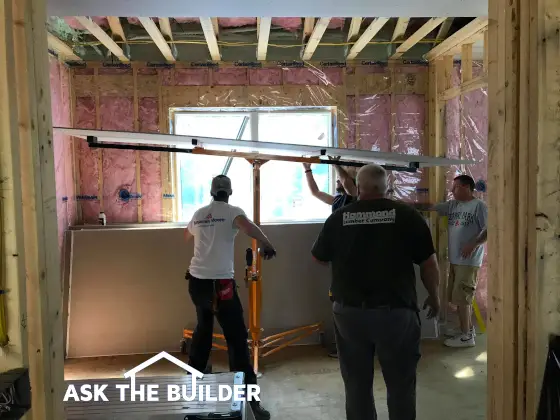
Drywall Installation | Large sheets of drywall are very heavy. Drywall requires muscle for sure. You can rent machines that hold the sheets up against the ceiling. (C) Copyright 2021 Tim Carter

Drywall Installation - It's Dusty and Dirty

Drywall installation and finishing is not as easy as it looks. Don't be fooled by those cheesy cable-TV home improvement shows. Just wait until you have to lift and hold a 4x12 piece of 1/2-inch drywall over your head and try to find a joist!

CLICK or TAP HERE to get FREE BIDS from local contractors who will install drywall for you.

What is the Best Temperature to Install Drywall?

Drywall and gypsum finishing products should be installed when the temperature is 55 F degrees or higher. As the temperature goes over 80 F, you'll start to suffer, especially if it's humid.

Does Drywall Expand?

Drywall expands as the temperature goes up. Drywall installed at 28 degrees F will expand 1/2 inch over 100 feet when the temperature rises to 72 degrees F.

Should I Leave a Gap When Installing Drywall?

Be sure to leave a 1/8" gap between sheets to account for this expansion if the drywall is cold and the room temperature is below freezing when hanging the material.

What is the Minimum Temperature to Finish Drywall?

Drywall finishing materials perform poorly in temperatures below 55 degrees. Never allow drywall finishing materials to freeze before they are completely dry. Frozen finish compounds can lose their strength and possibly lose their bonding qualities as well.

Will Humidity Cause Drywall to Expand?

Humidity can also cause expansion and contraction problems in drywall. Drywall can expand 1/2 inch per 100 feet when the relative humidity goes from 13 percent to 90 percent. This expansion can cause the boards to become wavy due to the expansion. Excessive humidity can also cause ceiling drywall to sag between framing members. In the event this happens, it cannot be corrected. The force of gravity pulls the drywall down and it will retain this bowed shape.

What Should I Do About Damaged Panel Edges?

Damaged drywall panel edges should be cut out. Don't try to fasten crushed or fractured drywall.

Often during delivery or installation, the edge of the drywall panels may get bumped. The result of this is a fractured edge. The gypsum core becomes fractured while the paper covering may or may not be intact. Often the result looks like a blister. These areas should be cut out and any fractured core material should be removed. Do not try to install fasteners through a damaged area. The fractured area will have little ability to hold a fastener. The board or panel may sag in this area at a later date.

Should Walls be Straight?

Wall studs should be straight. All crowns in the lumber should face the same direction.

For a top-notch job, make sure that framing members are in alignment. Bowed or twisted walls studs will cause wavy walls. Misaligned framing members can also result in nail pops. Nailheads will frequently puncture the paper covering the core.

How Long Should Drywall Nails & Screws Be?

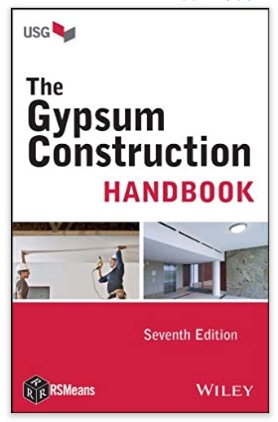
For the best advice, look at USG's Gypsum Construction Handbook. You'll discover they almost always recommend 1 and 1/4-inch screws for 1/2-inch-thick drywall and 1 and 5/8-inch screws for 5/8-inch-thick drywall.

gypsum construction handbook

This is the Bible of hanging and finishing drywall. I recommend you buy this and read the section on drywall. CLICK THE IMAGE to have a copy delivered to your home.

gypsum construction handbook

This is the most recent edition as of 2021.

Nails and screws should be the proper length. Nails that are too long can cause nail pops if lumber shrinkage occurs. One half inch drywall works best with 1 1/4 inch annular ring shanked drywall nails. The same goes for screws. Always use nails and screws approved for drywall. They have specially shaped heads that are formed so as not to tear the paper when slightly recessed. This is extremely important. Driving a nail or screw too deep will also tear the paper around the fastener. If this occurs, the holding power of that nail or screw is greatly diminished. Screws and nails should be driven approximately 1/32 inch below the surface. Always apply pressure to the board with your hand, just before the screw or nail begins to recess. The board must be tightly pressed against the framing members when driving fasteners.

What is the Proper Spacing for Nails and Screws?

Ceilings should have fasteners every 12 inches. Walls can have fasteners every 16 inches on center.

Screws and nails should be put in a sufficient quantity so as to hold the drywall in place. The maximum spacing for screws and nails in ceilings attached to wood is 12 inches on center. For a four foot wide piece of drywall, that means one at each edge and three fasteners equally spaced between the two edge fasteners. For walls, you need one at each edge and two others between the edge, or 16 inches on center. This spacing is extremely important.

Remember, if the drywall pieces are not properly attached, you will in all likelihood experience problems at a later date. The amount of time and mess that goes into finishing the drywall dictates that you should spend the extra time to properly install the panels. All too often, people hanging drywall spend too little time, thinking that the finisher will tend to their mistakes. Don't let this happen on your job!

Column B19

USG Corporation Drywall Book

gypsum construction handbook

This is the Bible of hanging and finishing drywall. I recommend you buy this and read the section on drywall. CLICK THE IMAGE to have a copy delivered to your home.

USG Corporation Drywall Book - Inexpensive and Remarkable

The Gypsum Construction Handbook is a plaster and drywall book by USG Corporation. It's is loaded with numerous photographs and diagrams. I highly recommend that you read it if you want to learn more about drywall. The name of the book is:

The United States Gypsum Corporation also has lots of great installation guides.

CLICK HERE and use their search engine to locate what you need.

Column B19

Secret of Chalk Resistant Paint

Secret to Selecting a Chalk Resistant Paint

Paint chalk is nothing more than broken down resin and pigment. A film of paint is basically like a very thick double decker sandwich (resin - pigment- resin - pigment - resin - pigment.......). A freshly painted surface has resin at the surface. You can prove this easily. After the paint dries, rub your finger across it. You will not have any pigment on your finger, it will be clean. However, do this same thing to a painted surface that has weathered outside for several years. Generally, you will get a film of pigment on your finger. The industry calls this chalk. The protective resin has broken down and left the pigment exposed. Thus, the key to chalk resistant paints is to purchase one that has quality resins and a high content of these resins. Since we already know that the resins are one of the most expensive ingredients in paint, you will probably pay a higher price for a chalk resistant paint. Beware of inexpensive paints and the claims they make!

To select a chalk resistant paint, you will need some very basic math skills. Most paint manufacturers list the contents of the paint on the side of each can. The contents are generally shown as two categories: PIGMENTS & VEHICLE. They are generally expressed as a percentage of the total volume. These categories are usually broken down again. The PIGMENTS will list various compounds which make up the pigments. The VEHICLE will list the amount of resin, any additives, and amount of solvent. Your mission is actually quite simple. To begin with, look for a paint that has a high vehicle percentage. Then, look to see if the resins comprise approximately 30 -35% of the total of the VEHICLE. If both of these values are high, you will be selecting a paint that has a very high total resin content. That is the secret.

Remember, the resin in the paint holds everything together. A high quality resin will resist breakdown. Also, the higher the ratio is between resin to pigment means that the pigment particles will be surrounded by that much more resin. This will make it harder for the pigment to get to the surface, where it appears as 'chalk'.

Column B13

Paint Characteristics

Chalk Resistant Paint Characteristics

Many people take paint for granted. They feel that it is a simple product which requires little understanding or training to work with. This is a misconception. Paints are highly sophisticated products. There are many, many different types all with specific formulations. Most paint manufacturers have chemists with PhD's that constantly work with the ingredients of paint in an effort to improve them. The chemistry of paint is not as simple as you or I might think. In fact, some paint formulas are highly guarded secrets.

The paints that you or I use on our houses naturally breakdown. The sun, water, chemicals found in rain water, etc. can cause paint to deteriorate. It is a natural process, as many objects exposed to the elements naturally deteriorate. Because of this, it becomes a challenge to locate, purchase and apply a paint which will not readily breakdown. In order to accomplish this, I feel it would be beneficial for you to understand what characteristics make paint long lasting and chalk resistant.

Most paints are made up of three primary ingredients. These ingredients are pigments, resins, and vehicle. Some individuals prefer to express the vehicle as a combination of two ingredients, solvents and additives.

The pigments are the ingredients which give paint its hiding ability. They also give it its color. A paint without pigment would be very similar to varnish or urethane, basically it would be clear. Pigments can also help to block the corrosive effects of liquids or vapors. They can also be formulated to minimize the effects of ultraviolet radiation (the sun's rays).

Resins for the most part are the most important ingredient of paint. These materials give the paint its ability to 'stick or adhere' to things. The resins also surround the pigments and enable them to stick together as well. Remember, for the most part, resins are formulated to be clear, so you can't really see them. That is why they can surround the pigment and give a uniform color or appearance when dry. The resins can be formulated from many different compounds. Oil based paints have alkyd resins. Latex paints have acrylic resins. Epoxy paints have epoxy resins. So, as you can see, there are different resins, all with different levels of quality. For the most part, resins are the most expensive ingredient in paint. So, if you were a paint manufacturer and you wanted to make more money, what would be the first ingredient that you would try to minimize??? Are you starting to get the picture?

The vehicle is that part of the paint which enables it to be a liquid. If paints didn't have vehicle, they would be solid chunks in the paint can. How would you apply them? Paint manufacturers figured this out a long time ago. They knew that they wouldn't sell much paint if people couldn't use them. For the most part, the vehicle in paint evaporates shortly after you apply paint. This part of the vehicle is called a solvent. The solids (pigments, resins, additives) are left behind on the object you painted. Different paints have different solvents. Oil based paints usually have mineral spirits or turpentine as their solvent. Latex paints consider water as their solvent. Some paints have alcohol as a solvent. The solvents in most oil based paints are considered to be volatile organic compounds (hydro-carbons). These compounds cause air pollution when they evaporate. In liquid form (paint thinner or mineral spirits) they can pollute soil or water. Some states limit the use of these compounds in paint. In the future, it may be almost impossible to purchase 'oil' based paints. Paint manufacturers are responding to this challenge. They are attempting to formulate latex or acrylic paints that have the same durability as oil paints.

Related Articles:  Tips, Chalk Resistant Paint, Peeling Paint

Column B13