Vinyl Floor Tile Manufacturers

Sources of Exciting New Vinyl Tiles

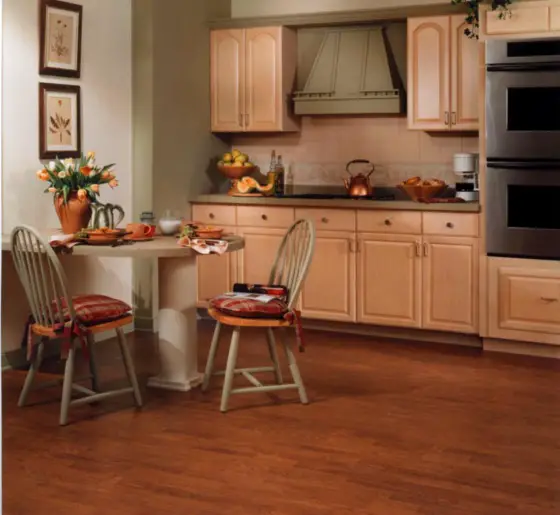
The following companies make vinyl floor tiles and planks. Not all of them have the exciting new patterns and planks that I like. The company that I saw that had the widest selection of awesome floor planks and new tile styles is Congoleum. When I saw their products at the International Builders Show in Dallas, Texas back in January, 2000, I was amazed. For so many years, vinyl tiles were ho-hum. That has changed!

I urge you to call these companies or visit their websites. I feel the hard copy catalogs are a must to get because the color reproductions of the tiles is far better than the images you will see on the Internet. Also, some of the companies websites are VERY hard to navigate. I am amazed at how poorly they are organized. You may get frustrated like I did. You can also browse the Internet and locate local companies that carry vinyl tiles. Find somebody that has a full sample selection of Congoleum products. Take a bib with you, because you are going to salivate.

  • Amtico International
    www.amtico.com/
  • Armstrong
    www.armstrong.com/
  • Congoleum
    www.congoleum.com/
  • Domco
    www.domco.com/
  • Forbo Industries
    www.forbo-flooring.com
  • Tarkett
    www.tarkett.com/

Column B307

Vinyl Floor Tile & Vinyl Planks

vinyl Tile flooringHave you ever been really surprised when you look at something new? It happened to me when I saw the results of the silent revolution that happened with vinyl floor tiles. In the mid-1990's, laminate flooring made a big splash. This alternative new flooring material started to take away market share from traditional flooring like vinyl tile, ceramic tiles, hardwood, etc. The companies that made these products probably had an emergency meeting when they detected a drop in sales. Several of the vinyl tile companies put their research and development teams to work and the results are breathtaking.

Forget About Grocery Tile

Up until I saw the new vinyl tiles and planks, I felt that most of the tiles out there were just renditions of the standard grocery store or large discount department store floors that have endless rows of the mundane floor tile patterns that haven't changed in nearly 40 years. The new vinyl floor tiles and planks ARE going to take your breath away when you see them. I have always liked vinyl tile because it is flexible, durable and the material itself is waterproof. But I have never liked the looks of the product! Well, I can't wait to put the new planks in my basement activity room!

Adhesives

Some of the thinner gauge vinyl flooring tiles come with a factory applied adhesive. You just peel off the silicone paper and install the tiles. This is a pretty fail-safe method of adhering the tile to a subfloor. I personally am not a big fan of the self-stick tiles only because they are thinner gauge than the commercial tile. I love tile that is 1/8 inch thick. It wears like iron and offers more durability in case something drops on the floor.

The adhesives used for the 1/8th inch thick tile are product specific. This means you just can't use any adhesive. The wonderful Congoleum product catalog on my desk contains a handy table that tells you exactly which adhesive to use with each dry back 1/8th inch thick tile. If you use a substitute adhesive, you are rolling the dice.

The Planks

The vinyl plank system I intend to install is a magnificent product. It has all of the appearance attributes of real hardwood and the imitation laminate flooring. But it has a huge advantage - the material is waterproof. This makes the vinyl planks an excellent choice for basement floors that are subject to periodic episodes of water infiltration. It makes them excellent choices for people who want a wood floor look in a bathroom.

Because the vinyl planks come in long rectangles, they look like wood. I never liked the 12 x 12 wood look-a-like vinyl tiles because the majority of wood flooring is strip, not veneered squares. The new vinyl planks complete the illusion and they do it well.

The Other New Tiles

Do you like geometric patterns? If so, wait till you see some of the new designs. How about tiles with Southwestern style borders? Are you a natural stone lover, perhaps marble? If so, you will be able to find elegant black, green, rose, almond and white simulated marble. I majored in geology in college and these tiles look like the real McCoy!

Have you ever been to a museum or some other fancy building that has inlaid wood floors? You can get vinyl tiles that simulate this effect too!

If you like the look of symmetry often found in sheet vinyl products, these same patterns are available in vinyl tile. You lay the tiles down and the end result is the look of sheet vinyl.

Would you like to create a solid color mosaic look? You can get brilliant solid colors like red, yellow, forest green, deep blue, gray, black, white, and taupe. The black and white tiles when laid in an alternating pattern is a striking floor. In a kids activity room, you could create a decent sized checker or chess board right in the middle of the floor. Now THAT would be a conversation item, as long as you get checkers that are 10 inches in diameter or 24 inch high chess pieces!

If you are lucky enough to have a Congoleum flooring showroom near your home that displays their full line of products, you are going to be blown away by what you will see. Some other manufacturers have good looking products, but not to the extent of Congoleum.

Column B307

Home Design Software

DIY Architecture

Let's say you are planning a room addition. Did you know that you already possess the talents which allow you to calculate a comfortable size for the room addition? You may even possess some good design skills. Now you might think that I am wrong on this one.

For sake of discussion, let's assume that your local zoning ordinances will permit you to do just about anything. Some cities have strict setback lines and so forth that may limit the size of your planned addition - you must be aware of these limitations.

Go into your present living room. How does it feel? Imagine if it were say 6 feet wider and 8 feet longer. Maybe this size would allow you the space for that new couch, or a fireplace, built-in bookcases, whatever. The point is this. Use your existing rooms as starting points. You can measure them and stretch them to suit your needs. You need to start thinking in terms of space and how much you need.

Putting it on Paper

Remember earlier how I told you that my drafting skills were poor. Today, you don't need to know how to draw! If you have a fairly modern computer and sufficient memory, there are many affordable computer design programs that will draw your planned room addition.

These programs are not intended to replace an architect. I feel that many homeowners can use these programs to help them get a feel for what the process involves. By using one of these simplistic programs, you can actually draft a floor plan, create elevations (pictures of how walls will look), and even do a walk through 3D tour!

Many of these programs cost less than $100 dollars. If you have the slightest amount of interest, you can possibly plow through much of your preliminary design work. The 3D features of some of the programs allow you to see what you are designing. This is very helpful, as many of my customers had great difficulty in visualizing a blueprint. They simply couldn't see what was going to be.

It is important to note that these programs, in my opinion, are not meant to replace an architect or an interior designer. These professionals can take your concepts and refine them. In many instances they can maximum the utility and beauty of your ideas.

User Friendly Homeowner Software Design Programs

Many of these programs are similar in several respects. You can develop floor plans, elevations and often take a tour of what you have created. Many have libraries of existing house plans that you can modify. They are very powerful. You must pay attention to the system requirements on the side of the program box. In other words, make sure you have 'enough' computer. Most of these programs can be bought for the same amount of money you might pay an architect for 1 hour of his/her time. You can do a lot of your own preliminary work and produce computer generated ideas in a jiffy!

  • CAD Complete House
    Deep River Publishing Corp

  • Home & Landscape Design
    Punch! Software
  • My House
    Designware
  • Turbo Cad
    IMSI

Column B106

House Plans, Blueprints & Architects

House Plans, Blueprints & Architects

How many times have you heard stories where a homeowner became entangled in a dispute with a contractor? Perhaps this has happened to you. Almost invariably the problem can be traced to a poorly written contract (or no contract at all) and/or a poor set of plans (or no plans at all).

Successful projects are based upon precise, well-thought out plans. If it will not work on paper, it will not work in the field. Believe me, I know this for a fact.

The Value of Plans

When I first got into the construction business, I used to try to draw my own plans. My art skills were poor. The plans were crude. I made mistakes. As time went on, I began to appreciate the talents of real, residential architects. Some of these individuals possessed real talent. They had excellent drafting skills compared to mine.

More importantly, they were trained (usually) to follow a disciplined format to plan a project.

Several of my early jobs ended up in disaster. A toilet was too close to a vanity. Kitchen layouts were clumsy. Any number of things were wrong. Fortunately, I learned quickly that time spent planning was time well spent. Yes, it took a little extra time to think things out. But this time was always less than the time and cost spent to correct an incorrectly sized or placed window or door.

Working with Architects

Architects, by nature, are artists. They work with building materials to create things. Other artists work with clay, plaster, or paints. Many architecture schools place a large emphasis on commercial and industrial type training. Not too much time is spent on residential architecture. My architect friends have pondered this dilemma with me on several occasions. They seem to feel that the schools need to prepare them for the real world where the jobs are. A huge majority of architects are hired into the commercial, institutional, and industrial fields when they graduate. Rarely, does a first year architect go directly to a residential environment.

The primary reason for this, I'm told, is that there is little money in the residential field. Homeowners, on the whole, sometimes have trouble dealing with architect fees. Some people turn white when told that planning fees could approach $3,000 - 5,000 for a large room addition or simple, single family house.

If you are planning to build a new home or construct a large room addition, consider using an architect. Now, mind you, not just any architect. You are going to have to hunt around for an architect that does residential planning as a full time profession. There are usually several of these around in major market places. Sometimes commercial architects moonlight on the side and draw residential plans at home and on the weekends for extra income. I know of two individuals here in Cincinnati who have done it for years. Their plans are good values.

Getting the Most Value

If you plan to use an architect, there are ways to minimize costs. Sometimes a large portion of an architect's fee lies in preliminary planning. This is the phase of planning where an architect tries to extract from you what you want.

Imagine how difficult an architect's job really is. They try to read your mind as to your desires. An architect may produce 3 - 4 drawings before he/she hits what really strikes your fancy.

A better approach, I've found, is for you to gather ideas before the planning process starts. Look through magazines and product literature brochures. Select photographs that show exactly what you like.

Cut out separate photos and tape or paste them onto a piece of paper. Write down what you like and or dislike about a photo. Organize these photos in a three ring binder.

If you do this for each room or critical rooms in your house, you will be able to immediately communicate to your architect what you want. This could save hundreds and possibly thousands of dollars in designing fees. Many of my past clients did this with great success.

Read about problems with a room addition (contract price $500,000) when the contractor didn't check the plans.

Column B106

House Plans, Books and Blueprint Sources

Where Does One Find Great Plans?

Bookstores

In the not too distant past, if you wanted to dream about your new home you would visit a bookstore or a newsstand that sold magazines. Here you would find all sorts of magazines and books that contained house plans of every type, size, style and shape. These magazines and books are indeed still published, but advancements in technology have allowed us to go to the next level. You can also get CD-ROM's with house plans and visit countless websites that also feature plans.

The Real McCoy

When you purchase one of the plans from any of these venues, you get a very good plan, but it may not be perfect. What I mean by perfection is that it may not be a plan that has many, if not all, of the elements that I feel make a superior plan. Where can you get a copy of such a plan? Well, I found a nearly perfect house plan that was drawn by a high quality residential architect in Cincinnati, Ohio. He licensed the plan to me and I am permitted to sell copies. This plan is unbelievable. It shows you exactly what your set of final blueprints should look like. It illustrates to you all of the different tables, details, schedules, elevations, etc. that are necessary to communicate to a builder your wants and desires. You can order a set of these plans to help you incorporate all of the same elements into your plans. If you do this, the chances of misunderstandings with your builder will be minimized.

Fantastic plans also protect you. If the builder or a sub-contractor states that they didn't know about this or that, you can point to the plans and say, "Well, it was right there. I expect you to finish the job as the plans state with no increase in price. It is not my fault that you missed it." Great plans can save you thousands of dollars.

Sources of Detailed Plans and Specifications


Tim's Sample Plans

To order the sample set of blueprints from me, you have two choices:

Go to my On-line Store under sample blueprints or call us at 513-407-8727.

The cost for the plans is just $19.97. I GUARANTEE that they will save you money. How? Because you will be able to make your plans better and you will include items in your plans that otherwise would have led to expensive change orders or cost overruns. It is that simple.


A Great Web Site

Dream Home Source has a searchable database of over 15,000 house plans! It is free! This is an awesome web site. Simply go to:

http://www.dreamhomesource.com/

Plan Books

600 Most Popular Home Plans

This 427 page paperback book by Creative Homeowner Press, is a wonderful book filled with lots of different plans in black and white.

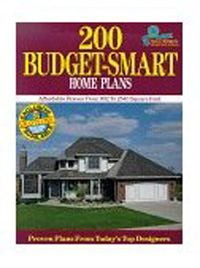
200 Budget-Smart Home Plans : Affordable Homes from 902 to 2,540 Square Feet (Blue Ribbon Designer Series)

Function and style come together in this budget minded book of home plans. Complete construction blueprints available for all 200 plans. 2-color throughout, by Paulette Mulvin.

Encyclopedia of Home Designs : 500 House Plans from 1,000 to 6,300 Square Feet by Homeplanners LLC.

This new edition features the most popular portfolios and brand-new plans from the nation's top designers.

500 Best Selling Home Plans 500 Best Selling Home Plans by Sunset Books Inc Staff, Paperback - 512 pages 1998 edition (September 1997)
1001 All Time Best Selling Home Plans 1001 All Time Best Selling Home Plans by Home Planners, Paperback - (March 1, 2000).

This book features a variety of styles including: Farmhouses, Country Cottages, Contemporaries, Vacation Cabins, Luxury Estates, Historical Houses, Regional Specialties. 704 pages, 32 pages of full-color photographs and renderings with all other pages featuring two-color highlights for floorplans and designs. This book also features 359 one-story homes and 642 multi-story homes.

Book Buying Tips

If you intend to buy a book containing house plans I highly recommend that you go to the Internet and READ the reviews of the books from people who have bought and used them. This is a fantastic tool that the Internet offers at the major book store websites.

Not to be cynical, but keep in mind that some of the reviews may be written by a friend of the author in an effort to get sales jump started. It wouldn't be the first time this has happened! But all in all, I think you will get an idea of the book quality by reading several of the reviews.

Column B340

Communication, Contractors, and Records

Communication breakdowns between homeowners and contractors happen on a minute by minute basis throughout the world each and every day. The tension that results can tear apart marriages and ruin relationships for a very long time. The common ground in the dispute between the parties is always the same: the loss of money! The homeowners almost always think they are getting less value than they bargained for and the contractor is thinking that ANY extra work or materials means less profit. You need to understand the psychology of situations to be able to react well when they happen.

Going Sour

A job can go sour for any number of reasons. If it is your house or room addition job you need to be concerned. Your hard earned money is at stake as well as potential future liabilities if and when you sell your home. What am I talking about? Many, if not all, states have property disclosure laws. If you know of defects in your house you must disclose them to a future purchaser. Accckkk! This means that you cannot allow a contractor to make a mistake. If they do make one, and you know about it, then someone must fix it. Why should you pay twice to have work done? Get the point?

Trust

I estimate that probably less than 10 percent of the builders and sub-contractors out in the work force are absolutely excellent workers that require no supervision. These people take enormous pride in their work and they will correct their own mistakes without any input from you. That is assuming they discover the mistake before you happen to. Even if you find it first, they will never put up an argument and will fix the error in a timely fashion with no whining. So what happens if you are working with someone whom you can't entirely trust? If you have any sensation of mis-trust then you have probably made a mistake by hiring them in the first place. If it is too late, then you must start the documentation process.

The Spoken Word

This is quite possibly the largest mine field in communications. You have a conversation, promises are made and then things don't happen the way one or more of the parties want them to. Had there been a recording of the conversation, at least there could be no argument over what was said. It is hard and often uncomfortable to tape record conversations. There is a powerful alternative.

Sixteen years ago an old banker taught me two tricks in one. I must say they work. You are in a meeting. You would like something done by a certain time. Instead of you saying, "Hey, I want my kitchen job completed in the next 3 weeks." Try this: "Is it possible for you to complete my kitchen job in the next three weeks?" If the contractor says, "Yes", then you are set. If he says, "No" then you might say, "I was hoping to get it done sooner. Is there any way this can happen?" If you finally get the date you want you STOP the conversation and write down these notes on a legal pad in front of you. The pause in the conversation is powerful. Believe me, the contractor SEES you writing this down. He makes a mental note that tells him that you will not forget what he said. If you do this same thing with all of the important points of each verbal meeting you have, your notes will be a life saver. To take it to the next step, you need to summarize the notes in writing after each meeting and send a copy to the builder.

Email

Some folks hate it. Email is a wonderful tool! Why? It is a written record already! TRY to communicate important points via email with the builder. Print them out. Save the written responses in a file should you need them later. Save all of them on a disk as well.

Paper Trail

If you ever have to get into the legal system, an excellent paper trail of events will save you. Letters, photos, emails, etc. are what you need. KEY on building code violations. You will ALWAYS win on these issues! How do you best spot building code violations? You need to buy a copy of the current code. You can get one or find out how to get one by contacting your local building department. They normally cost between $35 and $50. The best $$ you can spend!

Column B340

New Home Construction – Problems to Avoid

Twenty Five Must Avoid Problems During New Home Construction

Here is just a partial list of some of the nightmares that can be avoided with some careful planning before the job starts. With a little thought I am quite sure you will come up with at least ten other items. Identifying problems before they manifest themselves just requires some forward thinking. Try to think in three dimensions. Place yourself in the finished room. Go around your existing home and pick out problems you have lived with for years. Don't make the same mistake twice.

Flooring - In the not too distant past, hardwood floors were not allowed to be installed over OSB sub-flooring. Yet, I saw it done all the time. That requirement has since changed BUT there are still minimum standards for hardwood flooring as well as other floorings. ALWAYS get a set of installation instructions for the finished product and see what is called for. This goes for sheet vinyl, tile, etc.

Hallways - Did you bump or scratch the walls of your hallways or stairwells as you moved into your home? They were possibly too narrow. Forty two inch wide staircases are a minimum in my book. Fifty six inch wide hallways are superb.

Doorways - Doorways into bedrooms should be at least 2 feet 8 inches in width. This will allow you to get that large desk or chest of drawers into the room with ease. Doorways into kitchens, laundry rooms, etc. must be at least 36 inches wide.

Floor Framing Systems - If your builder builds to code you still may end up with a springy or bouncy floor. Stiff floors can be achieved with ease up front but are a nightmare to fix after the fact.

Wire for the Future - The future is here now. You may not have computers networked today but it is a distinct possibility in three or four years. Install CAT-5 wiring to one or more places in key rooms. Each wire should be a separate one from a central network hub. Do not run these wires in a series from outlet to outlet!

Cracked Concrete - Your driveway looks swell when you move in but will it stay that way? If you pour it 5 or 6 inches thick and install 1/2 inch steel bars, it should be crack free for many years.

Roofing Felt Paper - You trust your builder and roofer, right? But all too often they skip an important step - felt paper! Most shingle warranties require it and it is critical to maintain the fire rating of the shingles.

Exterior Wall Water Barrier - There are tens of thousands of houses built with no water barrier on the side walls. Don't count on brick or any siding material to stop water. That is totally unrealistic. At the bare minimum you need felt paper. An air and water infiltration barrier is better.

Hot Water Loop - Do you hate waiting for hot water when you turn on a faucet? A simple recirculating loop can solve the problem.

Low Water Pressure - It is possible that your water pressure is low because of a problem with the city or county water main. But low pressure problems more often than not stem from undersized piping inside the house or under the front lawn.

Fire Safety - An electrical fire is a silent killer. You can avoid it with some preplanning. Install arc fault circuit interrupter circuit breakers. They are a must.

Access Panels - How will you change out the bathtub faucet in the future? If you have an old fashioned access panel it will be easy and fast.

Total Comfort - The indoor climate of your home can be super comfortable if the HVAC system is properly sized and the ductwork or piping is sized correctly. Only 1 in 10 HVAC contractors know how to do this! Choose wisely!

Laundry Room - The plan shows a laundry room but is it big enough? Where will the piles of dirty laundry rest? In a hallway in front of the washer and dryer where you must stand to work? Get the picture? The room needs to be big.

Blocking - Toilet paper holders, towel bars, heavy pictures, etc. need solid wood block behind the drywall or plaster. It takes some planning to get this blocking in the right place. Take photos before the drywall goes up to help you locate it after the fact.

Roof Overhangs - Old houses had generous overhangs. These design features help protect the sides of the house in most rain storms. Don't overlook this feature!

Sound / Noise Control - Plan now for noise control. There are all sorts of things you can do to minimize sound transmission between rooms and between floors. But it MUST be done during construction, not after!

Blank Conduits - What happens if you must add a CAT-5 wire or a telephone line at a later date? If you have blank conduits that extend from the distribution hubs up into the attic space, it will be a breeze. Without these conduits it can be an ordeal to install a wire. The cost of the conduit is possibly less than $50.00.

L Shaped Stairwells - Certain house plans incorporate L shaped staircases. These are a nightmare when it comes time to move large objects. See if you can avoid this problem.

Basement Ceiling Height - It costs extra money to get a basement wall that is 9 feet 6 inches tall. But trust me, you will never regret spending this money! Walls poured this high enable you to get full height finished ceilings in lower levels.

Garages - The garage space on your plan will look enormous when compared to other rooms. But wait till you put in cars, garbage cans, bikes, lawn mowers, etc. The minimum sized garage that I would build would be 25 feet deep and 30 feet wide. The garage door width should never be less than 9 feet. And if you have a full size SUV, you better have one door that is 8 feet tall.

Holiday Lighting - Many people invest lots of time installing and displaying outdoor lighting during the holiday season. This lighting usage is actually extending to other holidays like Halloween and even the 4th of July. Install numerous outdoor electric receptacles at key locations. Make them operate via an indoor switch near your front door or an extra switch at your bedside in case you forget to turn them off.

Ceramic Tile - All too often it is installed over water resistant drywall. This is the drywall with the green paper. It WILL fail in 5 to 7 years! Install ceramic tile on top of cement board. This product is 100 percent waterproof.

Vapor Barriers - They are by no means all created equal. Most builders use clear poly that is one layer and made with recycled material. It often has pin holes in it. For a little more $$$, you can get a high performance vapor barrier.

Ventilation - Roof ventilation is so important. I had a roof rot problem at my own home because a product had yet to be invented. All of the right products are now available. Ventilate!
Construction – Get Organized

Nine months ago a neighbor's house suffered from a devastating electrical fire. No one was injured or killed but the house was ravaged by the fire. I helped the neighbor's locate possibly the best builder in town - Amy Christian - to reconstruct the home. Amy is very well organized and spent lots of time going over exactly what she was going to do. Back in the spring Amy outlined the product selections that needed to be made to keep the job on schedule. Everything seemed to be on track.

Ho Hum

The neighbors did their job and picked out materials. Amy began to install them. But once installed, the wife decided to change her mind about certain things. As you might expect this created a flood of expensive change orders and the delays that all too often are part of a change order.

What's more, the homeowners started to select materials that didn't work well with the existing construction. For example, they recently decided to install lots of large sized ceramic floor tile. The thickness of the tile plus the required cement board underlayment created problems at a pair of swinging doors and where the tile butts up against existing hardwood flooring. The long and short of it is that the homeowners drifted from the outline provided by the builder. As you can imagine there is some finger pointing and lots of unnecessary stress.

Servants? I Think Not

Don't take decision making lightly. The builder and all of the sub contractors have other jobs to go to. It is unreasonable for you to think that they are your servants. As such, when you make a product selection, expect to live with it or pay a hefty price to make a change. Certain materials that you like may be custom ordered. It can take months to get some items. If you decide too late or change your mind, the job will undoubtedly grind to a halt. Trust me, as I write this my neighbor's house is vacant and no one is working there today. The wife changed her mind on several items and the builder is waiting for the material to arrive.

Avoiding the Slowdown

You can avoid lots of hassle if you make all of your decisions before you start the job. This is done all the time on commercial work. Certain materials are specified and called for in the original plans. This is one reason why commercial projects often run much more smoothly than residential ones. It is also why they often are completed at a more rapid pace. The architects and building owners don't dilly dally around. They make decisions and move on.

Making a Binder

Organizing your selections is important. I have found that a large sized 3 ring binder works well for this. Create a section or tab for each room. In that section store all of the technical cut sheets for the products that will be in that room. If you are really detail oriented you will have a color chip for each paint that will be used in that room as well as samples of fabrics, carpet, and window shades, etc. These are very important in case the wrong items get delivered to the jobsite. A worker can look at the binder and cross check the item before he starts to install it.

Don't Wait

It is going to take time to build the binder. You will visit many stores and walk out with brochures, samples, etc. It can take weeks and weeks to finally put it all together. The upside? Well, if you do your homework and the builder approves all of your choices, you get to sit back and make leisurely visits to the jobsite to check on the progress.

Column B376

Tips on Paying Contractors

Tips on Paying Contractors

1. Demand itemized bids from your contractors. Ask who will work on your job. Will the individuals be employees or subcontractors? Obtain a list of all subcontractors and suppliers who intend to work on or deliver materials to your property. The effort will be worth it.

2. Negotiate with your contractor one of two things: #1- Obtain signed, notarized affidavits from each sub and the contractor himself at each payment period. Get materialman's certificates at the same time. The totals of the affidavits and materialman's certificates should EQUAL the amount of your payment!!! If not, you have a problem. #2- Negotiate the right to pay each individual yourself. If you do this, you must also receive the same affidavits and materialman's certificates.

3. Resist paying for goods and services not rendered. Often contractors ask for money up front. This is an extremely dangerous thing for you to do. Deposits should only be forwarded for special order non-returnable items that a contractor may have to purchase for your job, or where state law requires it. If possible, only pay the minimum amount required by state law. Monies for anything else are a sign that the contractor is either financially weak, or possibly doesn't trust you. Trust in a building relationship is a two-way street. You are entrusting your most prized possession to the contractor. You are trusting him or her that they will not harm your property. You are trusting that they will start and finish the job in a timely fashion. Etc., etc., etc. Surely they should trust you!!!!

4. Demand itemized bills from the contractor at each payment period. Compare these bills with the amount of work performed and the itemized bid you received at the beginning of the job. If there is a discrepancy, investigate what is wrong. Do not pay the bill unless you feel it is correct. If you pay too much money as the job progresses, quite possibly you will have, for example, $10,000 worth of work yet to complete, but only $2,000 of your money left to pay. Thousands of homeowners have found themselves in this precarious position.

5. Do not issue final payment to a contractor until you are satisfied with the work. However, do not abuse this practice. For example, if there is a tiny $100 scratch on a cabinet, it is unfair for you to withhold a $10,000 payment. Hold back $200 and release the rest. Be reasonable. Treat the contractor as you would like to be treated. Remember, if you pay a contractor before all work is complete, you will be relying on HOPE alone with respect to the uncompleted work. Never rely on hope.

Column B32

Specialized Drywall Primer & Drywall Sealer Products

Drywall Primer & Drywall Sealers

Drywall, and the compounds which are used to hide the nails and joints, are a witch's brew of different textures and porosities.

If you are fortunate to have either good eyesight or powerful bifocals like me, take a close look at a piece of drywall. I mean a really close look. Use a magnifying glass if necessary.

You should quickly notice that the paper surface of the drywall is not smooth. In fact, it is actually quite rough. This is intentional. The paper must be rough so the joint compound treatments stick to it.

On the other hand, the joint compound treatments, when sanded, are quite smooth. To make matters worse, the paper is not as porous as the joint compound.

This means that if you want a perfectly good looking paint job, you need to use a primer that will fill in the rough areas and a sealer which will address the different porosities.

Wouldn't it be great if you could get one paint which would do both? You can!

Manufacturers of Specialized Drywall Primer & Sealer Paints

  • Behr
  • Benjamin Moore & Company
  • Duron Paints
  • Gardner-Gibson
  • Martin Senour Paints
  • Pratt & Lambert, Inc.
  • Sherwin Williams Company
  • USG Corporation

Each of these manufacturers makes a specialized primer/sealer for new drywall work. If your drywall has already been painted with the wrong product, it is not a problem. As long as you apply these specialized products to a clean, dry surface, you should obtain spectacular results. Be sure to apply the primer/sealers at the recommended rate. Do not thin the products or spread too thinly.

Column B49