July 4, 2021 AsktheBuilder Newsletter

If you're a new subscriber and you speak Greek, I'd say "Teekanis" to you right now. You'd probably reply, "Cala!" Yes, yes, I know I butchered both words, but it's what my Greek bosses would say to me when I came to work each day at Skyline Chili in Cincinnati. Bottom Line: Hello! Bring more cheese out here to the steam table.

I'm actually writing about all my experiences at Skyline Chili in a book I'm producing for my youngest daughter. What we did with ice balls will make you roar with laughter. The restaurant had a Scotsman machine that made wonderful small cube ice that was perfect to make ice balls the size of baseballs. Use your imagination. But I digress!

That said, you may be a long-time subscriber who enjoys taking a stroll down memory lane with me each week. Years ago in the early days of Ask the Builder, I was in my office one morning thinking about a new column to write.

All of a sudden a memory of me sneaking into my Mom's bedroom while she was downstairs sloshed around in my tiny gray cells. I would slowly lift the lid to her lowboy cedar chest, bend over, and slowly inhale with my eyes closed. I loved that intoxicating aroma.

Not too many years after that, I'd also slowly inhale with some of my girlfriends, especially those that wore a perfume that smells like the current Indecent brand. I know, TMI!

indecent perfume
As for my Mom's cedar chest, it's now in my possession and I'd never give it up.

cedar oil can
It turns out I was in this minuscule minority of ten people in the USA who happened to like cedar chests and closets. That column turned out to be the biggest flop of Ask the Builder history!

CLICK or TAP HERE to read it and discover lots about aromatic cedar and how you can restore it! Aromatic cedar is a winner and it's still available.

Happy Birthday Lady Liberty!

Do you like being told what to do knowing that if you don't do it you'll be punished? I didn't think so. Our Founding Fathers here in the USA didn't much care for it either and they kicked tyrannical King George and his liege lord buddies to the curb 245 years ago.

July 4, 1776 - a day that should forever live in world history as the birth of true freedom and liberty.

How smart our Founders were! They understood that we have unalienable rights given to us by God, not some other man who happens to wear a crown and is surrounded by sellswords who pledge their fealty just because the powerful man (king) provides them food, shelter, and allows them to keep their heads on their shoulders.

Do you know what unalienable means? It means impossible to be taken away. Yet right now, there are quite a few people around you trying to tell you what to do, when you can do it, and doing their best to slowly strip you of your unalienable rights all while they distract you.

That's not a polite thing to do at a birthday party for goodness sake!

I suggest we take a big piece of birthday cake and smash it in their faces! BWAHAHAHAHAHAHAHA! Or better yet, we can use a shaving cream pie so we don't waste the tasty birthday cake. Most definitely we do NOT want to throw mocha chip ice cream at these bad folk. That frozen delicacy needs to be in our stomachs!

Enjoy the day and try to reflect on what July 4th in the USA really means. It's not all about hot dogs, brats, and fireworks.

If you want to really grasp what's in play and happening each day right here in the USA, and your country too if you're not a US citizen, watch this short video clip and start to read the first book in the series.

"...There is no middle ground."

Gulp.

Really focus on the last two sentences Cersei says to Ned. Focus on the emotion and determination in her voice.

Cersei - you absolutely don't want to be on her bad side.

3D Printed Houses - Slooooow Down

My son has a 3D printer and has made some amazing things with it. If you can dream it, software can help you design it, and a precision printer can create your vision in hours.

But what about upping your game? Use a printer that oozes mortar and create a house. There's lots of gushing going on about these 3D printed houses, but as often is the case, you're hearing and seeing just half the truth.

And you know the old saying, right?

A half-truth is a whole lie.

CLICK or TAP HERE to discover the not-so-pleasant underbelly of 3D printed houses. Yes, the moniker my kids have given me continues to live on.

As they grew up, they affectionately labeled me as the Dream Crusher.

I would retort, "You know nothing. I'm the Truth Teller."

Bats in Your Belfry, er Your Attic

Bats have been given a pretty bad wrap by Hollywood wouldn't you say? You almost always see them in horror movies.

Think how many mosquito bites you'd have if they weren't flapping around each summer night.

I remember as a kid being fascinated by bats as they'd swoop around just above the heads of my neighborhood buddies and me on those sultry and steamy summer nights. We'd try to stay out after dark as long as we could soaking up all that was wonderful in our tiny world of blinking fireflies on Riddle View Lane.

Bats are like us and they do need to rest. If you're like most, you don't want them creating Zzzzzzs up in your attic.

CLICK or TAP HERE to discover an unorthodox and inexpensive way to make sure bats don't get their mail at your house!

That's quite enough for a holiday weekend.

I suggest you reflect on whether or not it's such a good idea to pledge your fealty to those that want to tell you what to do.

As George C. Scott said in the open of the famous movie Patton, "The thought of it is hateful."

Tim Carter
Founder - www.AsktheBuilder.com
Best Darn Cleaner - www.StainSolver.com
106 Record FD Contacts - www.W3ATB.com

Do It Right, Not Over!

P.S. How did you do last week in the fun Rechargeable Battery quiz? Were you in the vast majority that want a fantastic affordable charger that RESTORES to like-new condition worn-out rechargeable batteries? Who were the folks that said "No"? Crazy!


Rechargable Battery Quiz Results Graph

Build a Cardboard Boat

craftsman bumper sticker

Build a Cardboard Boat | I used about 50 of these bumper stickers to help win the prize!

Build a Cardboard Boat - Sears Editors Conference 1999

I was lucky to be part of the team that was destined to build a cardboard boat that set a Florida state record. The year, I believe, was 1999.

Mike Mangan, the public relations manager for Sears, invited me to my first ever Sears Editors Conference in Clearwater Beach, Florida.

Mike always held the event in June of each year as it was the peak of the low season and no doubt he got a fantastic rate on booking 100, or more, rooms for all the editors, vendors, and Sears brand managers that attended the event.

The events were typically held at the same beachfront hotel that was easily a 4-star hotel conference center. It was deluxe.

Sears Editors Conferences - The Gold Standard

Before I give you the details of the cardboard boat-building contest, allow me to set the stage.

The Sears Editors Conferences were the best put on of any I attended over the 20-year span of time when I attended conferences hosted by manufacturers. These events allowed manufacturers to get the undivided attention of members of the working press. The Sears conferences were a three-day event filled with a perfect mix of work and play.

The first day of the conference was an evening mixer usually set up in a nice grassy area by the outdoor swimming pool. There was always plenty of food and drink and you'd rub shoulders with other editors and industry peers. All of the Sears brand managers and representatives who made the tools we'd see the next day were also mingling to get our ears and win favor with us so we'd feature their products in our publications.

8 AM Start Time

The next morning the conference would start at 8 AM sharp  in a giant room in the bowels of the hotel. These rooms were built for conferences, wedding receptions, etc. The space always had a U-shaped table setup where all of us editors would sit at. Around the edges of the room all of the new tools were on display at different tables and hand-on stations.

There were so many new tools to look at, that each one was only given about 10 minutes or so. It was an intense four hours of information overload and then lunch was served. After that we'd see a few more tools and there was always a hands-on portion where you could touch, feel, and use some of the tools.

Afternoon Off

Mike always let us have the afternoon off. He typically had two organized events you might choose to do, or you could just chill on your own in your room or down by the pool.

This first year, one of the events was build a cardboard boat. I was most curious about this and decided to join in the activity.

Build a Cardboard Boat

I believe we had to meet down by the pool at 3 PM on the smallish grassy lawn area adjacent to the pool where the mixer the night before was held. The hotel activity director, with Mike's help, had already decided who was going to be on what team. I think there were four teams of about five or six people on a team.

I was fortunate to be on Larry Eisinger's team. Larry was the true father of the home-improvement movement. He was a veteran of WW II, a pilot, and after surviving the war he moved to Staten Island, NY getting involved in the publishing industry. CLICK or TAP HERE to see a huge selection of many of the books Larry either authored, co-authored, or edited.

He became the editor for Fawcett publishing and they were cranking out how-to books at a blistering pace for WW II vets who were building things like CRAZY at their homes for their new young families.

Larry actually wrote a book about how he and his wife built their own new home on Staten Island. It's tragic that more of Larry's story is not curated. Larry and I became great friends at this conference as his weekly newspaper column was being syndicated by the same company as mine, Tribune Media Services.

It just so happened that Larry was a sailor and he was an excellent illustrator. He took charge immediately of our team.

The Cardboard Boat Parts

Each team was given the exact same things to build their boat. I believe it was three 4x8 sheets of heavy cardboard, two 30-inch pieces of 3/4-inch PVC pipe, and a few rolls of tape, two Craftsman tape measures, and a few Sears razor knives. Sitting on a table off to the side was a secret building material that was available but not really mentioned. This was by design. It was a tall stack of Sears bumper stickers. I don't need to tell you that bumper stickers are waterproof!

The hotel activity director gathered us all around and said, "Ladies and gentlemen. Welcome to this fun team activity. You each have your materials and your task is to build any boat you want. Two of your team must get in the boat once built at the shallow end of the pool. You then have to paddle to the deep end touching the edge of the pool. Then you must return to the shallow end. Those on the team with the fastest time win a special prize. You have 45 minutes to build your boat. Good luck."

There was a burst of chatter among all the teams. Larry, being the senior member of the team, oozed respect. He drew a fast sketch of a simple canoe for our five-member team. He then assigned tasks to get things done. It was my job to build the paddles.

I knew that the secret to victory was to make a paddle that wouldn't turn to mush. I'd need two or three layers of cardboard to make it stiff and I needed to somehow make it water-resistant. That's when I glanced over and saw the bumper stickers on an unattended table ten feet away. I sauntered over and took a stack about 3/4-inch thick. No one else seemed to even give a hoot about the stickers. It was mayhem there in the grassy area as the other teams were frantically trying to build their boats. That was fine by me.

Top Secret

I didn't want to give away our secret, so I wandered away from the crowd with all I needed to build the paddles. Twenty minutes later, I was finished and they were completely covered with CRAFTSMAN red, black, and white bumper stickers - two layers to ensure no water could get to the cardboard!

Larry and my other team members did a marvelous job on the canoe Larry designed. It turns out Larry had written a book about building boats. It was serendipity!

Time's Up!

The 45 minutes went by in a flash. There were four teams if my memory serves me right. They were picked at random to enter the pool. The first team successfully got in their boat and started to flail about. Within 20 seconds their paddles fell apart. I was grinning the entire time.

The second team didn't even get to try to paddle. As they tried to get into their boat, the keel buckled, the boat sank, and the two people got drenched. Everyone was howling with laughter.

The third team did a magnificent job watching how to gingerly get into their boat. Off they went across the pool to the other end, they turned, and got back to the shallow end. Victory for them!

Larry then said almost in a whisper to our two sailors, "Remember, when you get to the other side do NOT turn around. Just start to paddle in reverse."

My team launched and the paddles worked like real ones. They didn't transform into pieces of sliced cheddar cheese staying stiff the entire time. Our two marine explorers touched the far end of the pool and were back to the starting line in 43 seconds I believe.

"We've got a NEW RECORD time," the hotel activity director announced. It turns out we had beaten all previous times for this event. The activity director went on to tell us that the cardboard boat-building activity is the most popular thing he does for conferences. I couldn't agree more.

It's really a fun team exercise and if you ever get to do it, look around for the bumper stickers!

The Party and Day After

The night of the second day there was a feast on the beach under a giant tent. Food and drink were abundant. There was a live band and you could dance. It was always a spectacular evening with tiki torches setting the perfect mood.

Because some drank too much, the morning of the third day had a shorter show-and-tell of new tools. I always felt sorry for those Sears vendors because most of the editors had a serious hangover. The event was over at 11:30 AM and Sears provided box lunches to all so you could eat as your limousine shuttled you to the airport for the flight home.

I was really lucky to attend the last of the Sears Editors Conferences. It was a golden time of being a member of the home improvement press. I'm afraid now that all too many companies have found out that ZOOM virtual conferences are so much cheaper. It might be a very long time before a conference like Mike used to do for Sears happens again. If you're invited, by all means go and thank your lucky stars.

This story was shared in the July 11, 2021 AsktheBuilder Newsletter.


How to Prevent Bats in Attic

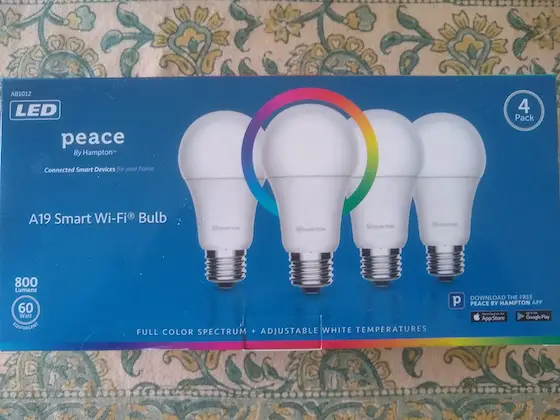
Peace normal smart LED bulbs

How to Prevent Bats in Attic | Yes, the things in this box will prevent bats in your attic. Keep reading to understand WHY.

How to Prevent Bats in Attic - Very Easy

IMPORTANT Author Note: After this column was featured in the July 4, 2021 newsletter, a subscriber was kind enough to share her frightening and expensive story about a bat encounter. It's at the bottom of this column. I URGE you to read it.

Bats frighten many people. The movie industry cranking out horror movies has helped foster the image that bats are evil and put in the same category as serpents.

The truth is bats are, for the most part, harmless and they're really good at eating pesky insects. But when it's time for them to rest, you don't want them doing it in your attic for goodness sake!

Where do Bats Sleep or Rest?

Bats sleep or rest in dark places. They're nocturnal mammals and are awake and moving about feeding when it's dark. They prefer darkness to sleep just as many humans do. For this reason, bats seek out caves, dark places behind shutters, house and barn attics, or a dim or dark corner of a room.

How do Bats Get in my Attic?

Bats can get in your attic via:

  • small holes in your roof
  • a gable-end ventilation vent
  • a hole in a soffit
  • a gap in roof or chimney flashing
  • a gap in a roof ridge vent

The hole or gap can be quite small. Bats are similar to mice and they can contort their bodies to get through very narrow gaps, cracks, and small holes. A gap just 1/2-inch wide by 3 inches long is plenty of space for a bat to pass through.

Watch this video to see all the possible places where a bat can enter your attic:

What are Bat Valves?

A bat valve is a device that allows bats to exit where they sleep and roost but prevents them from re-entering the attic or dark place as dawn arrives. You can purchase these yourself and install them in the holes that bats are using to go in and out of your attic. Watch this second video showing the installation of a bat valve:

What is the Best Way to Prevent Bats in Attic?

The best way to prevent bats in your attic is to install bat valves and once you know they're gone, seal up the entry holes or gaps.

The second-best way to give bats the bum's rush is to install several bright LED smart light bulbs up in your attic.

Peace normal smart LED bulbs

Here's a pack of 4 Peace LED smart bulbs. CLICK or TAP HERE to get quality smart bulbs now.

These bulbs can be controlled using an app on your smartphone and will automatically come on and go off so you always have bright light in the attic during the daylight hours.

The bats abhor bright light and they'll leave the attic on their own to find a dark place to roost during the day. Keep reading to see why this light bulb method is the CHEAPEST way to remove bats from an attic.

What Does it Cost to Have Bats Removed from an Attic?

It might cost you well over $1,000 to have a professional come to remediate bats. A friend of mine spent $1,500 in the summer of 2020 to have bat valves installed and then the entry holes sealed up.

How Much Does it Cost to Have LED Bulbs On?

Let's say you install two 8-watt LED bulbs that produce the same light as a traditional 75-watt incandescent bulb. Assume you pay 15 cents for every 1,000 watts of energy you consume. Assume the lights will be on for 12 hours a day.

Each bulb will consume 2,880 watts each 30 days. So in one month, the bulbs will consume 5,760 watts. Your cost would be about 87 cents. In a year, you'd spend about $10.45 for the electricity.

You can see why it's probably a very smart move to install the smart bulbs FIRST to see if you can evict the bats from your attic before you hire a professional. No matter what method you choose, you want to seal up the gaps or holes to prevent the bats from entering in the first place.

Author's Note: My college degree is in geology, not electrical engineering like Craig McCluskey. Craig is a subscriber to my free newsletter, read the above, and politely pointed out my calculations were wrong about energy consumption. Here's what he sent:

"I realize you have a geology degree, not electrical engineering as I do, so bear with me.

There is an analogy between using electricity and driving a car. Watts is the rate of using energy* as speed (miles per hour) is the rate of covering distance (miles).

So we have:

Car        |   Electricity
------------------|----------------
miles per hour  |      watts
miles       |    watt-hours

In rewriting that portion of the column correctly:

Let's say you install two 8-watt LED bulbs that produce the same light as a traditional 75-watt incandescent bulb. Assume you pay 15 cents for every 1,000 watt-hours (which is 1 kilowatt-hour) of energy you consume. Assume the lights will be on for 12 hours a day.

Each bulb will consume 2,880 watt-hours (2.88 kWh), each 30 days. So in one month, the bulbs will consume 5,760 watt-hours (5.76 kWh). Your cost would be about 87 cents. In a year, you'd spend about $10.52 for the electricity.

* If you want to get technical, Watts is Joules/second and energy is Joules. Hope that helps.

Regards,

Craig

Homeowner Bat Story:

About 2 years ago, my husband Steve was in the bathroom and realized there was a bat in there with him! He immediately got out of the bathroom, then slowly went back, took a towel, and chased the bat out of the window. This is absolutely the WRONG thing to do, and we found out the hard way.

We had a wildlife outfit come the next day to bat-proof the house (thankfully, no bats were in the house, because they're a protected species in NC and if they're nesting in your house, you have to wait until the babies leave the house before you can bat-proof it!).

As Steve was discussing what he'd done with the bat expert, when Steve mentioned that the bat had touched his arm as he chased it out the window, the fellow immediately paused and gave Steve a very long look. Then he told him that his company requires them to get rabies shots if they've ever touched a bat in the process of performing their jobs. The reason being, he said, was that you can be scratched by a bat or even bitten and not know it because their claws and teeth are so tiny.

We also read in later information that if you've been sleeping and find a bat in the room with you and then you chase it out, you will need to get the rabies shots as well, because you can't know if it touched you.

Naturally, to say that was very concerning was an understatement! Of course, you can't take a chance with something like that, so Steve had to get the rabies shots series. The good news is that they aren't the horrific shots of old. The bad news is that here in NC the first shot, which consists of a gamma globulin shot as well as a rabies shot, has to be given at a hospital. Which means an emergency room. So as soon as you walk through the door, you're in for an "emergency room" charge as well as any other high hospital charges.

He never even saw a doctor at that visit--a PA saw him. He got those two shots. Then the protocol requires another 3 shots given on a very specific time frame--as in, you have to have them on a particular day--not one day earlier or later. Steve couldn't get to the NC Health Department to get the remaining shots (which charges about $350 or so for each shot, but is only open from 8 to 5 and only has one location here in Raleigh), so had to go back to the hospital to get the remaining shots. In the end, the total charges for these shots, for which he never saw a doctor, or never was admitted to the hospital, was $20,000! Insurance, thankfully, did cover part of it, but we're still making payments on the $4,000 that was our part of the fiasco.

The lesson here is: If you find a bat in your house, DO NOT chase it out. Confine it as best you can wherever it may be and immediately call animal control so that they can capture it and test it for rabies (sadly, this means killing the bat). Or, if you really want to make it leave your house, be SURE you're covered head to toe with heavy clothing, a hat and gloves, and as much protection you can put on you so that it doesn't touch you as you chase it out.

I wish we had known these things before this episode, and we'd be $4,000 richer. Whenever the subject of bats comes up when I'm having conversations with other people, I always bring up this story so the same thing doesn't happen to someone else.

Thanks for reading this long missive!

Happy Fourth of July!!!

3D Printed House Cost

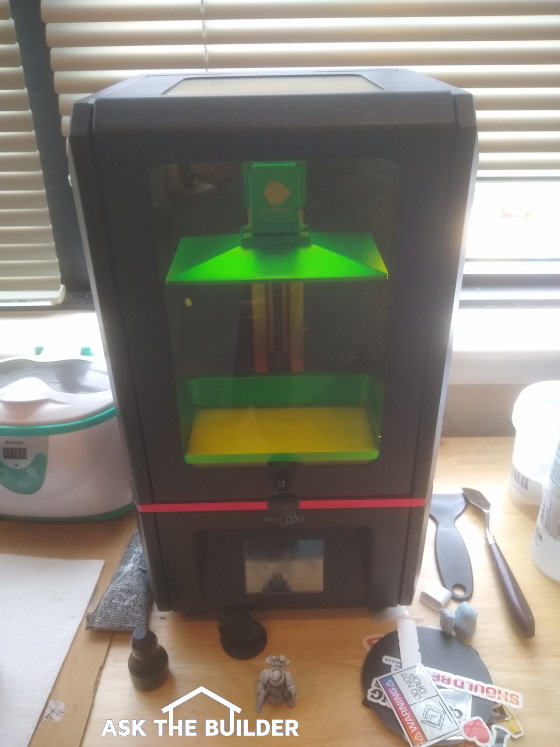
3d printer

3D Printed House Cost | This is a 3D printer. It could print a tiny house for a model railroad. You need a giant machine to print the walls for your home.

3D Printed House Cost - It's Not All Unicorns and Rainbows

You may wonder if the new belle of the ball, 3D printed house, is really going to cost you less money to build than a normal house. Some publications fawn about new techniques like these and only share the glitter and gleam of the technology. This is nothing new as decades ago lots of bold promises were made about geodesic dome houses and A-frames. Both were flash-in-the-pan trends and only time will tell what will happen with 3D printed homes.

I prefer to roll up my sleeves and deal in reality when it comes to what a 3D printed house cost might be. Let's unpack what's in play.

What's Really Different About a 3D Printed House?

The only thing that's different about a basic 3D printed house vs. one built with lumber is the exterior walls. You can build a 3D printed house where all the walls are made with the concrete batter that oozes out of the machine nozzle, but for sake of this column, let's just consider the exterior walls.

A concrete mortar created with sand and Portland cement is extruded through a moving nozzle. Layer after layer of this mortar is placed precisely by a computer-controlled machine. The resulting wall takes the place of a traditional wood-framed wall that could have been built in a factory using similar precision technology.

Keep in mind that a traditional single-story house built with wood wall panels made in a factory can be ready for the roof in less than one day. I'm talking about comparing apples to apples with a 3D-printed house. Let's assume any square footage less than 2,000 square feet for sake of discussion. So don't get wowed when the 3D printed house folks tell you it's a huge time saver.

Other than that, everything else in the house is pretty much the same as a normal frame house. Watch this short video to understand the technology:

What are the Drawbacks of a 3D Printed House?

There are lots of drawbacks or hidden bugaboos with 3D printed homes. Almost all of these factor into the cost of the 3D printed home and some may actually cause the price of the home to go up. The following questions are ones you should be thinking about asking a 3D house builder.

The following is not a complete list of drawbacks or questions you might ask. These are just a few of the major ones that are tumbling around in my tiny gray cells as I write this column.

Mobilizing the Giant 3D Printer

Imagine what it costs to drive the giant machine to your job site, set it up, calibrate it, and then take it all apart once the job is complete. Are there any extra foundation or site requirements to ensure the machine is completely stable as it operates? Do you need to pay for a crane twice to lift it off then put it back on a flat-bed tractor-trailer?

Quality Control of the Mortar

How is the quality and integrity of the cement mortar controlled at the job site? Is this mixture created by workers on the site or brought from a ready-mix concrete plant? How do you know if the material has enough Portland cement in it?

Exterior Insulation

The exterior walls are solid concrete. Masonry is a poor insulator and heat is sucked into cold masonry faster than water entering a sponge. How do you achieve a R-rating for exterior wall insulation that will meet or exceed the energy code recommendations? CLICK or TAP HERE for a table of exterior wall R-values for all USA states.  Do you have to build a wood-frame wall inside the exterior wall and then add fiberglass? Do you glue closed-cell foam to the inside of the exterior walls?

Building In Cold Climates

The concrete mortar used to build 3D printed houses contains water. You can't allow this water in the oozing mortar coming out of the printer nozzle to freeze before it achieves a certain PSI strength. CLICK or TAP HERE to understand what's in play when working with concrete in cold weather. Yes, you can add anti-freeze chemicals to the mortar mix to help prevent freezing, but check into how these chemicals affect the long-term strength of the concrete mortar.

That said, what are the limitations of building a 3D printed house if the weather forecast for the day the printer is turned on is for a high of 20 F with a low temperature that night of -3 F? What extra costs are involved to prevent the wet mortar from freezing?

Installing Electric in Exterior Walls

How are electric outlets installed in exterior walls? The National Electrical Code is quite specific about the requirement of having outlets every 12 linear feet on walls in rooms. It's quite obvious the electric is added later after the 3D printer is moved to the next job site. How is the electric work done and what does it look like? Will it be the industrial look with metal conduit and boxes screwed to the exterior walls?

Plumbing on Exterior Walls

It's common to have a kitchen sink on an exterior wall centered on a window. How do you install the plumbing drain pipe and the required vent pipe in the 3D printed wall? Don't let the builder or plumber tell you they're going to use a modern air-admittance valve (AAV)! These mechanical devices with moving parts eventually fail allowing sewer gas to enter your kitchen. You don't want an AAV, believe me.

Kitchen Cabinets

Many houses have a kitchen wall or two on an exterior wall so you can get natural light into the room. How are kitchen base and wall cabinets attached to the rough 3D printed concrete walls? How do you deal with countertop backsplashes on these exterior walls? What extra costs are involved dealing with the rough surfaces?

Interior Wall Surface

What is done is you don't like the look of the rough 3D printed concrete? How do you get a smooth interior wall? What does this cost?

Exterior Wall Surface

Most of the 3D printed homes I see the exterior concrete layers are just painted. What happens if you don't like this look? What if you want a brick, stone, wood, vinyl, or other exterior surfaces that might appeal more to your tastes?

Don't fall for the sizzling sales talk when it comes to 3D printed home cost. Use your own tiny gray cells and imagine other questions that you might want to ask before you decide this is the path to take.

This column was featured in the July 4, 2021 AsktheBuilder Newsletter.

Column 1413

June 27, 2021 AsktheBuilder Newsletter

I can tell by the smile on your face that you're new here. How exciting to get your first issue of my newsletter! I recommend we dance to celebrate. CLICK or TAP HERE to see what song is swirling around in my head! It should make you feel pretty happy.

That said, you may remember another song I shared a while back. It's a duet that might flood you with lots of dreamy memories of when you were a little younger. It does for me, that's for sure! CLICK or TAP HERE and take a few deep breaths.

"It Didn't WORK!"

A few days ago, I got an email from a woman claiming my Stain Solver didn't get algae off her exterior cedar shakes after two attempts at using the product. She was pretty frustrated.

I'm sharing this because there are two teaching moments in this situation. This same scenario plays itself out each day thousands of times with countless products. Heck, you may even have been upset when some product you bought didn't work as advertised.

Her last sentence was, "...I ended up cleaning it with straight bleach."

OUCH!

In your opinion, what was the first thing she did wrong? Think a moment before you settle on your answer.

In my opinion, she didn't STOP and jump on the phone to call us for help after it didn't work the FIRST TIME. She immediately blamed the product, when it could have been an oversight on her part. Based on my experience, I'm sure she was not using the Stain Solver the way I show in all the Stain Solver videos.

When you have a problem with any product, STOP using it and either CALL the manufacturer or visit their website to see if there are better instructions than what's on the label, how-to videos, etc. Don't be so quick to pull the trigger on the product being bad.

In the case of Stain Solver, there are thousands of homeowners who have used it to make their cedar shakes look BRAND NEW. I've cleaned thousands of square feet of cedar with it so I know it works.

Here's the second teaching moment. Why is bleach - chlorine bleach - bad for wood? Well, if you saw the photo she sent me of her RUINED cedar, you'd never even think of splashing it on wood. Her cleaned cedar, which is supposed to be a stunning reddish-brown, is now WHITE as a ghost. Frustration when mixed with a dash of obstinateness is the recipe for bad jujumagumbo!

FREE BIDS - Local Contractors

Get FREE BIDS for any job inside or outside your home. You’ll get calls within an hour.

Fun Rechargeable Batteries Quiz

Did you know that there are enough disposable one-time-use AA batteries THROWN AWAY each year that if put end to end they'd circle our Earth Ball just about three times? Are you one of these people adding to the 235 tons of batteries THROWN AWAY EACH DAY?

Do you purchase normal AA or AAA alkaline batteries for things in your home or business? Have you ever done a price comparison between alkaline batteries vs rechargeable ones? What about the chargers? Are there big differences in chargers?

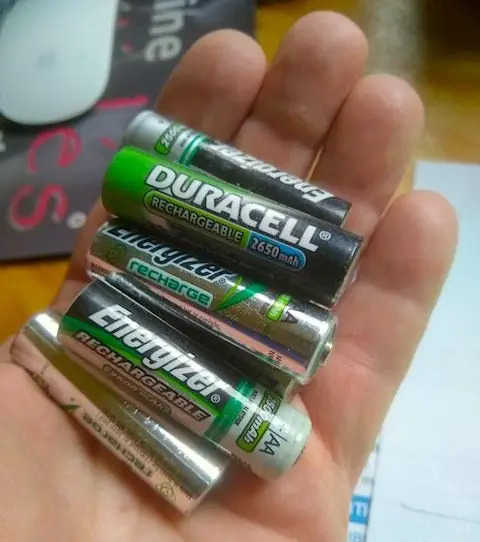
rechargeable AA batteries

I urge you to take this really short fast fun quiz to see what you know or don't know about rechargeable batteries. I'm in the process of reviewing some of the BEST rechargeable batteries I know of and will report my findings SOON. CLICK or TAP HERE to take the fun quiz.

Bogus Invention Claim

A few days ago, I received the following email from Rusten:

"I'd like your thoughts on a new invention to keep rain water out of people's basements."

He also included a link to a website showing this new invention.

Having a degree in geology with a focus in hydrogeology - the study of groundwater - I'm a sucker for anything that might help STOP water from going into basements.

Well, I went to the website and was stunned to see a silly hinged downspout diverter that flops down when rainwater flows down the downspout. The aluminum channel goes down like a castle drawbridge and DUMPS the water 3 feet from your home.

This is NOT THE WAY to STOP water from entering a basement. No way. No how.

CLICK or TAP HERE to see how to STOP WATER from entering your basement or crawlspace.

That's enough for a Sunday.

If you get up early on the East Coast and are reading this, I'll be outside in a portable screened shelter on my amateur radio. This weekend is the annual Field Day.

I've set an ambitious goal and will try to make contact with no less than 150 other operators in a 24-hour period. I'll be using just 5 watts of transmitting power, my radio will be powered by a 12 Ah battery, and a solar panel will be charging the battery.

That's the point of Field Day - to get out in the field and practice using all your radio equipment under emergency conditions. It's easy to stay in a shack and do radio. It's quite another thing to be in a cage fight with bugs, the heat, and possible rain storms.

That's why the primary sell line of ham radio is:

When all else FAILS...

Yes, some of us operators know how to get outside, setup communications, and save lives and property using our own personal equipment. CLICK or TAP HERE to see how I train to do this each year.

Tim Carter
Founder - www.AsktheBuilder.com
Pre-Sale NEXT WEEK - www.StainSolver.com
Field Day - www.W3ATB.com

Do It Right, Not Over!

P.S. Tell me, do you think you know the right way to connect a deck post to a pier? My guess is, no. CLICK or TAP HERE to see if you were right.

Rechargeable Battery Quiz

Rechargeable Battery Quiz

Connecting Deck Posts and Piers

Connecting Deck Posts and Piers

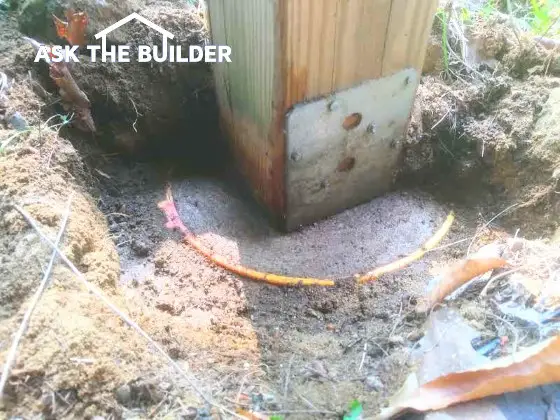
Connecting Deck Posts and Piers | This is a 6x6 treated post connected to a poured concrete deck pier that extends down 54 inches into the soil. Copyright 2021 Tim Carter

Connecting Deck Posts and Piers - Use the Right Hardware

QUESTION: Tim, you helped me years ago and now I’m back. I’m going to build a freestanding deck at my house during my vacation. After watching lots of online videos, I’m somewhat confused about how to connect the deck posts to the concrete piers. What is the best way?

I’m worried about my freestanding deck swaying back and forth. The top of the deck is going to be about 7 feet up in the air. My goal is to have the deck rock solid. What should I do to make this happen? Ron S., Richmond, VA

You may have ambitious plans like Ron. A deck could be in your immediate future. Even if you’re going to hire a contractor to build your new deck, you might want to heed the advice I’m about to dole out to Ron. I say this because each week I receive lots of photographs from homeowners like you who have hired contractors to do work. The photos of the mistakes make me shudder!

How are Deck Foundations Different From House Foundations?

Ron understands that his deck needs to rest upon concrete footings or piers. That’s a great start. What’s important to realize is a deck foundation is much different than most house foundations. A house foundation typically has a continuous footing and foundation under all the bearing walls. This distributes the weight of the structure over a much larger square foot area under the house than what’s happening under a deck.

A freestanding deck is not much different than a card table that has four legs. All of the weight of the table and whatever is on it transfers to the floor. This weight is concentrated on just the four small bottom pads of the table legs. A table and all the things on it might just weigh fifty pounds. A deck fully loaded with people attending a party, the deck itself, and all the deck furniture might weigh several thousand pounds.

How Much Weight Is On Deck Piers?

Do the math as to how much weight is pushing down on each deck post and you see why you need to have concrete piers resting on solid soil. Keep in mind if you live where the soil freezes, the bottom of this concrete pier must be deeper in the soil than the frost penetrates. Your local building department can advise you as to the frost line in your area.

What Diameter Should a Deck Pier Be?

In almost all cases, a 2-foot-diameter pier is sufficient. This pier can get smaller as it comes up to the surface of the ground. A 1-foot-diameter pad at the top of the pier is plenty of space to place a 6x6 or 4x4 wood deck post.

deck pier form

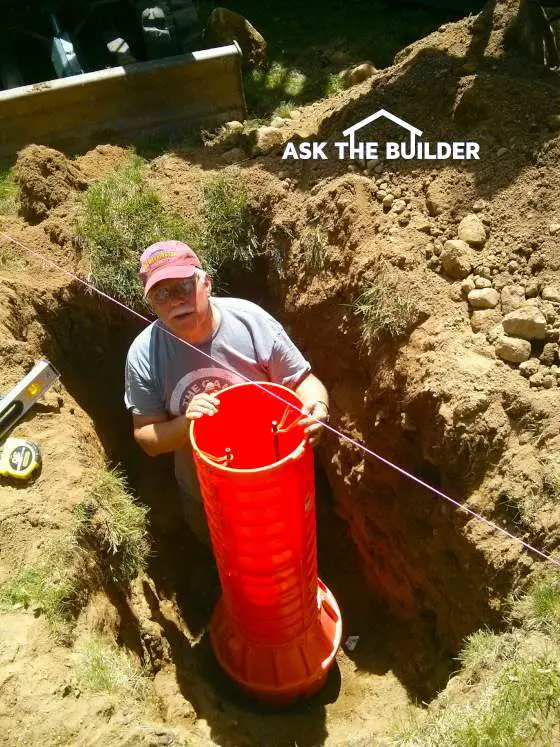
Note how the bottom of the pier is bigger than the top. This is me setting a deck pier form. Yeah, they need to be that deep in the ground in New Hampshire to prevent frost heave. (C) Copyright 2021 Tim Carter

Should Deck Posts Be Fastened to the Concrete Pier?

The deck post must be fastened to the concrete pier. It’s best to place a long 1/2-inch anchor bolt in the wet concrete that will be used to bolt down a heavy galvanized metal deck post base. There are quite a few designs and I prefer to use ones that allow for a little adjustment of the post base if the anchor bolt is not in the exact perfect location.

stair cleat with simpson post bases

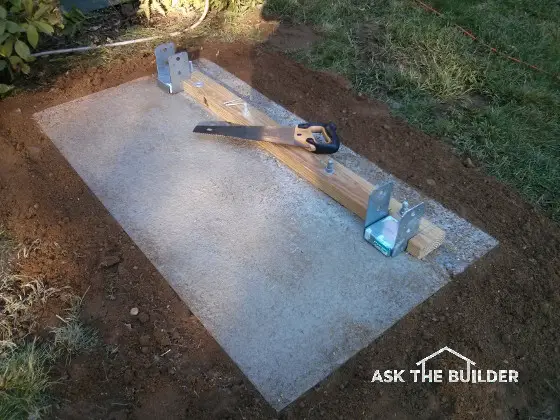
These are two metal post bases bolted to the thick concrete landing pad for a deck stairs. These post bases are for the bottom newel post for the staircase handrail. You can use these metal bases for connecting wood posts to concrete for many purposes. Copyright 2021 Tim Carter ALL RIGHTS RESERVED

Many of these post bases are designed so the wood post sits up off the poured concrete pier. This is a good idea as you don’t want the treated wood to be buried in the soil. I’ve personally pulled treated lumber out of the ground that was eaten up by termites. I’ve seen treated lumber rot that’s been in constant contact with wet or damp soil.

Should I Use Roofing Nails to Connect the Post to the Base?

Be sure that you use the proper galvanized threaded bolts to attach the wood post to the metal post base. Never use roofing nails. Roofing nails are not structural fasteners. You need high-quality hot-galvanized bolts that can withstand the corrosive environment that’s in play at the bottom of the post base. The copper in the treated wood when mixed with rainwater will start to corrode steel or iron that’s not protected by a thick galvanized layer or two of zinc.

Is it a Good Idea to Hire a Structural Engineer?

The best money Ron can spend on this project, and you should consider it too if you’re building a deck like his, is a consult and simple plan from a local residential structural engineer. These professionals can develop an easy-to-understand plan that shows all the proper bracing that needs to be installed so the deck will not sway.

CLICK or TAP HERE to get FREE BIDS from local structural engineers.

The Internet is littered with videos of deck collapses. People have died and been seriously injured when a deck collapses. I know a young woman who fell from a collapsed deck. She broke her neck and ruptured her spleen yet somehow survived albeit in bad shape.


How Much Weight Do People Add to a Deck?

Imagine what the combined weight is of thirty adults dancing up on a deck. It can easily be over two tons. 30 x 150 pounds average = 4,500 pounds! Dancing can create a harmonic motion that starts to get amplified as the people all dance to the same music. It’s a recipe for disaster if the deck doesn’t have abundant diagonal horizontal and vertical bracing.

For starters, think about what corner fence posts look like on a ranch. The corner fence post almost always has two diagonal braces that extend either direction from the top of the corner post down to the base of the adjacent fence post. This brace prevents the top of the corner post from leaning over towards the row of posts as the fencing is stretched. Your deck needs these same braces.

The engineer will not only call out the type of bracing that’s required, but he’ll also call out exactly how you connect the braces to the framing. His plan will show exactly what hardware or fasteners to use. If the plan calls for a 1/2-inch-diameter through-bolt, don’t drill a hole larger than 1/2-inch diameter. You always want structural fasteners to fit snuggly in the holes.

Column 1411

June 20, 2021 AsktheBuilder Newsletter

Welcome, especially if this is your first issue. I love saying "Hello!" to you and every other new subscriber right up top here.

That said, you may be a very seasoned subscriber. Do you happen to recall the video I did that shows you how easy it is to drill a hole in just about any steel item you may have around your home?

Keep in mind that if you're drilling thin metal, clamp it down and wear thick leather gloves. CLICK or TAP HERE to see how easy it is to drill holes in solid steel.

FREE BIDS - Local Contractors

CLICK or TAP HERE to get FREE BIDS for any job inside or outside your home. You’ll get calls within an hour.

Where Are the Fans?

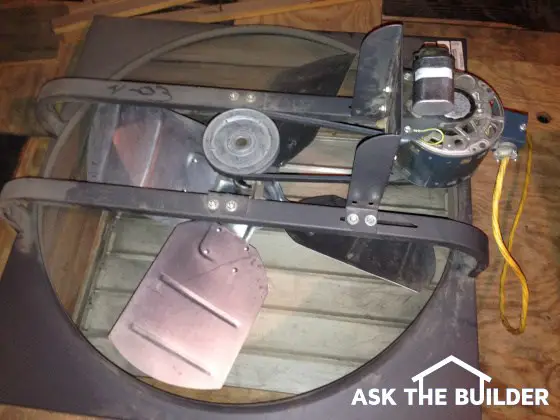
Lewis Greene emailed me asking, "Why do you rarely, if ever, see whole-house fans in new houses?" Here's one:

whole house fan

How would you answer Lewis?

Here's mine. Whole-house fans were just part of the technology and comfort step ladder. They were very popular after the great WW II and could be found in the attic of many houses. As time progresses, new technology and products trump older ones. That's happened to whole-house fans.

In the 1960s, central air conditioning started to become affordable to the masses. I distinctly remember the outdoor compressor unit being installed in my childhood home.

Prior to that, sleeping on sweltering summer nights in our brick-oven of a house, was almost torture. After the AC was installed, I thought I had died and went to Heaven.

Once people started to see how wonderful it was to have a central air conditioner lower both the dew point and the temperature in a home, they were all in like a game of Texas Holdem'.

Whole house fans work great in climates like New Hampshire and other parts of the world where you have dew points in the mid 50-F range. But if you're in New Orleans, Houston, Orlando, or steamy Miami, you'll kick that whole-house fan to the curb faster than you can say "Alexa, turn down the temperature."

Attention Architects & Draftsmen/women

I know I've mentioned several times that I draw plumbing isometric drawings for anyone that needs to secure a plumbing permit.

When I start to draw, the first thing I do is look at the plan and imagine I'm the plumber. I need to see how I'm going to get the pipes to all the rooms they need to be in.

Multi-story houses pose problems and I'm seeing a disturbing lack of foresight on the part of the person who's creating the floor plans. These people are not looking out for the plumber, much less the HVAC installer who has bigger ducts, nor are they thinking about how in the world you're going to get a 3 or 4-inch pipe across a ceiling and down a nearby wall.

Keep in mind it's always best if you can keep vertical plumbing stacks inside interior walls. Putting one in an exterior wall would always be my last choice for a host of reasons.

Rarely was this an issue in old homes. I rehabbed many an old home in my youth and the architects of old understood that you need to have interior walls that are aligned with bathrooms above.

If you're getting ready to build a new home, I urge you to get your plumber and HVAC man involved early in the planning process. You'll never regret doing this.

Magic Roof Paper

Close your eyes. Oh, wait, if you do that you can't read.

Imagine a paper product made with Teflon components that reflects the sun's heat and even sucks heat out of the interior of a home.

The author of an article about this claims it's so great it can make it so you don't have to use AC in your home. Here was the headline of the article. Realize an editor may have created the headline:

New Sustainable Roofing Material Can Naturally Keep Buildings Cool Without A/C

Does this sound too good to be true? It does to me.

My tiny gray cells came up with this partial list of questions:

How does this material stand up to hail and the sun's destructive UV radiation?

What would a roof covered in paper look like? Similar to the houses covered with blue tarps after Hurricane Katrina?

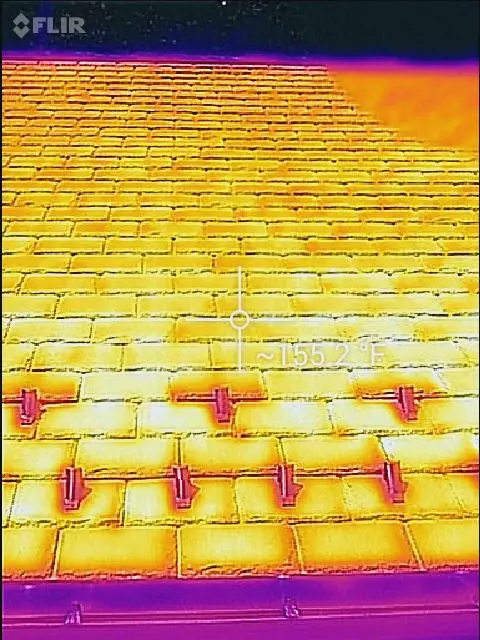
What happens to the heat? Look at this photo of what my roof temperature gets to on a summer's day:

Flir camera roof photo

Think LONG and HARD about that last question of mine.

What is happening to the heat the paper vacuums from the inside of your home?

The point I'm trying to make is be really careful of products that make incredible claims. Don't become a lab rat. Have someone else you know install it at their home and see if it really works.

That's enough for Father's Day. I intend to do some outdoor radio today and kayak for sure. I may be tempted to ram wake-boarding boats that play their music TOO LOUD.

Tim Carter
Founder - www.AsktheBuilder.com
Pre-Sale SOON - www.StainSolver.com
Field Day Next Week! - www.W3ATB.com

Do It Right, Not Over!

P.S. Answer me honestly. Do you know how to SQUARE a foundation, a wall, a patio, etc. WITHOUT using any crazy math, including algebra? I know how and share the secret HERE.

How to square a building

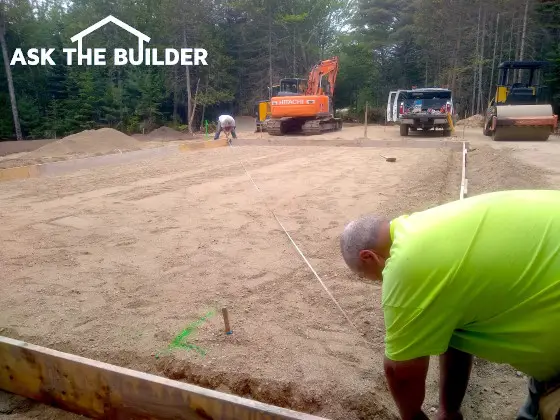
These two men are checking the diagonal measurement for the forms for a concrete slab. They want to make sure it’s square. Copyright 2021 Tim Carter

How to Square a Building

How to square a building

How to Square a Building | These two men are checking the diagonal measurement for the forms for a concrete slab. They want to make sure it’s square. Copyright 2021 Tim Carter

How to Square a Building

Last week, a 75-year-old man submitted a question on the Ask Tim page of my AsktheBuilder.com website. I get quite a few each week and answer each one. This particular question put a huge smile on my face because it screamed “ATTITUDE”.

Connie, yes it can be a name for a man, said, “I am going to attempt to build my home myself using some subs to do various work. I am going to do the footing and foundation. How do I lay out my batter boards with a string line to make sure my piers are all straight and in line?"

Can you imagine the excitement he’s feeling about starting this project? Don’t you love a positive attitude like this? To be sure it needs to be mixed with realism as to what he can do physically. I was immediately reminded of Harry Andrews who build the one-of-a-kind Loveland Castle along the banks of the Little Miami River in a suburb of Cincinnati, Ohio.

Harry set a goal in 1927 nearly a decade after serving in World War I. He decided to build the massive castle and continued to add stone after stone until his death in 1981. While Connie’s house dream is much more modest, I admire people who set goals and do their best to achieve them. We should all take a lesson from Connie and Harry!

Connie asked a few of the right questions but he didn’t touch on a few really important ones about what needs to be done when you decided to build a foundation. Let’s start to unpack the process and I’ll share some of the common pitfalls I see many professional builders make.

Why is Foundation Height Important?

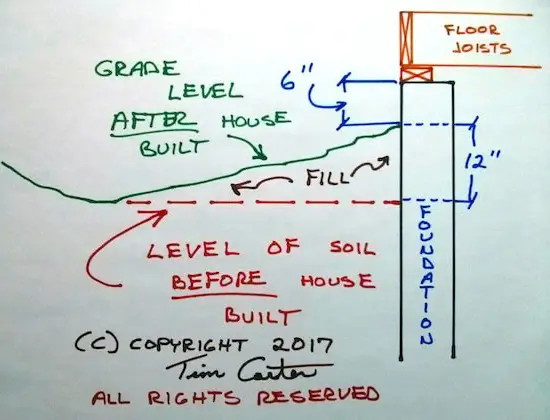
The height of the foundation is perhaps one of the most important things to consider. All too often I do autopsies on water-infiltration issues homeowners suffer because the top of their house foundation is too close to the ground surrounding the house. Drive through some older neighborhoods in your city or town and it’s not uncommon to see the top of the foundation 30, or more, inches up out of the ground! Click or tap here to discover so much more about foundation height and why it's so very important.

CLICK or TAP HERE to get FREE BIDS from local foundation contractors who can get things square.

How High Should A Foundation Be Above Ground?

The building code, which happens to be a set of minimum standards, states that the top of the foundation must be no less than 4 or 6 inches above the ground that touches the foundation. But wait, there’s more! The ground must then slope away from the foundation a minimum of 6 inches within the first 10 feet of horizontal distance from the foundation. Confused?

foundation height above grade sketch

What this means is that your foundation should simply mimic the top of a hill where all the ground around the foundation slopes away so you have great water drainage and surface water doesn’t flow towards the house. Remember, the numbers above are minimum requirements. You can create more fall if you want.

How Do You Square a Foundation or Wall?

In my opinion, the next most important step is to make sure the foundation is square. Connie didn’t mention this, but I’m sure he’s aware of it. You were taught how to do this all those years ago in high school geometry class. Remember when you grumbled under your breath sitting at your desk saying, “When am I EVER going to use this silly formula about right triangles?” Well, today is the day.

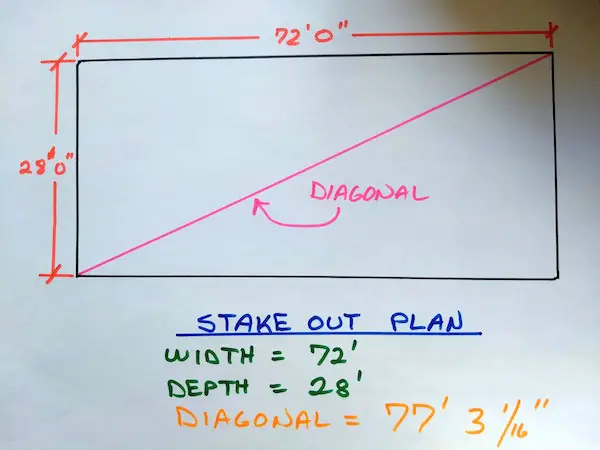
The really amazing thing about this is you don’t need to know any math at all to get a rectangle square. After all, a rectangle is simply two identical right triangles smashed up against one another. Here’s what Connie, or you, need to do to get the batter boards or form boards for a foundation square.

The first step is to make sure the measurements of the opposites sides of each leg of the rectangle, or even a square, are the same. For example, if Connie’s house slab measures 45 feet by 28 feet, then he needs to make sure the two opposing form boards do measure 28 feet and the other two are exactly 45 feet. That’s easy to check.

You then make sure all four sides are straight. Now you stretch a tape across the diagonals of the rectangle and see what the measurements are. If you’re lucky, they’ll measure exactly the same. This means the form is perfectly square as you’ve got two identical right triangles.

stake out plan drawing

That diagonal will be the same for the opposite two corners when the rectangle is square. Can you see you have two identical right triangles stacked on top of one another? It's best to create one of these simple drawings before you get out to the job site. Double-check the diagonal calculation. TAP THE IMAGE to get the cool calculator I use to do this.

But if the diagonal measurements are different, you need to pull one side of the forms so the one diagonal measurement shortens. Have someone hold the opposite side of the forms so they don’t move while you pull. As this happens, the short diagonal measurement will automatically lengthen. You don’t need to have a calculator or know any algebra. It’s magic! You can do the same thing to get frame walls, or decks, or anything square.

But if you do want a fantastic construction calculator that will rapidly calculate the diagonal measurement, CLICK or TAP HERE. Get any of the ones made by Calculated Industries.

construction calculator

This is a superb construction calculator. I've had tremendous success with Calculated Industries products. CLICK or TAP on the calculator to have it in your hands in days.

Connie needs to make sure the top of his foundation or piers is level. This is accomplished using a traditional builder’s transit or a newer fancy laser level.

As for getting piers in line, just stretch a mason’s string tightly across boards set away from the foundation corners. Be sure the string represents the outer face or center of the piers and you just use a level to plumb down to ensure the pier forms are where they need to be. I’ve got much more about all this in past columns on my website. Go check them out for more hidden building secrets.

Column 1410

June 13, 2021 AsktheBuilder Newsletter

Did you just subscribe to this newsletter in the last few days? Welcome aboard! This top paragraph is where I extend my gratitude for your trust. Trust is an interesting concept. I recently saw a TV commercial that got me thinking about how important it is. But more on that later in the newsletter.

You, though, might have been part of my crew for so many years you might recall when my Roofing Ripoff book debuted. It reads like a murder mystery that you can get through in less than one hour.

CLICK HERE to read the first three chapters for FREE!

roofing ripoff book cover

Remember when I was hot and bothered about my 30-year asphalt shingles that were beginning to fall apart in just nine years? Well, the cosmic tumblers aligned perfectly enabling me to interview a top official in the asphalt shingle industry.

I had to promise his identity would never be revealed. For this guarantee, he spilled the beans about why my, and your, shingles were falling apart.

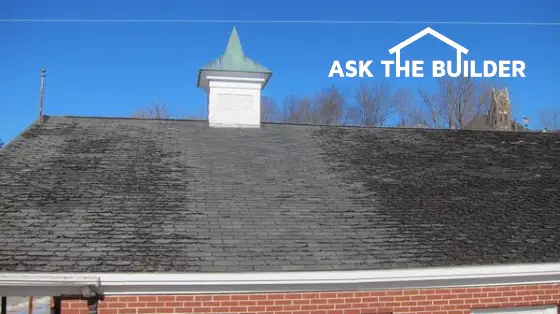
But that’s not the best part. As you help me get to the bottom of the debacle, you’ll discover I was the first person in the world to discover that a wide copper strip on the top of your roof will dramatically extend the life of your shingles, assuming they’re new or in great shape.

Look at the photo below to see proof. Look really closely and tell me if you can figure out the prevailing weather direction.

Post Office Roof
Imagine having your new asphalt shingle roof last for 40, 50 or more years. HOLY COW!

It’s all in my Roofing Ripoff book. If you’re going to be putting a new roof on soon, you really need to peruse it. Trust me, I guarantee you’ll be aghast at how you and millions of others were played.

But what do I know? I ate lunch sitting on overturned empty drywall mud buckets for 21+ years…

White Residue on Wood

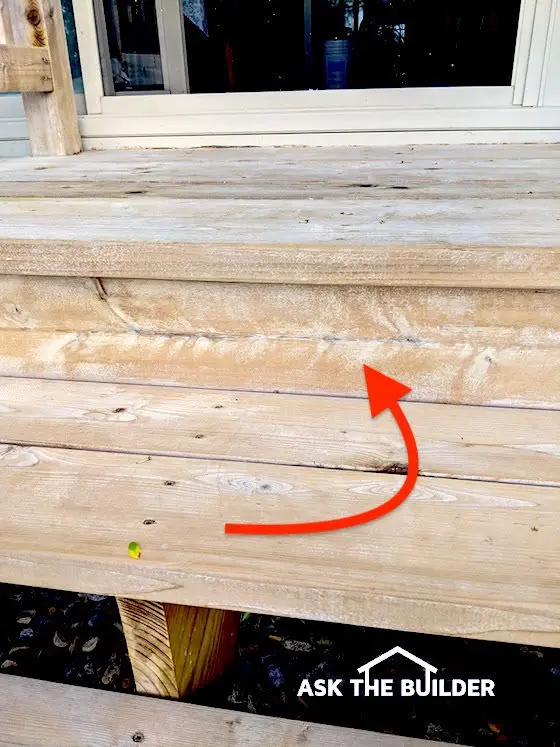
Have you seen this residue on outdoor wood you’ve just cleaned?
white residue on cleaned wood

Do you know what it is, what causes it to appear, and how to get rid of it?

But most importantly, do you know how to make sure it NEVER COMES BACK AGAIN?

I know the answers to all those questions and more. Days ago, I decided to create a wonderful 2-page PDF file that will allow you to save all sorts of time and headaches in the future.

CLICK or TAP HERE to gain access to it.

FREE BIDS - Local Contractors

Man Shoveling
CLICK or TAP HERE to get FREE BIDS for any job inside or outside your home. You’ll get calls within an hour.

Easy Wood Fascia

Wall-mount doors are gaining in popularity. But some don’t want their home to look like a barn. Now realize, I’m not saying barns are bad!

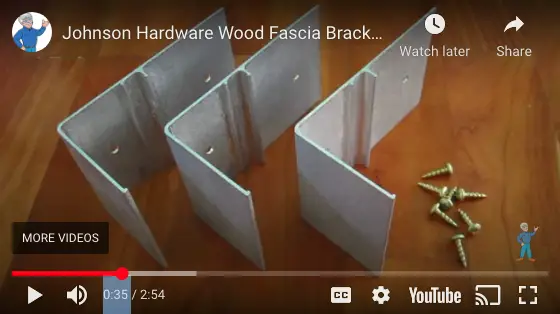
What if you could find magic simple easy-to-install hardware like this to solve the conundrum? Look:
wood fascia brackets

CLICK or TAP HERE and then tell me what you think of this absolutely amazing invention.

While watching my latest video, you may note there appears to be a defect in the lens. For some reason, it’s not registering hair pixels on top of my head and in one scene it created some strange distortion of my upper torso. I’ve since sent the camera in for testing.

Common Sense Might Be Uncommon

About a week ago, I was watching TV and started to howl with laughter. It was a hokey huckster commercial selling this miracle product you can spray on the outside of your home to make algae and mildew disappear. I felt like I had stepped into a time machine and was standing next to a traveling snake-oil salesman’s wagon in a tiny dusty out-West town 150 years ago.

The name of the product is not important as you’ll immediately identify this commercial. If your vision is poor, you may not be able to discern that much of what you saw in the commercial was CGI - computer generated imagery. That’s what you see in many of the big-screen action movies.

In other words, what you’re seeing is FAKE. There’s lots of fake stuff out there inundating you and me each day. It’s your job to separate the wheat from the chaff. But I can help.

While trying to control my laughter, I was immediately reminded of a product that’s quite similar and has been on the market for years - Wet & Forget. Several months ago, I got an email from another home improvement website pounding their chest about how good the product is. I saved it for this newsletter.

Wet & Forget Email

This past week, I decided to dedicate my syndicated newspaper column, yes, it still runs in over 60+ papers in the USA, to the topic of how to best clean algae off siding.

I BEG YOU TO READ the column to understand why these miracle easy-to-use products don’t live up to their expectations. Peer at the product labels and my guess is you’ll discover both of these products probably contain a VERY TOXIC chemical you’d never ever ever want to spray on the outside of your home. I talk about this chemical in my latest column. CLICK or TAP HERE to read it.

I’ll leave you with this. When you see a website say that something is the BEST and then you discover it’s not, does that shake you to your core? It should. I recall the one script line in the first Spiderman movie:

With great power comes great responsibility.

Stop being played.

Stop consuming fake commercials, fake reviews, fake anything. Instead, start using your tiny gray cells and put all you are seeing and hearing to the smell test.

Who You Gonna Call?
ghostbusters logo fair use act

Bob Abel lives in hot and humid Florida. He reached out to me a few days ago with a question I get all the time. He was asking about a tankless water heater, but it could have been any product. You’ll immediately see how you could ask this question about hundreds of things:

“My wife and I will be building a home in Port St Lucie, FL. We are looking at installing a tankless water heater. The builder only installs these units on the outside of the home. I've heard that this might not be a good option because there is a history of these units "frying" in a hot-weather climate. Your thoughts?”

How might you answer this question?

Imagine you’re on a huge TV game show and you’re on stage in the game where you might win $1,000,000 if you can answer the following question:

Who do you think has the most authoritative answer to Bob’s question?

Tick tick tick tick tick - you only have 15 seconds to answer. Who is it?

Well, we know you’re not going to reach out to Bill Murray or Dan Aykroyd, right?

CLUE: Think product warranty!

The correct answer is the product manufacturer. You read the written installation instructions for each product you’re going to use to ensure it’s being installed correctly so as to not void the warranty.

There’s another nugget of information in Bob’s question. Did you pick up on it?

He said, “I’ve heard that….”

Heard it from whom? Are they an expert? Was it on some forum where clueless people babble on or speculate? Was it from some young contractor with a whopping six months total lifetime experience working with tankless water heaters?

Bottom Line: STOP being so trusting.

STOP TRUSTING everything you hear or see. Question everything for goodness sake.

Each week, I do countless autopsies on horrible homeowner problems where the ROOT CAUSE of the problem is the homeowner TRUSTED the contractor or the person wearing an apron at a big box store.

Please, STOP DOING THIS.

Use your tiny gray cells and shift them into critical-thinking gear.

Invest the time and read the written instructions from the manufacturer. If they’re not clear, then I can help you for goodness sake. I’m happy to call you on the phone.

That’s quite enough for a HOT Sunday in June.

Tim Carter
Founder - www.AsktheBuilder.com
Certified Organic Cleaner - www.StainSolver.com
DX Fun - www.W3ATB.com

Do It Right, Not Over!

P.S. What’s the best exterior house paint? What's the resin or GLUE component of the paint that’s the best? Do you know? Should you know? CLICK or TAP HERE to discover if you were right.