Condensation – Cause & Control

DEAR TIM: This past summer I had a new heating system installed. I switched from radiant baseboard heating to a forced air system. My windows now have condensation forming on them. Is the new heating system producing excessive moisture inside my house? If not, what might be the cause of the condensation. On extremely cold nights the water turns to ice. Is there a solution to the problem? G. I.

DEAR G.I.: Too bad you couldn't have kept the radiant system in place along with your new system. I often think that the best heating system is one that utilizes both radiant energy and air circulation. Don't fret, I have only seen one house in my 25 years of building that did incorporate both systems.

Your new system may be to blame if you had a humidifier installed. The humidifier may be pumping too much moisture into the air. Humidifiers are mechanisms that attach to the sides of the ductwork very near or next to your new furnace. They are often easy to spot since they have a tiny flexible water supply line which connects them to your plumbing system.

If you indeed have a humidifier, check the control dial which regulates its operation. The indoor relative humidity must be adjusted in relationship to the outdoor temperature. As the outdoor temperature drops, so to must your indoor humidity. When you do not control this balance, condensation begins to form on the window glass.

If you do not have a humidifier, I think I know what is causing the problem. Condensation forms on your windows because the glass temperature reaches the dew point as the outside temperature drops. It is the same thing that happens to the grass on an early summer morning or when a cold can of soda or beer is taken outside in the summer time. The air that comes into contact with the cold surface cools rapidly. The moisture in this cooled air switches from the vapor state to the liquid state. The liquid water collects on the cold surface.

In your case, I think your old baseboard heaters produced enough radiant heat to keep your interior glass above the dew point of the moist, indoor air. Your new forced air system will not readily produce the invisible infrared heat that your baseboard heaters provided. This is one reason why radiant heat is so desirable.

The solution to your problem lies in lowering the indoor humidity to a tolerable and comfortable level. You may be able to do this by identifying sources of excessive indoor humidity. Excessively hot baths or showers pump huge volumes of moisture into the air. Try to take cooler showers. Cooking activities that create lots of steam might be the culprit. Try to cover pots to minimize steam rising into the air. Vast forests of indoor plants can produce large quantities of airborne moisture. Investigate to see if there are plants that liberate less moisture than others. I suggest that you invest in a high quality hygrometer. This is a device that measures relative humidity.

Take readings in different rooms each day at the same time. Chart your findings. Observe how much condensation is present on the glass at the same time. If you still have condensation after you have attempted to minimize indoor humidity, you will have to operate a dehumidifier. This device will allow you to extract moisture from the inside of your house. Continue to take humidity readings until the condensation stops or you can't stand the static electricity shocks!
Laminate Flooring

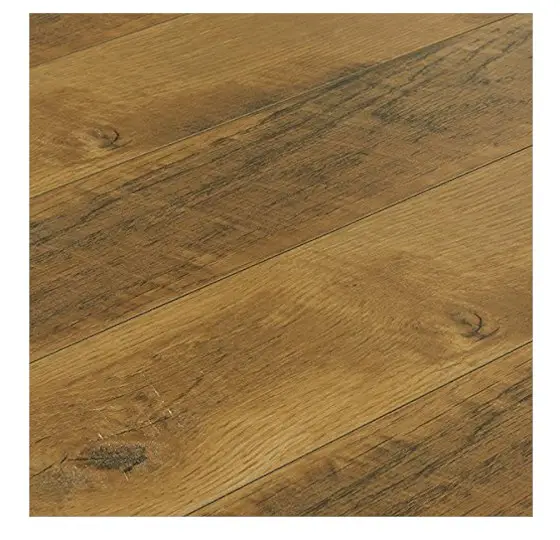
oak laminate flooring

This is the exact product I have in my man cave. You'll trick 9 out of 10 people. They'll think it's reclaimed oak from a barn. CLICK THE IMAGE NOW TO HAVE THIS DELIVERED TO YOUR HOME.

DEAR TIM: My husband and I are looking for flooring for our new home. We have seen samples of the new plastic laminate flooring. Is this the same material that is used for plastic laminate countertops? Do you feel it is the ultimate flooring product? Are there limitations as to where it can be used? S. T.

DEAR S. T.: Plastic laminate is not really new. It has been in production and use for over 25 years. It is a European product that was introduced to the United States marketplace in 1994. The manufactures of carpet, sheet vinyl, ceramic tile, and hardwood are concerned. There is a strong possibility that this new flooring material will capture nearly 18 percent of the flooring market in the next four years.

As you might expect, several of the major domestic manufacturers of plastic laminate have jumped at this opportunity. You and I as consumers will benefit. The product will continue to improve and pricing should become even better than it is today. While this new flooring material is by no means perfect, it offers distinct advantages over traditional flooring materials.

The laminate flooring materials actually offer the advantages of traditional flooring materials bundled into one product. These new materials are often installed over a foam cushion. The cushion offers resiliency similar to carpet and sheet vinyl. New printing technology allows the paper which produces the color and pattern to be incredibly realistic. This allows the laminates to compete against hardwood flooring. The space age clear plastic wear-layer can resist cigarette burns and indelible markers. In the past, this advantage was held only by ceramic tile.

If you’re interested in learning more about laminate flooring cost I have an article here.

Ease of installation is another advantage. Laminate flooring can be installed quickly with a minimum of tools. Often they can be walked on the following day. The individual pieces are milled so that they interlock with one another. Special glues are used on the interlocking edges of the flooring pieces. Most laminate products are installed over the existing floor in a floating fashion. The individual laminate planks are not glued or nailed to the floor below. Once the glued edges dry, you basically end up with a singular, giant piece of flooring.

Laminate flooring can be installed over virtually any material. To obtain the most satisfactory results, the existing flooring should be in good, sound condition. It should also be as level as possible. Loose or rotten subflooring, missing tiles, etc. should be replaced or secured prior to covering with laminate. Laminate flooring can, in some instances, be installed over thin carpeting!

This new flooring material is comparable to traditional plastic laminates. However, the clear plastic wear layer is often 20 times more durable than the one on your kitchen countertop. Beneath this hard plastic coating one often finds a 1/4 inch core of medium or high density particle board. The underside of the particle board is coated with a thinner laminate which helps to protect the particle board from absorbing moisture.

Laminate flooring is fantastic but it is not perfect. It can be damaged just like any other flooring. Any floor that is not subjected to excessive moisture is a great location for laminate. Should the particle board core be subjected to moisture extremes, it can swell and buckle. For this reason, it is may not be a good idea to install laminate flooring in a bathroom environment.

If you decide to install it in your kitchen, you must watch spills and how you mop your floor. The high density particle board cores tend to withstand moisture better than medium density cores. Basements that are prone to periodic leaks may cause problems with laminate flooring. Be sure to consult with the manufacturer prior to installing your new floor.

Column 158

Urethane Finishes – Clear & Complicated!

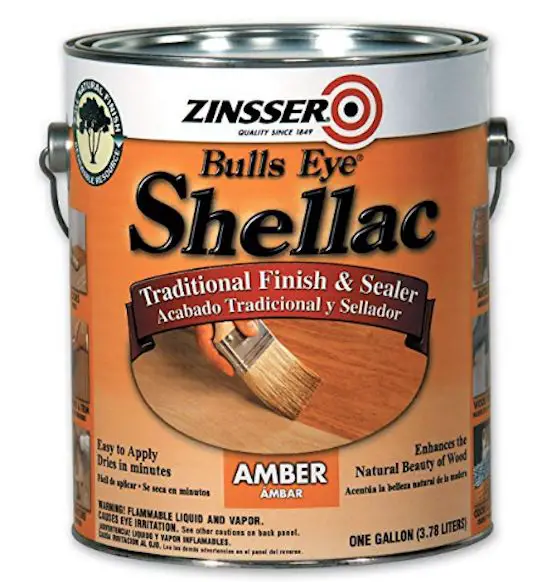
This is the BEST stain blocker you can buy. It's 100 percent shellac. It's also an amazing odor blocker. CLICK THE PHOTO to have it delivered to your home in days.

DEAR TIM: I have been having trouble with my wood front door. The clear finishes I have used all tend to flake off and peel. Is there a urethane that really works well outdoors in harsh sunlight? Or, should I use a traditional spar varnish or shellac? Better yet, should I use the new water-based urethanes? R. A.

DEAR R. A.: Yikes! You couldn't have picked a more bewildering subject. Clear coatings are very complex. There is a big difference between products. A single clear coating will not necessarily perform well on all surfaces. What's more some clear coatings don't stay clear. They can actually develop a patina or amber color over time.

There are two groups of clear coatings as far as I'm concerned. The ones that simply dry and the ones that cure. The coatings that simply dry tend to be old technology. The ones that cure undergo a chemical reaction when they are exposed to the atmosphere. If this chemical reaction occurs favorably, the resultant finish often is much more durable than the old time tested clear finishes.

Shellacs are examples of the clear coatings that simply dry. These products contain resins secreted by female lacc bugs. The deposits are collected from twigs, ground up, and often dissolved in alcohol. After you apply shellac and the alcohol evaporates, you have the exact same bug resin particles. They are simply stuck against one another on your wood.

Linseed oil, traditional oil varnishes, and some urethanes are different. These coatings chemically react with air and sometimes moisture in the air to produce chemically different compounds. The resultant film finish is often much more durable than the products that simply dry. The reason is simple. The chemical reaction causes the ingredients in the coating to chemically bond to one another. Water, chemicals, etc. have a much harder time trying to penetrate this type of finish.

To further complicate the issue, clear coatings are formulated for different purposes. The urethane you need for your front door needs to be flexible to withstand the frequent expansion and contraction of the wood. It also needs to have ultraviolet light (UV) blockers. On the other hand, urethanes for a hardwood floor must have tenacious adhesion and hardness properties. The film has to withstand the twisting motion of shoes with minimal scuffing. Some floor urethanes need UV protection as well since sunlight can stream into certain rooms.

In addition to chemical UV blockers, sunlight protection is sometimes achieved in outdoor urethanes by the addition of finely ground silica sand. This is an ingredient that produces the semi-gloss or satin finish. The sand performs three tasks. It flattens the gloss, absorbs and deflects UV radiation, and the sand powder can harden the finish giving it more durability.

Without adequate UV protection, sunlight penetrates clear coatings and blasts apart the lignin in the upper layers of the wood. The lignin is the glue which holds the wood cells together. If the wood falls apart, it takes the coating with it as it falls to the ground. If your painter applies the wrong urethane to an exterior door film failure can happen in as little as two to three years.

Perhaps the most exciting urethanes to hit the market are the water based ones. Many of these dry crystal clear and they do not yellow. They dry so quickly that you often apply 4 coats in one day. This makes them an excellent time saving product. If you open a can of water based urethane you will likely be fooled. They look milky in the liquid state but dry crystal clear within minutes. I used this product on a cork floor I just installed and I am thrilled with the results.


Garage Storage

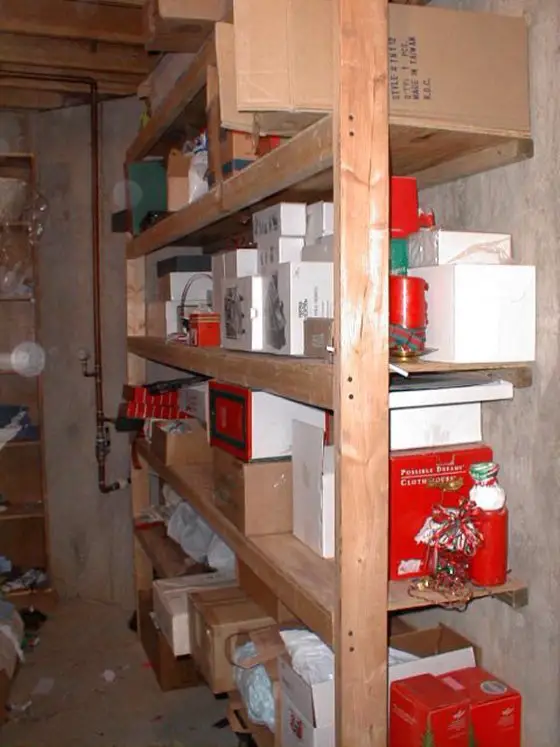
garage storage shelves

DEAR TIM: I need more storage space. As I tripped over some garden tools while taking out the garbage, I noticed how much wasted space is available in my two car garage. Can you offer any suggestions as to utilizing the wall space and floor space in front of my car? I'm looking for simple solutions that I can handle in several days. Is it possible? T. N.

DEAR T. N.: It sounds like you walked through my garage last night. My wife constantly reminds me about my construction leftovers, her garden tools, the kid's bikes, etc. that are scattered about our garage. I believe I can solve your problem and mine at the same time. Here is what we can do.

My guess is that you have certain boxes or objects that are only needed once or twice a year. These objects are going to be placed on shelves that are somewhat out of reach. Things that are used on a weekly or monthly basis will be conveniently located. We will accomplish this by building a series of shelves at different heights and locations within the garage.

The storage space for the seldom used items will be created on the side walls of the garage. Determine the height of the largest object that needs to be stored. Our shelf height will be adjusted to accommodate the largest item. A 16 inch deep shelf usually will be adequate for all but the largest items. This allows us to extract 24 lineal feet of storage for each piece of 5/8 inch plywood we will buy.

The side wall shelves will be secured by using a 2x2 on the sidewall as a cleat. Pieces of 1/4 inch threaded rod, nuts, and washers suspended from the ceiling will hold the front edge level and secure. The threaded rod will pass through a 2x3 that we attach under the front edge of the shelf. The 2x3, when placed on edge, stiffens the shelf so it will not sag. We will put a piece of threaded rod every 6 feet. 2x4 blocks that pass over the ceiling rafters will be drilled to accept the other end of the threaded rod. The nuts on the ends of the rods will allow us to easily level the shelves.

The back wall of the garage is going to be transformed into a solid wall of shelves, bins, and cabinets. Low cost basic cabinets can often be purchased to suit this purpose. If we are patient and/or lucky, we may be able to purchase damaged units at a deeply discounted price. Let's use a piece of 3/4 inch plywood as the top. This thick wood will take much abuse and serve as an excellent work bench.

A series of shelves similar to the sidewall shelves can be built alongside the cabinet layout. We will start our first shelf two feet off the floor. Each successive shelf will be 16 inches above the one below. Instead of using threaded rod to secure the front edge, we can use vertical 2x4's at each corner and at 4 foot intervals. The 2x4's will be simply screwed into the horizontal 2x3's.

I plan to surround the second shelf from the floor with a 1x6 piece of wood. This barrier will restrain all of my kid's baseballs, basketballs, and any other ball or outdoor game piece that would readily fall roll from a conventional shelf. Dividers that run from the front to back of this shelf will help to segregate different sports equipment.

Don't forget to plan for a void space on the back wall to store your lawn mower or wheelbarrow. These items as well as garbage cans can really cause problems as you open and close car doors. I'm quite sure I will put these large items on the back wall in between the two cars. Let me know if you come up with some innovative solutions for your garage!

Scaling Concrete

DEAR TIM: My 9 month old concrete driveway has begun to deteriorate. The surface finish is scaling. My contractor has blamed the defect on my use of deicing salt and that brought onto my driveway by my cars. He refuses to replace/repair the damaged concrete. Is it true that deicing salt is the cause of my problem? Do you think my contractor has no responsibility in this issue? A. R.

DEAR A. R.: Based upon your description of the problem, I am quite certain that your contractor is liable for the damage to your driveway. The deicing salt excuse is often used by concrete contractors who do not install concrete properly or who install it too late in the season. Concrete which is properly formulated, installed, and finished will withstand many years of exposure to freezing temperatures and deicing salts.

Deicing salts melt snow and ice which in turn creates salty meltwater. This meltwater, as well as regular winter rainwater, can and does saturate the upper layers of concrete surfaces. As the temperature drops, the meltwater can freeze within the concrete. Water expands approximately 9 percent in volume when it freezes. This expansion can blast apart concrete which is not formulated and installed to withstand these freezing forces.

Concrete can be ordered from ready mix plants which contains microscopic air bubbles (air entrained). The air within the bubbles acts like mini pressure relief valves. The expanding ice compresses the air within the bubbles. The air absorbs the impact instead of the cement, sand, and gravel Your contractor is also able to purchase concrete with varying amounts of cement and water. Cement is the glue which holds the sand and stone particles together in concrete. Concrete that will experience freezing temperatures requires a minimum of 564 pounds of cement per cubic yard. This is sometimes referred to as a 6 bag mix.


Want perfect concrete work? Find a pro by using my Concrete Work (Sidewalks, Driveways, Patios & Steps) Checklist. I offer a 100% Money Back Guarantee.


The amount of water present during the mixing and finishing processes is critical to the final strength of the concrete. Weak concrete can not adequately resist repeated freeze-thaw cycles. If you add too much water while mixing concrete, it dilutes the fixed amount of cement "glue" that is present in the mix. Sprinkling or spraying water on the surface of concrete or troweling in bleed water during the finishing process dilutes the amount of available cement in the top most layer, that place where it is needed the most!

Concrete formation and strength development continues for many months after the concrete is placed and finished. Ongoing chemical reactions within the slab require water. Thus, it is important for concrete to be cured with a liquid compound, moist cured with water, or tightly covered with plastic to retard or stop moisture loss from the slab for a period of approximately 7 days.

Stop - Purchase Deicing Salt eGuide NowGet a 24-page guide right now that answers all your questions about Deicing Salts. Will it RUIN your concrete? Did you know that salt can SERIOUSLY harm you? What about your expensive landscaping? You can have all these answers and more in less than a minute. Buy it NOW.

Concrete must also be allowed to dry out after the initial curing period. Concrete poured too late in the year still retains water from the mixing process. This water coupled with rain or meltwater can overwhelm the tiny pressure relief air bubbles. Before exposure to deicing salts or extended periods of freezing and thawing, concrete slabs should be allowed to air dry for a minimum of 30 days.

Millions of cubic yards of concrete exist in my city, as well as yours, that have been through years and years of winter weather. These roadways, drives, and sidewalks get repeatedly wet and are frequently exposed to deicing salts. These same concrete surfaces show no signs of scaling. I suggest that you contact your contractor and the ready mix company. They can produce the delivery ticket that will indicate the strength of the concrete, whether or not air was included, and how much water may have been added to the mix once the concrete arrived at the jobsite.

Read my article on  Concrete and Masonry Sealers in the July 2, 2009 Newsletter.

Barrier Free Kitchen Design

DEAR TIM: My husband and I are building a new home. Our plans are to live there for the rest of our lives. What things can we do in the kitchen to make that room barrier free in the event that one or both of us become disabled? Will these modifications add significantly to the cost of the house? R. I.

DEAR R. I.: I commend you for thinking ahead. Currently there are millions of Americans who have some physical disability. It has been predicted that within the next 10 - 15 years nearly half of our population will be 60 years of age or older. Not too long ago I made modifications at my mother's home to deal with her physical handicap. I am sensitive to your thinking.

The challenge is to design a kitchen which will serve you now as you are fully mobile but can be easily adapted at a future date. There are no real design obstacles in the kitchen as I see it.

The overall size of the kitchen is critical. It must contain enough space between cabinets, appliances and islands to allow the free movement of a wheelchair. In most cases this means a minimum of 36 inches between any two points. However, to fully rotate a wheelchair 180 degrees to make a U-turn, you need 5 feet between any two points. If you think backing up a car is bad, just wait till you try a wheelchair!

Your cabinet and countertop layout are equally important. Do not install a standard sink base cabinet. Choose an easily removable sink front instead. In the event that you or your husband become confined to a wheelchair, you will need to access the sink. Be sure that the plumber installs the piping such that an anti-scald valve or motion detector faucet can be easily installed.


Avoid flaws and mistakes when planning your kitchen. Use my Kitchen Remodeling Checklist as your remodel guide. I offer a 100% Money Back Guarantee.


Design your cabinet layout to allow a 60 inch wide food preparation area next to the cooktop. This preparation area as well as the cooktop need to be designed so that they can be lowered approximately 4 inches should it become necessary. Choose a cooktop that has front or side mounted controls. Reaching over a heated burner to adjust the temperature can be dangerous.

Install a wall mounted self-cleaning oven away from the cooktop. Be sure that it is mounted low enough in the oven cabinet to allow for easy access from a person sitting in a wheel chair. You can use gas appliances now, however, the cooktop and oven should be wired for electric usage in the future. It is possible that you or your husband my loose your sense of smell and be unable to detect a gas leak.

All of the base cabinets that you choose should have ample pull out bins, shelves, etc. This allows all of the cabinet contents to be within easy reach of someone sitting in a wheelchair. It is also a handy feature for those who are not disabled. Make sure that you choose D shaped handles for all cabinets and drawers. Avoid knobs as they can be slippery and hard to grasp as time goes on. Magnetic catches on all cabinets doors are handy as well.

The refrigerator choice is important. Select a side by side design. Spend the money for one with a front dispenser for ice and water. This makes it very easy for a disabled person to get ice and water in a jiffy. Besides, it will keep you from yelling at your grandkids to shut the freezer door as they make trip after trip for ice cubes!

Most of the discussed options will cost very little. However, you must discuss these concerns at a very early stage with your builder. If he has an elderly parent or relative, I'll bet he will be very accommodating to your wishes.

CLICK HERE to read about Handicap Showers.

Payment Suggestions

DEAR TIM: My house was severely damaged by a natural disaster. My husband and I hired a contractor who was referred by a friend and whose state license is in good standing. We visited other smaller jobs to review his work. We signed a contract with him to perform $250,000 in repairs. He has taken all of our money and only 1/3 of the work is complete, much of it against code. What should we have done to avoid this nightmare? J.C.

DEAR J. C.: After reviewing all of the details of your story, I can see that this person was a con artist from the start. All of the facts that you have presented indicate that this individual was not capable of performing a job of your scope. Furthermore, it appears that he had every intention of stealing your money. He has no honor and makes life miserable for all honest, stable, and trustworthy contractors.

Some state laws permit contractors to ask for and accept deposit money the day the contract is signed. In many cases, deposit money forwarded by a homeowner to a contractor is nothing more than a loan. You put yourself and your money at great risk if you advance money to a contractor for no good reason. Some contractors use deposit money to pay the bills of other jobs currently in progress. This business practice is often referred to as under-capitalization. In other words, their financial gas tank is running near empty.

Contractors deserve advance money in certain instances. For example, they may have to order custom non-returnable objects such as kitchen cabinets or custom windows or doors. A build/design firm may want the cost of the design work and the building permit covered as these items can only be used on your job. Design and planning costs can be negotiated during the bidding process. Costs for custom materials can be verified by asking for copies of the quotes from suppliers. Honest contractors generally will not hesitate to provide you with these numbers.

I also noticed that you allowed the contractor to begin work without finished, detailed plans that were approved by your local building department. This was a critical error on your part. It is vitally important to have finished plans and specifications BEFORE the contract is signed. The plans should be an integral part of the contract documents. An investment of $250 or so with a attorney to review your contract would have been very prudent. The contract could have contained language telling the contractor that all work must be performed in accordance to the plans and specifications.

Payments of additional monies as the work progresses must be tied to specific progress points. You can agree to pay weekly or monthly for work that is complete and satisfactory. To aid you in determining what is a fair price to pay at each of these times, a detailed cost breakdown of the job costs is required. Had you obtained this breakdown of costs on your job, the money to pay for the yet unfinished work would still be in your possession.

I suggest that you contact your local building department as well. Often these agencies provide written progress reports during construction. These reports tell you whether or not the work is being completed in accordance with the building code laws. Make the contractor submit these reports, if they are available, at each request for payment.

In addition, be sure you receive notarized affidavits from each person who has worked on your property or material supplier who has delivered materials. If your contractor has not yet paid these people, your nightmare is just beginning.

Power Tool Differences

DEAR TIM: I am going to buy a one half inch drill and a circular saw for numerous projects around the house. There is a wide range in price between models. Surely this difference translates to performance and durability. What are the differences between professional power tools and the less expensive DIY power tools? Are the professional tools worth the price? F. R.

DEAR F. R.: Several months ago, I helped a friend build a deck. He insisted on using his power tools. His new DIY drill started to burn up after drilling only four holes through a treated 2 by 6. Even though the one half inch spade bit was sharp, you could stop the drill by simply applying significant pressure against the wood. We put away his toy and finished the job with my power drill.

There are major differences between DIY power tools and those used by professionals. The major components of power drills and saws have little in common with one another. Even the electrical power cords are different!

The outer housing of a professional drill or saw is often constructed using a glass filled nylon type plastic. This material is exceptionally stable, it can resist many chemicals, and it is rarely affected by extremes of heat or cold. DIY power tools usually have an inexpensive polycarbonate plastic housing. Polycarbonate plastics can flex when heated. They can be attacked by many construction type chemicals.

The internal bearings found in professional quality tools are usually ball and roller type. These bearings create less drag when the drill or saw is in operation. Less drag means less heat. Many DIY power tools contain lower quality sleeve type bearings. These bearings can heat rapidly if a significant load is placed upon the tool. My friend's drill must have contained these bearings.

The electrical motor found in a professional drill or saw is almost always more efficient and powerful than that used in a DIY tool. A professional tool will develop more torque or power. This is why my drill bored through the 2 x 6 with little effort. The armature, or central core, of the motor is usually precision balanced in a professional tool. Special high temperature wire is also used in the armature and field windings. DIY tools use unbalanced armatures.

Power drills and saws contain gears and transmissions. These components transmit the spinning movement of the motor to the saw blade or drill bit. The cut steel helical gears found in professional tools produce minimum vibration. Their closely machined tolerances deliver long life. DIY tools usually contain simple powdered metal or spur gears. These parts often create vibrations which lead to accelerated wear and breakdown.

Power cords on professional tools contain rubber. This allows the cord to remain flexible in cold weather. The cords are usually 4 to 6 feet longer than those in a DIY tool. DIY tools have nylon power cords which are stiff in cold weather.

In many instances a professional drill or circular saw often can be purchased for just $40 to 60 more than what you might pay for a DIY power tool. My tools usually last 4 - 6 years before a major malfunction. The average homeowner, in my opinion, would have a difficult time burning up a professional tool. Don't play around, buy some real tools.

Attic Access – It Doesn’t Have to Be a Hassle!

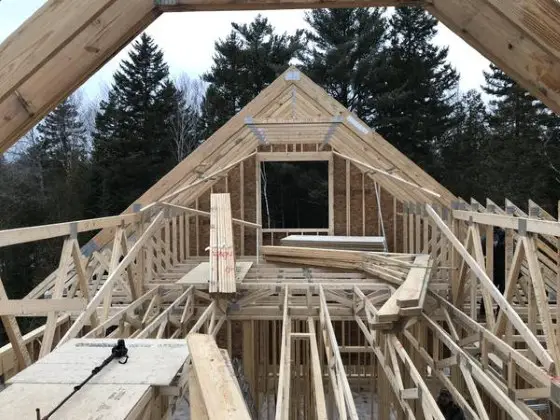
floor truss in attic

Attic Access | This is a new home in 2019 and you can see a giant attic space is being created by trusses. A traditional staircase, NOT a ladder, will allow the homeowners to get up into this huge room.

Attic Access - Traditional Safe Steps are Best

DEAR TIM: My new home has an access panel which leads to the attic area. I am tired of using a dangerous step ladder to get to this part of my home. A folding attic ladder is of some interest to me. However, many of them seem flimsy. What should I look for when shopping for attic access steps? How in the world do you cut the bottoms of the stairs so they fit perfectly to the floor? M. O.

DEAR M. O.: Some of the folding attic steps I have seen and installed are not much better than your step ladder. There are major structural differences in folding attic ladders and disappearing stairways. Some folding attic steps are so weak that they will not support my weight while carrying a 50 lb box up to the attic!

What Should I Look for in a Folding Attic Ladder?

If you decide to purchase a folding attic ladder, there are certain things to look for. Be sure that the stringers (side members of the ladder) and the treads (steps) are at least 3/4 inch thick. Both of these components should also be at least 3.5 inches wide. Some manufacturers use materials that are slightly smaller.

Inspect the underside of each tread. Look for a ladder rod. This is a thin metal rod that passes under each tread. It provides strength. Be sure that each and every tread has this rod.

What is the Minimum Safe Weight Capacity of a Folding Attic Ladder?

Not all folding ladders are made equal. They each have different weight-bearing capacities. The minimum capacity you should purchase is 250 pounds. Some models will handle 300 pounds.

What About One-Piece Attic Staircases?

Many homeowners are familiar with the sectional folding attic ladders. Did you know that you can also purchase and install a true disappearing one-piece stairway? These items are usually much more durable and often are more comfortable to climb. The angle of these stairs is often much closer than that of a regular household staircase.

These disappearing stairways have one piece stringers. They actually operate in a similar fashion as a folding attic ladder. You pull a chain attached to a flush ceiling panel. The stairway rotates and slides gently into position. Some of these stairways can support weights up to 800 pounds.

How Much Ceiling Room is Needed for a Folding Attic Ladder?

The average folding attic ladder will fit where the distance between floors is 8 foot 5 inches to 10 feet. Any elevation between these heights is made by trimming the side stringers. The one piece attic stairway can be ordered to accommodate any floor to floor elevation between 7 foot 7 inches and 12 foot 10 inches.

If you decide to install a folding attic ladder, be absolutely sure to follow the instructions supplied by the manufacturer. Many manufacturers require that 16 penny nails or 1/4 inch lag bolts be used to attach the ladder frame to the rough opening. Resist the temptation to use small finish nails or drywall screws! Using these timid fasteners can result in a serious or fatal injury.

Is it Hard to Trim Folding Attic Ladder Legs?

Trimming folding attic stringers to the exact length is simple. Most of these devices have three sections. Unfold the first two sections until they are straight and point towards the floor. WATCH THIS VIDEO:

Make sure the ladder is pulled down completely from the attic. Take your tape measure and slide it slowly along the top of the stringer. While contacting the top of the stringer it will soon touch the floor. Note the distance between the floor and the end of the second section. Record this measurement. Do the same thing on the top of the other stringer.

Unfold the third and final section of the ladder. Translate these measurements to the top edge of the stringer of the folded section. Fold the third section back up and repeat the entire procedure on the bottom of each stringer. The underside measurements should be less than the top side measurements. Connect the two marks on each side of the stringer. If you have performed your calculations accurately, the mark should be parallel with the floor. Cut the stringers off one eight of an inch on the long side of the line. Check the fit of the ladder sections when unfolded. All of the sections should meet perfectly when the bottom cut is right.

This column was featured in the May 30, 2021 AsktheBuilder Newsletter.


Multi-Colored, Rattle-Free Vinyl Siding!

DEAR TIM: My husband does not like to paint or stain. We want the exterior of our new home to be as maintenance free as possible. Vinyl siding has many advantages, however, it doesn't look like real wood to me. In addition, a friend's house covered with vinyl siding rattles and clatters with every gust of wind. Is there a realistic fade-resistant vinyl siding? What can be done to keep the vinyl quiet on windy days? N. I.

DEAR N. I.: I have got some fantastic news for you and your husband. There are numerous vinyl sidings that will address each and every concern that you have raised. Solving the rattling problem is easy. Your neighbor's siding chatters because of operator error. Not only can we fix her siding, but also we will make sure that your siding will be installed correctly the first time.

The vinyl siding industry, like many others, has witnessed much change in the past 15 years. Some of the first vinyl siding products succumbed to the intense ultraviolet (UV) light from the sun. The UV rays caused colors to fade and the vinyl to breakdown and chalk.

Many vinyl siding companies responded to this problem. They increased the quantity and quality of a pigment called titanium dioxide within the siding. This pigment not only absorbs UV radiation, it also acts as a reflector. Other colored pigments have also been developed that resist UV degradation. These new pigments allow vinyl siding manufacturers to create exciting variegated, or multi-colored, siding.


Installing vinyl siding on your house? Find the best professionals by using my Vinyl Siding Checklist. I offer a 100% Money Back Guarantee.


These new vinyl sidings look like stained natural wood. Some of them look like weathered cedar that you might find on a New England seashore cottage. Don't confuse this coloration with the wood grained texture that virtually every solid colored siding possesses. The new sidings have this in addition to the multiple colors!

Some manufacturers have developed realistic trim pieces to replicate the size and shape of wood corner posts and window trim. When used with the new siding the accessory pieces create the illusion of a real wood house.

Because vinyl siding expands and contracts in relationship to the outside temperature, it is installed in a unique fashion. A 12 foot long siding panel can grow by as much as a quarter of an inch as the temperature rises. To make sure that the siding does not buckle or bow, the siding must simply hang on the wall. All vinyl siding has longs slots along the top edge through which nails or staples are driven. These fasteners must be driven in the center of each slot. In addition, they need to be driven to within one thirty-second of an inch of the vinyl siding. This gap allows the siding to move as it expands and contracts.

The individual who installed your neighbor's siding goofed. The gap between the head of the nail and the siding is probably one quarter of an inch or larger. Wind gusts allow the siding to flap against the house. Fortunately this problem can be fixed. Your neighbor can purchase a simple hand tool to unzip the interlocking pieces siding. Once unzipped, the siding can be properly nailed. Using the same tool, you simply lock the siding back together. This is a job which can he handled by a serious DIY'r. Have your neighbor call a professional vinyl siding installer if they feel the slightest anxiety about tackling this job.

Author's Notes:

March, 1999

Recently the Vinyl Siding Institute introduced a voluntary certification program for vinyl siding manufacturers. Those manufacturers who want to prove to you that they indeed make a quality product now have a mechanism to do just that.

If you want to find out more about the certification program and manufacturers who participate, visit the Vinyl Siding Institute's website (www.vinylsiding.org).