Heat Wave Help – How We Used to Stay Cool

Heat Wave Help

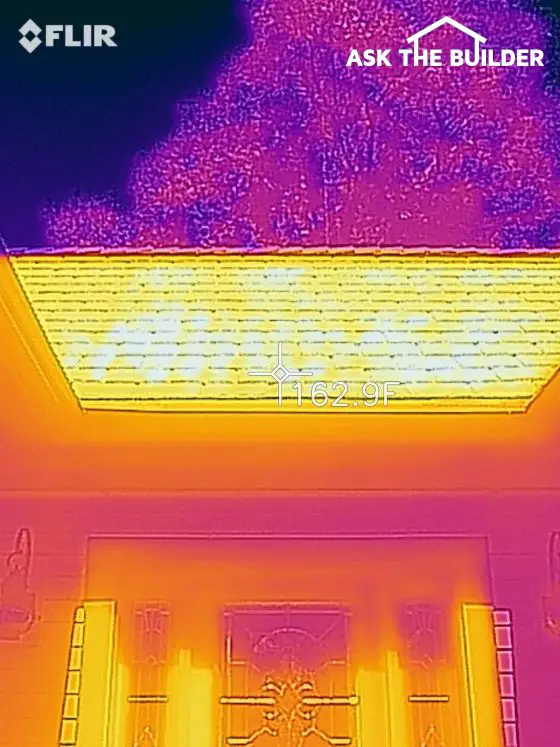
Heat Wave Help - How We Used to Stay Cool | It’s no wonder your attic is blistering hot. My roof temperature exceeds 162 F and that heat radiates into my attic and then into my home. (C) Copyright 2019 Tim Carter

How to Cool My Home - Use Time-Tested Methods

You may be one of the tens of millions of people that have been suffering in the blistering heatwave that had a vicious grip on the Eastern USA during July. I happen to live in central New Hampshire and it was a withering 91 F with a dew point near 70 F this past weekend. That’s rare for this part of the nation and I know it’s much hotter in other locations.

Summer heat is nothing new. Not by a long shot. If you dig deep into weather history and connect it to homes and how our ancestors survived, you’ll discover that builders and homeowners discovered how to cope with the heat and humidity.

You may wonder what’s in play when the sun’s powerful infrared rays strike your home’s roof and windows. I used my infrared camera and captured a frightening image of my roof not too long ago.

How Hot Can A Roof Surface Get?

The south-facing roof shingles, or roof surface, which take a direct strike from the sun, get up to almost 163 F. That’s hot enough to cause second-degree skin burns in seconds should you touch the roof surface. Believe me, that’s the voice of experience talking.

That heat is transferred to the wood framing that supports your roof. Years ago, I recorded temperatures in my house attic of 140 F. The entire roof radiates heat much like a campfire that’s reduced to glowing embers.

This heat is transferred to the inside of your home because the ceiling below your attic starts to get very hot. Once again, think of how a campfire keeps you warm.

I know, you’re wondering all about your attic insulation and why it’s not helping to keep you cool. The reason is simple. Insulation is a building product that slows the transfer of heat. It does not stop it. To stop a large portion of heat transfer, you need a radiant barrier similar to aluminum foil.

Will a Radiant Barrier Product Ruin My Roofing?

I've not done this testing, but I paid attention in my high school physics class. When the sun is beating down on your roof, the heat bounced back by the radiant barrier should always be less, unless the barrier has a concave shape. In this case, it might focus the infrared rays back to the underside of the roof sheathing in a tightly focused area.

CLICK or TAP HERE to read all my past columns about radiant barriers, especially the chips.

Does My Attic Insulation Get Hot?

Keep in mind as the temperature of your attic starts to climb as the sun gets higher in the sky, so does the temperature of the actual insulation in your attic and walls.

The trouble is, the insulation then does the job it’s supposed to do late in the day and early evening. You want your house to cool down, but it’s slowing the transfer of heat from the inside of your house to the outdoors. It’s a vicious circle of one of the laws of physics.

I can clearly remember growing up without central air conditioning in my Midwest home. My mother had all sorts of electric fans we used in the bedrooms to blow lots of air across us to help make sleeping possible.

How Does a Fan Cool Me Off?

Fans help cool you because they increase the rate of evaporation of your body’s perspiration. As the sweat turns into water vapor, it takes some of your body heat with it. The faster you can make this happen the cooler you’ll be - to a degree of course.

Builders years ago built homes with large overhangs so the sun would not enter windows during the hottest part of the day. You don’t see generous overhangs in new homes all too often. This is an example of a building practice that's going from history to legend to myth.

Do Window Drapes Keep a House Cool?

Older homes had drapes over the windows indoors. People would pull these closed during the day to stop the direct influx of infrared rays into the living space. You can coat windows with nearly invisible films to reduce the absorption of infrared into your home if you don’t like drapes.

Will a Whole House Fan Cool My Home?

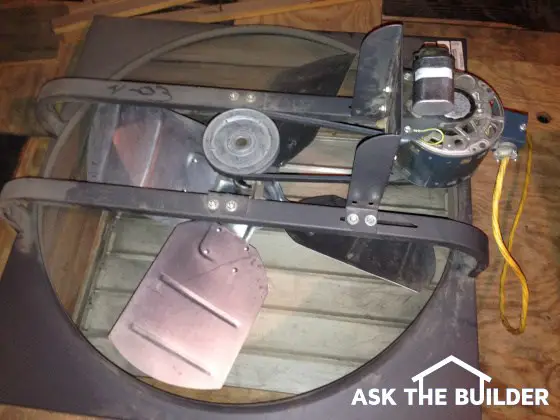
Whole house fans have been kicked to the curb for the most part as central AC seems to be the way to combat hot houses. Whole house fans can do a marvelous job of cooling you down as you can control where the breeze is in your home depending on what windows you open.

Chicken farmers use this ancient technology to keep chickens alive in hot weather. They use giant fans in hen houses that move hundreds of thousands of cubic feet of air per minute. Realize you can never get the temperature below the outside air temperature, but this amount of air moving across your body will rapidly cool you because of the evaporation of your perspiration.

The issue is, you don’t want to be using a whole-house fan while the AC is on. Realize that these giant fans kept millions of families fairly comfortable long before AC was affordable and in widespread use in residential homes.

Are Ceiling Paddle Fans A Good Idea?

Simple ceiling paddle fans in rooms also can help. Just look in the background of old TV shows and movies that take place in hot climates. You almost always see these lazy fans creating a breeze. Do your best to make sure all these simple things aren’t forgotten by new homeowners and young builders!

Column 1311
Picking Exterior Paint Colors – Walk or Drive Around

house paint color ideas

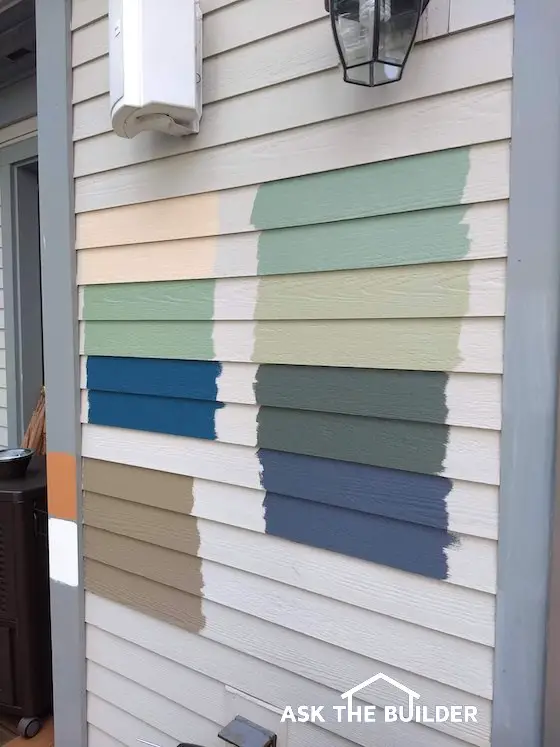
Picking Exterior Paint Colors  | You can do what is being done above on the siding, but there's a faster and easier way. One of these colors may end up over the entire house. Color selection confounds many. Be sure you use urethane house paint once you make your decision. (C) Copyright 2021 Tim Carter

Picking Exterior Paint Colors - Walk or Drive Around

QUESTION #1: Please help me, Tim! I’m trying to select a new color for the outside of my house. I’m frozen and unable to make a decision looking at samples on a brochure. I don’t want to make a mistake. Please share a few tips that can relieve my anxiety like ice cream satisfies my sweet tooth. Deb M., Turtle Lake, ND

You may be like Deb. If so, you’re not alone. Color selection stymies lots of people, including me! The ability to visualize different and complementary colors over large areas, like the outside of a home, is a gift. Treasure it if you have it.

CLICK or TAP HERE to get FREE BIDS from local painters who can help you pick colors.

Is Color-Selection Anxiety Real?

The anxiety surrounding a decision like this is real. You may not want your house to look ugly to others. You don’t have the money to correct a color mistake. You need to get it right the first time.

What's the Best Way To Pick House Colors?

I’ll share with you the same advice I gave my customers years ago. Get in your car and drive around looking at exterior paint colors. Go through neighborhoods looking for houses that look like yours and have a color scheme that you really like. This can now be done sitting in your living room looking at hundreds of house listings on real estate sites. You can also use different social media websites that curate millions of photos of houses.

When Should I Pick the Color Chips?

Once you locate a few colors you like, use the color chip samples from paint stores to get close to the colors that excite you. Purchase a small sample can and paint part of your house with it. Be sure to wash this part of the house with soap and water before applying the paint.

Can Colors Fool Me and Why?

Realize that colors can fool you. It’s important to realize that a color that looks great on a small chip may appear much darker when it dries on a larger area. Paint stores can reduce the color saturation to reduce the boldness of the color by adding not as much of the pigment to the base.

Should the Color Match the Roof?

If your roof makes up lots of what you see when you view your home from the street, you need to make sure the color of the roof compliments the house colors. The same is true for windows you might have that come with a factory color that can’t be changed.

Can Colors Make Me Feel Good?

The key to eliminating your anxiety is selecting colors that make you feel good. Most people have certain colors that create a feeling of happiness. For me, it happens to be bright blues, reds and some greens.

Should the Trim Be a Different Color?

I also recommend that once you feel you have the right colors, remember you can paint the trim a different color than the main body of the house, I recommend you paint part of one side of the house. Stand back and look at it at different times of day to ensure you really feel good about what it will look like when complete.

How Many Colors Can I Use?

Don’t be afraid to have three or four colors on display at your home. The last Queen Anne Victorian house I built for my family had four colors, plus a natural wood-stained soffit. The wood siding was a mild butter yellow, the fascia boards and door and window trim were a lighter forest green, the windows were a dusty beige and our front door was a bold scarlet red. My wife selected the color scheme and we received lots of compliments about it.

Column 1310 A

Cover AC Unit in Winter? – What Does the Mfr Say To Do?

cover ac unit in winter

Cover AC Unit in Winter | Do your neighbors cover their AC unit? Should you? Is there a danger if it's covered? Copyright 2021 Tim Carter

"When you opened up and read the owner's manual about covering your AC unit in winter, what was the manufacturer's recommendation?”

Cover AC Unit in Winter - Simple Question - Not-so-Simple Answer

QUESTION: "Tim, I want your opinion. Is it a good idea to cover my AC unit in winter?" Joseph D., Pingree Grove, IL

This is a question that Joe submitted to the Ask Tim page on my website while his AC unit was working hard in the first few weeks of July. He was looking ahead, and that’s a very good idea. It’s a very valid question that I receive quite often. It’s also part of a deeply disturbing trend I’m witnessing.

CLICK or TAP HERE to get FREE BIDS from local AC contractors who can help you decide to cover your AC unit.

Here’s how I answered Joe, “When you opened up and read the owners manual about covering your AC unit in winter, what was the manufacturer's recommendation?”

Does my answer make sense to you? After all, Joe wanted my opinion.

Joe and I had another brief exchange and my last message to him was, “My opinion doesn’t matter. I don’t support the warranty. There’s only one source for the correct answer - the manufacturer.”

Can the Cover Hurt the AC Unit?

Yes, a cover can cause condensation to form under the cover. The relative humidity can skyrocket to near 100% on sunny days when the sun heats up the covered AC unit.

What Do the AC Unit Manufacturers Say To Do?

The AC unit manufacturers tell you what to do in your owner's manual. Read it and see if they say to cover it and with what exact cover.

Will It Hurt the AC Unit if it Comes on While Covered?

Yes, your AC unit will not be able to get access to the thousands of cubic feet of air it needs to flow over the outside coil.

Why Should I Read the Owner's Manual?

The owner's manual will ensure your AC unit works as efficiently as possible and that you service and care for it correctly.

Have you read many owners manuals? If it's really important to do something to keep the warranty in force or to make sure the product performs well, you'll see text telling you what you should do.

Changing oil and air filters in cars and trucks is a good example. You see this in manuals.

If the AC unit should be covered in the winter, the manufacturer will say so in the manual.

All of your questions about what to do with a product, how to care for the product, how to install the product, etc. should be answered by the company that made the product. Start taking the time to read the full label on products. Invest the time to read an owner's manual. It will pay off in spades.

It’s foolhardy on your part to follow the advice of some invisible person online that will never come to your home to install a new product when their advice falls flat.
Column 1310B

House Paint Color Ideas – Drive Around

house paint color ideas

House Paint Color Ideas | One of these colors may end up over the entire house. Color selection confounds many. (C) Copyright 2019 Tim Carter

"If your roof makes up lots of what you see when you view your home from the street, you need to make sure the color of the roof compliments the house colors."

House Paint Color Ideas - Drive Around & Cruise the Internet Too

Please help me, Tim! I’m trying to select a new color for the outside of my house. I’m frozen and unable to make a decision looking at samples on a brochure. I don’t want to make a mistake. Please share a few tips that can relieve my anxiety like ice cream satisfies my sweet tooth. Deb M., Turtle Lake, ND

You may be like Deb. If so, you’re not alone. Color selection stymies lots of people, including me! The ability to visualize different and complementary colors over large areas, like the outside of a home, is a gift. Treasure it if you have it.

The anxiety surrounding a decision like this is real. You may not want your house to look ugly to others. You don’t have the money to correct a color mistake. You need to get it right the first time. If you need to match a color you love, you better read my matching paint colors column now.

I’ll share with you the same advice I gave my customers years ago. Get in your car and drive around through neighborhoods looking for houses that look like yours and have a color scheme that you really like. This can now be done sitting in your living room looking at hundreds of house listings on real estate sites. You can also use different social media websites that curate millions of photos of houses.

Should I Apply Test Colors?

Once you locate a few colors you like, use the color chip samples from paint stores to get close to the colors that excite you. Purchase a small sample can and paint part of your house with it. Be sure to wash this part of the house with soap and water before applying the paint.

Realize that colors can fool you. It’s important to realize that a color that looks great on a small chip may appear much darker when it dries on a larger area. Paint stores can reduce the color saturation to reduce the boldness of the color by adding not as much of the pigment to the base.

Should I Try to Match the Roof Color?

If your roof makes up lots of what you see when you view your home from the street, you need to make sure the color of the roof compliments the house colors. The same is true for windows you might have that come with a factory color that can’t be changed.

The key to eliminating your anxiety is by selecting colors that make you feel good. Most people have certain colors that create a feeling of happiness. For me, it happens to be bright blues, reds and some greens.

I also recommend that once you feel you have the right colors, remember you can paint the trim a different color than the main body of the house, I recommend you paint part of one side of the house. Stand back and look at it at different times of day to ensure you really feel good about what it will look like when complete.

What About Using More than Two Colors?

Don’t be afraid to have three or four colors on display at your home. The last Queen Anne Victorian house I built for my family had four colors, plus a natural wood-stained soffit. The wood siding was a mild butter yellow, the fascia boards and door and window trim were a lighter forest green, the windows were a dusty beige and our front door was a bold scarlet red. My wife selected the color scheme and we received lots of compliments about it.

July 14, 2019 AsktheBuilder Newsletter

If you're a new subscriber, please stand now.

"Welcome!" (roaring applause from 45,000+ other subscribers)

If you're a long-standing subscriber give yourself a pat on the back for your loyalty. Be sure to tell any new subscriber you see that juice boxes and fruit rollups are never distributed here at AsktheBuilder.com.

GE Washer & Dryer Review

A few days ago, I started to test a brand new GE washer and dryer. Kathy has never been happy with our older front loader HE washing machine that came with the house years ago.

Kathy wanted a top loader like we had at our old house.

ge top load washer

She's got one now and is happy as a clam in warm salt water. I think that's the happiest clams can be, but I'm not a clam expert.

CLICK or TAP HERE to watch some amazing videos of just a few features of this magic machine.

It's important to realize I've just started to test this machine. I've got LOTS of different things I plan to wash, so I'll keep you informed as to the status of the testing.

We also got the matching dryer and I'll have a separate review for that quite soon.

Joe and His AC Cover

A few days ago, Joe from IL asked me a simple question using my Ask Tim page on my website. Well, he thought it was simple. Here it is:

"Is it a good idea to cover my AC compressor in the winter?"

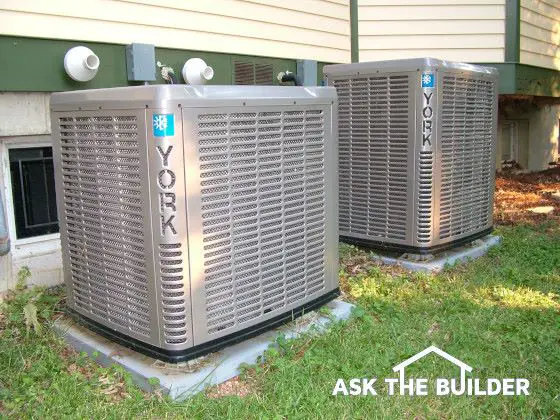
Here's the machine Joe's talking about. You may have one outside your home.

AC compressor

How would you answer this question? Think about it for a moment.

Okay, here's what I sent back to Joe:

"When you opened up and read the owner's manual about this, what was the manufacturer's recommendation?"

A few hours later Joe responded: "There was no recommendation."

I instantly knew that Joe missed the cloaked message in my reply. Did you get it, or did it float by you too?

I responded back once again to Joe telling him to re-read the manual, visit the manufacturer's website FAQ page or call their 800#. He sent back this response moments later:

"I'm looking for your opinion."

I finally had to huff and puff away the fog in Joe's head. I replied with:

"My opinion doesn't matter. I don't support the warranty.

There is only ONE SOURCE for the correct answer: the manufacturer."

WHY AM I SPENDING SO MUCH OF YOUR TIME ON THIS?

First and foremost, I'm getting an increasing number of questions like this.

You may want to know this or that about a PRODUCT.

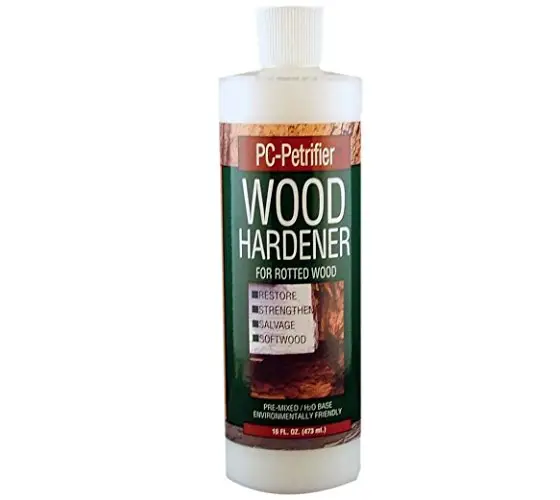
Just last week Iris wanted to know about when to apply PC Woody to the PC Petrifier.

PC Woody epoxy

I see a DISTURBING TREND of people asking others online for advice about how to install a product, what to do with a product, how to care for a product, etc.

If the warranty of a product is in play, do you think it's a good idea to trust a person's advice that isn't going to install a new product for you FREE of CHARGE?

Let's get back to Joe. Here are a few random thoughts that swirled around my head:

I wonder what happens to all the water vapor that gets trapped under the cover?

What happens if someone in the family turns on the AC in the spring and the cover is still on the compressor?

Does the cover make a fantastic dry and wind-proof shelter for a community of wire-nibbling mice?

Do yourself and your bank account a favor. Try doing these things:

Read the Owners Manuals that come with all products.

Read the label on products. Seriously - READ THE LABEL

If the answers you need are not to be found, then reach out to the manufacturer. You'd be stunned how many will respond - especially smaller companies.

That's enough for a Sunday.

Did you discover anything of value in this issue? If so, let me know.

Tim Carter
Founder - www.AsktheBuilder.com
Co-Founder - www.StainSolver.com - Certified Organic Goodness
Purveyor of Invisible Happy Waves - www.W3ATB.com

Do It Right, Not Over!

P.S. The "i" before "e" except after "c" spelling rule has been disproved by science.

GE 4.6 Capacity Top Load Washer Review

ge top load washer

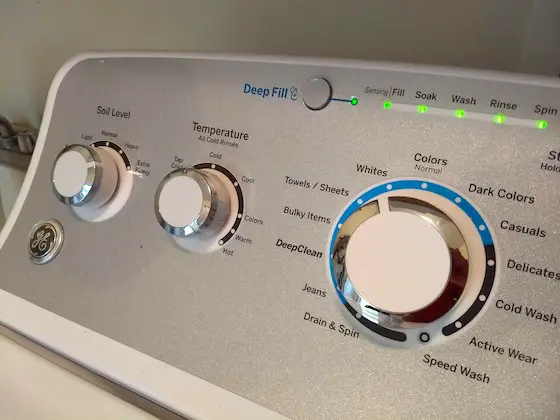
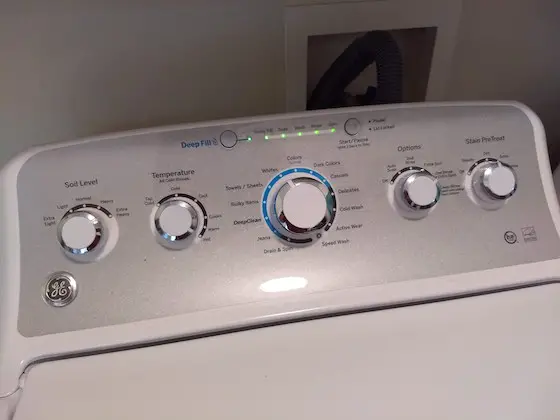
GE Top Load Washer | Here are just part of the controls for the GE Top Load 4.6 cu ft capacity washer. Model GTW500ASNWS Copyright 2019 Tim Carter

GE Top Load Washer - 4.6 Cubic Feet of Clothes

July 12, 2019 - The washer has been installed for just 48 hours. Testing is commencing. There are more photos below the videos. (This was so popular, it was shared in Tim's July 14, 2019 AsktheBuilder Newsletter.

The good news is it works well on the first few loads of normal clothes. I'll have much more information after I perform long-term testing.

May 21, 2020 UPDATE: Look below for the update. It will really PAY OFF for you to watch the videos just below and view my photographs BEFORE you read my update!

CLICK or TAP HERE for the official specs and features page in the meantime. You'll be BLOWN AWAY by all this washer can do. It's magic in a white steel box.

WATCH THESE TWO VIDEOS to get a small taste of what this machine has:

Here are more photos:

ge top load washer

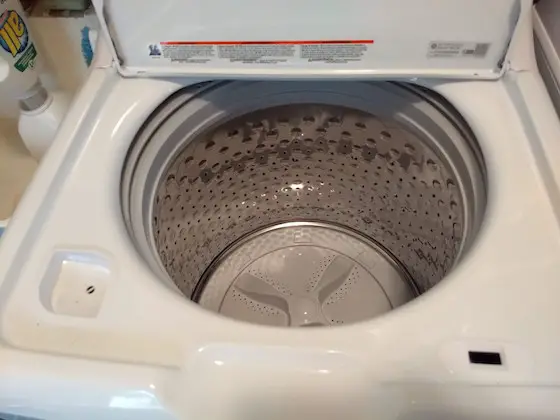
This is the gigantic stainless-steel drum. Notice the infusor impeller at the bottom. You don't need the old-fashioned tall agitator that BEATS your clothes TO DEATH. Copyright 2019 Tim Carter

ge top load washer

This is a wide shot of all the controls. You can control every aspect of your washing cycle. This is a DREAM MACHINE. Copyright 2019 Tim Carter

May 21, 2020 Update:

I'm happy to report after using this machine for almost a year, it's far better than I thought it would be. Everyone in the family loves it.

Is it Getting Clothes Clean Without the Giant Agitator?

Yes! Giant agitators destroy clothes over time, especially delicates. This newer technology is really getting my clothes clean. I've been doing my own laundry since age 8, so I know a thing or two about laundry.

Is the Machine Easy to Use?

Yes! All you do is just start with the controls on the left and make a selection with each one what you want. The machine has inner intelligence and will make sure you don't make the WRONG selection and ruin your clothes.

Is the Machine Noisy?

No. This machine doesn't make the racket that a traditional machine makes.

Is the Tub Big?

It's HUGE! Wait until you see what you can fit in it.

What Other Appliances Have You Tested?

Read about my Sharp Steam Countertop Oven. It's amazing!

Drywall Requires Muscle and House-Cracking Noises

drywall installation

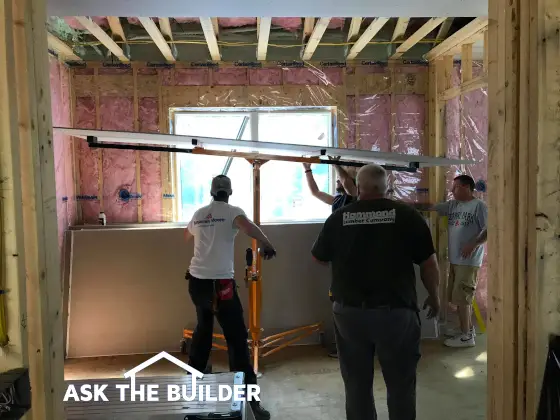
Large sheets of drywall are very heavy. You can rent machines that hold the sheets up against the ceiling. (C) Copyright 2019 Tim Carter

Drywall Requires Muscle

QUESTION #1: Tim, I need your honest advice. I’m seriously pondering installing new drywall in a room addition while I’m on vacation. I’ve watched cable TV shows, numerous online videos and read a few articles. It really doesn’t appear to be that hard. I’ve got a few helpers so I’m convinced we can install the material and finish it. Is drywall work harder than it looks? What are a few tips you can offer to help me complete this with a minimal amount of work and frustration? Mike M., Tyler, TX

Have you been on the receiving end of some of the digital courage that fueling Mike’s positive attitude? It’s easy to get intoxicated by what you see on shows and such. All too often the producers tend to gloss over the hard stuff. After all, if you walked away from a few TV shows thinking everything was too hard to do, you’d probably stop watching. I can tell you that’s the last thing the cable TV channel and producers want you to do!

It’s important to realize lots of books have been written about the craft of drywall installation and finishing. One of the best is the Gypsum Construction Handbook published by one of the top manufacturers of the drywall and finishing compounds - USG Corporation. I highly recommend reading the chapters about drywall so you make sure you’re installing it correctly.

Another key point is the weight of the material. You can now purchase drywall or sheetrock that weighs less than its predecessors, but even the lightweight material’s weight might stun you. Lifting and hold a 4x12 sheet of 1/2-inch drywall over your head while trying to monkey around with the screws and screw gun might extract all the strength and skill you have. I guarantee you’ll be sore the second day.

Installing drywall can be nasty dusty work. Razor knives are used to score, snap and cut the large sheets. Professionals use handy small hand-held routers with special bits to make the cutouts for electrical boxes and other fixtures. You might use a traditional punch saw made for drywall. By all means, do not use a circular saw to cut drywall like you might plywood or OSB!

Be sure you use the correct length screw and recess it just enough so it doesn’t tear the paper facing. Screw guns have precision depth adjustments so you get the screws just right. On ceilings, place the screws on 12-inch centers. On walls, the screws can be 16 inches on center.

Finishing drywall is an art. It requires significant hand-eye coordination. You need to mix the finishing compound so it’s the correct consistency. I prefer to have mine like moist mashed potatoes or warm cake icing. Put too much compound under the tape and you’ll have humps in your walls. Put too little under the tape and you’ll end up with blisters when you second coat.

I recommend that you build a test wall and practice finishing it before you ruin your new room addition. You’ll be stunned how hard it is to get professional finishing results if you’ve never done it before.

How do I feel about drywall finishing? Read about it in the August 4, 2009 Newsletter.

House-Cracking Noises

QUESTION #2: Hey Tim, it’s been really hot here the past few weeks. In the evening while watching TV with my husband, all of a sudden our deck and our house makes a cracking or popping noise. Sometimes I hear it up in the roof, but it’s often a noise in a wall. I’m worried that our house is going to fall apart and collapse. What’s causing the cracking and popping and should I be concerned? Elizabeth B., Knoxville, TN

Elizabeth would hear the same sound if she came to my own home. She’s hearing the lumber and decking moving as they cool down from the extreme temperature swings that happen on brilliant sunny days.

The sun can and does heat up roofs and walls. Here at my own home, my roof temperature gets close to 160 F. The wall siding is just a little below that and my composite decking gets so hot you can’t walk on it with bare feet. Composite decking that’s got lots of plastic in it expands quite a bit when heated.

This heat is transferred to the framing lumber in the roof, exterior walls, and deck structure. If you pay attention in the late morning, you might also hear cracking and popping as the lumber is expanding.

When the sun is setting the house material starts to cool down and it contracts. This movement can create a cracking sound much like when you crack a knuckle or an ankle tendon. It’s normal and not a reason for concern.

I’d only start to be concerned if I saw cracks in the interior finishes that started growing in size. If you are extremely concerned, you can hire a residential structural engineer to inspect your home and confirm all is well.

July 7, 2019 AsktheBuilder Newsletter

You could be a new subscriber. Be sure to let me know if I'm able to save you some time and money with this issue.

You may be a subscriber that's been here for quite some time. If so, ring the bell or sound off if I've helped you too.

The summer heat is building here above the Equator and I thought I'd devote this issue to help you keep your cool and SAVE YOU sweet moola.

Concrete Crack Repair - Not Too Hard

concrete slab crack

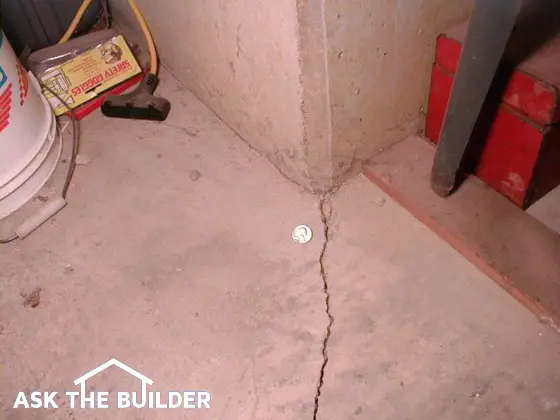
That's a nasty crack in a concrete slab. There are a few ways you can repair it.

CLICK or TAP HERE to see what I feel is the best product for this job. GREAT VIDEO at this page.

Is Your House HOT?

Are you suffering in your house even though you have central AC?

ac units
CLICK or TAP HERE to understand why you may not be as comfortable as you could be.

Poor-performing AC can be caused by many things. Here's a partial list:

Your AC compressor could also be low on refrigerant, the outside coil could be dirty, the flow of air around the outside unit could be blocked by leaves or other debris, etc.

The bottom line is there are MANY THINGS that need to be right for you to be cool as a cucumber.

Tim, What About Those Solar-Powered Attic Fans?

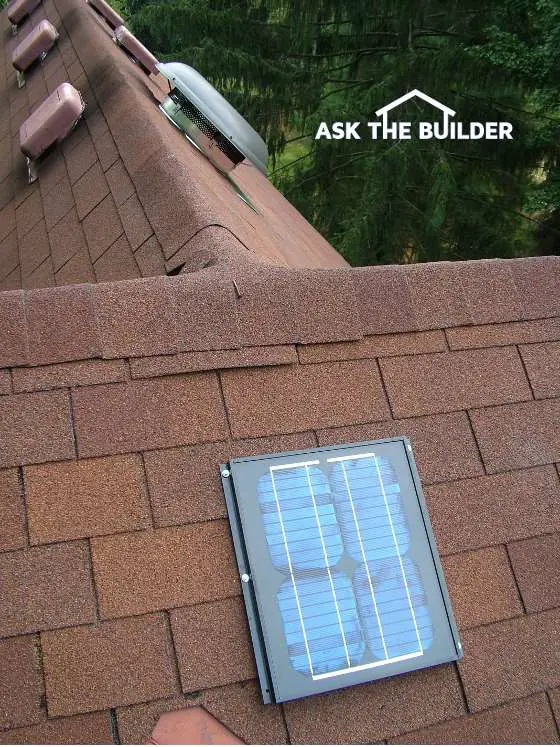
You mean these?

Solar Powered Attic Fan

Before you go any further, I want you to think about teriyaki chicken wings, or a bucket of crispy fried chicken. Yummy!

Think how that was made possible in the dead of summer for a second. Do you know what farmers have to do to get tasty chickens to your table? I didn't think so.

Okay, now you can CLICK or TAP HERE to see why solar-powered attic fans are, for the most part, hype and a classic case of an emotional fuzzy-feel home improvement purchase in all too many cases.

Hey Timbo! What About Whole House Fans?

You mean these?

whole house fan

Whole house fans work really well in certain situations. Is your home a candidate?

CLICK or TAP HERE to discover if you can employ one of these bad boys to keep you cool on a HOT day!!

That's enough for a HOT Sunday. It was blistering hot here in central NH yesterday with oppressive humidity. The dew point around 2 pm was 78 F.

Yes, I know where you are it could have been much worse.

I'm wearing a brilliant blue shirt and my patriotic bow tie to church today at the request of some who attend my church. They wondered last week if I'd wear the tie today or last Sunday as the 4th of July was almost perfectly in the middle of the week. I wore a red, white, and blue shirt last week with the patriotic bow tie.

Tim Carter
Founder - www.AsktheBuilder.com
Certified Organic Super Cleaner Man - www.StainSolver.com
When All Else #FAILS - www.W3ATB.com

Do It Right, Not Over!

Window Flashing Tape Leaking

window flashing tape

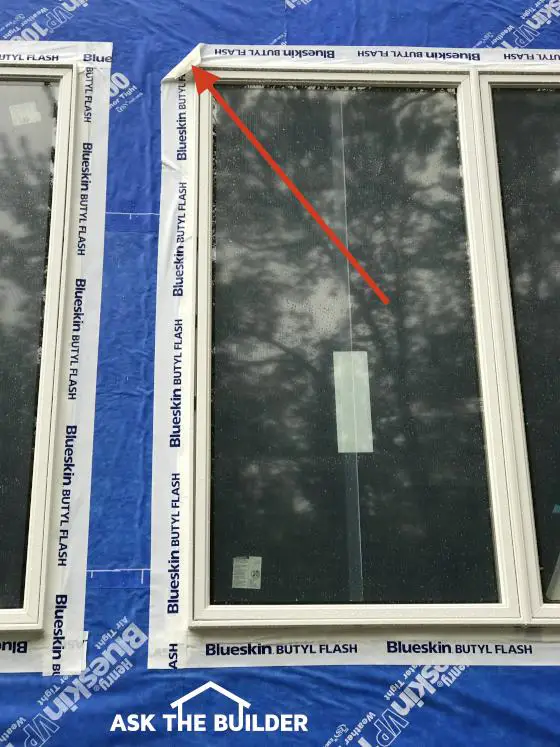
Window Flashing Tape Leaking | The red arrow points to white flashing tape that failed to adhere and water leaked into this new home. This construction method flies in the face of decades of hard-earned knowledge that produces leak-free construction. (C) Copyright 2019 Tim Carter

"That remarkable simple and effective building detail is being sacrificed at the altar of Build-it-Faster."

Window Flashing Tape Leaking

I’ve been wanting to write this column for years. The topic has been a burr under my saddle, but I needed to base the column on proof, not speculation. That proof arrived last week in a desperate phone call from my son-in-law. He and my daughter are building a new home in Downeast Maine and water was leaking into their home across the top of windows just days before the drywall was to be installed. I predicted this might happen, and sure enough, it did. It’s important to realize I’m not the builder of this home but am their principal advisor.

A second event happened last week that’s directly connected to this column, but you might not immediately see the significance. An intense rainstorm caused the Pemigewasset River here near my house to flash flood. The raging water uncovered a hidden cofferdam at an abandoned mill next to the river. No one had any knowledge of this dam that was buried under 10, or more, feet of sand for possibly 200-plus years!

Livermore Falls Cofferdam

This cofferdam was uncovered in a flash flood on the Pemigewasset River in the late spring of 2019. It lay buried under as much as 15 feet of sand for possibly 200 years or more. Copyright 2019 Tim Carter

I’ve been aghast in the past few decades at a growing trend in the residential construction industry that is burying hard-earned tried and true construction methods that were developed and used by builders for centuries. I’m talking about the explosion of flashing tape that’s being installed around countless windows and doors in homes and room additions all across the USA, and possibly the world for that matter.

This disturbing trend reminds me of the powerful writing of J.R.R. Tolkien in his masterpiece The Fellowship of the Ring. Tolkien wrote, “And some things that should have not been forgotten were lost. History became legend. Legend became myth. And for two and a half thousand years, the ring passed out of all knowledge.”

I referred to this same quote in chapter one of my Roofing Ripoff expose’ book I wrote about why your asphalt shingle roof is falling apart before your eyes. Each day old craftsmen and craftswomen die and unfortunately take their knowledge to the grave. New young builders are left to try to come up with solutions to problems on their own. Engineers at companies are tasked with the same conundrum if they fail to pay attention to older engineers.

water leak new door

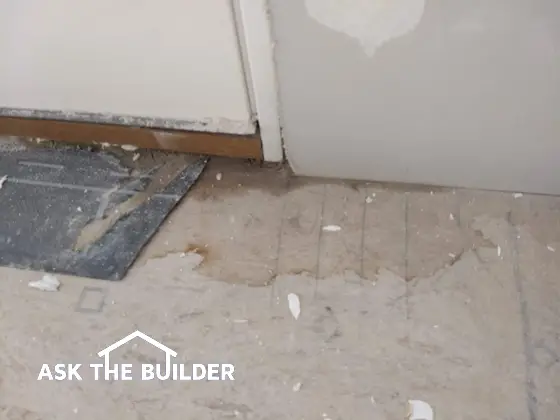
This is a water leak around a door in a brand new home that's still being built. The door was not flashed properly and water is leaking around and under the threshold. It's a ticking time bomb that could cost thousands of dollars to repair down the road. Copyright 2019 Tim Carter

The water leaking into my daughter and son-in-law’s new home is happening because the construction detail intended to prevent a leak depends on an adhesive on a piece of tape. Should the adhesive fail, water is sure to enter the home. It also depended upon expert installation methods from the person installing said tape. Another disturbing trend I’ve been observing is the disappearance of skilled laborers, but I digress. That’s a column for another day.

Mother Nature knows all about how to shed water to keep things dry. Apply your critical thinking skills to how feathers are layered on birds. Think about how fur is layered and coated on any number of animals that need to survive outdoors in bone-chilling cold and rainy days.

zip system flashing tape

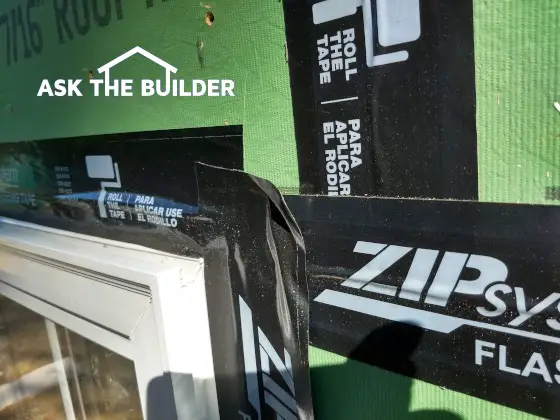
The corner of the tape in the center of the photo is already peeling. The causes are many. How long might it be before the other tape starts to peel away from the plastic-coated sheathing? Copyright 2019 Tim Carter

This same simple technology was used for centuries by builders to create dry and rot-free wood structures for years. Roof shingles and flashings are layered on roofs like feathers. Each shingle higher on a sloped roof overlaps the one below it. Gravity pulls the water down the roof to the ground.

Builders of old used the same method to keep walls dry. They overlapped pieces of asphalt-saturated paper in the same manner. When the paper passed over a door or window, the builders carefully installed a simple metal flashing that extended up the wood wall, was bent to pass over the top of the window or door trim, and then was bent a final time so about 1/4-inch of the metal lapped over the front of the window or door trim.

The best craftsmen made sure the metal was angled out slightly from the window or door trim to prevent capillary attraction from pulling the water up under the metal flashing.

Water dripping down behind the siding, or brick, or stone, or stucco would flow across the asphalt felt paper which overlapped the metal flashing on the wall. The water would then roll across the metal flashing and then flow out over the front of the window or door.

zip system flashing tape leak

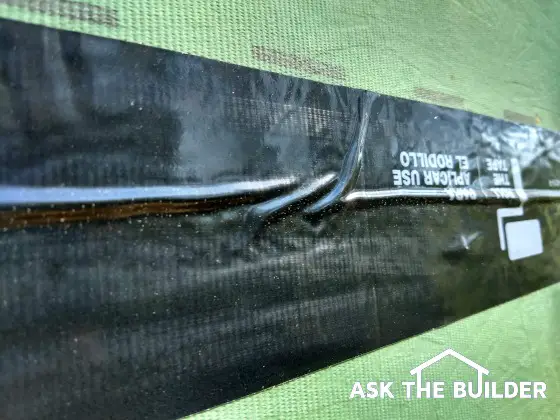
Look at the upward-angled pucker in the black tape at the center of the photo. The pucker is OPEN at the top and water can flow down into the tape and pass horizontally through the other horizontal pucker. The edges of the sheathing could start to rot and water can easily enter the wall cavity. Copyright 2019 Tim Carter

That remarkable simple and effective building detail is being sacrificed at the altar of Build-it-Faster. Just about every modern window or door has a built-in weatherproof nailing flange that can take the place of the older metal flashing. All that needs to happen is the top nailing flange needs to be carefully slid up behind the ​overlapping layers of ​weatherproof barrier above it.​ ​This weatherproof barrier is required to protect the wood framing of the house from water that gets behind siding, brick, stone, stucco, etc.

Many, not all, builders and laborers are using wide flashing tapes that overlap, not underlap, the materials above them. They hope that the adhesive doesn’t fail. If it does, water gets behind the tape and it’s game over.

I’ve maintained for years that it’s quite possible the adhesive on these tapes may not stand the test of time. Can the adhesive survive thousands of expansion and contraction cycles when the sun beats on a wall and transfers that heat to the tape?

My biggest beef is the tape that’s applied to the popular plastic-coated wall and roof sheathing. Your hopes for a dry structure are based entirely on whether or not the tape adhesive was installed perfectly and holds forever to that plastic coating.

I’m not a big fan of hope. You should only hope for things you can’t control. You can control how to make sure your new home or room addition never leaks. Just follow the footsteps of the master craftsmen/women of old.

Related Column: Window Flashing Tape

Column 1308

June 30, 2019 AsktheBuilder Newsletter

You could be a brand new subscriber. (light celebratory fireworks fuse!) Welcome! (bright lights in sky and BOOM BOOM BOOM noises)

You might be a subscriber that's been here long enough to have thought once or twice that it might be a good idea for me to tone it down. (Boo and Hiss sounds from my strongest supporters - splat sounds of rotten fruit hitting things and ground) 😉

I'm Like You

You may think everything at my home is unicorns, rainbows, and unending servings of mocha chip ice cream. Everything is perfect, nothing breaks and all is good.

BAH!

<RANT>

A month ago, out of nowhere, the electric line feeding my outdoor post lamp at the street, a security spotlight, and a branch to my outdoor shed started to throw a DEAD SHORT.

This means that as soon as you try to turn on a circuit breaker, it POPS with a nasty spark. Dead shorts are DANGEROUS.

The IDIOT builder who built my house - I didn't build it - allowed the electrician to put in buried electric lines outdoors that are NOT in CONDUIT.

This is but another example, in my opinion, of how many codes, including the National Electric Code (NEC) are a set of MINIMUM standards.

Building or installing something to code doesn't prohibit you from investing a small amount of time and money to do a BETTER JOB. Often installing something to code is like getting a 70 percent on a test. You just pass by the skin of your teeth.

Using my self-taught electrical skills, I was able to trace down the part of the line where the short is in just minutes. The short is located in the line that runs from the house up to a junction box attached to an oak tree on the other side of the driveway. The line branches here to go to the shed, post light, and to the security light.

I'm sharing this story to BEG YOU to ALWAYS INSIST that all buried electric lines around your home be placed in slightly oversized approved conduit. The conduit protects the line from frost heaves, heavy delivery trucks that drive on soggy soil, errant gardening shovels and spades, etc.

When the conduit is installed at your home, make a simple drawing of your house footprint, driveway, sidewalks, etc. and show the conduit(s) in a different COLOR in relationship to things you can see after the house is built.

Put this drawing in a zip-lock bag clearly marked that it's a plan of buried conduit. Staple it next to the electrical panel. A future homeowner/electrician will thank you.

UPDATE: Tim's RANT continues in the July 27, 2019 AsktheBuilder Newsletter. Click to read more.

</RANT>

P.S. I'm also dealing with a cranky sliding screen door that's jumping off the track every third day. She Who Must Be Obeyed is none too happy as she uses the door multiple times a day to feed the birds and water plants.

Last Call - $300 Gift Card

Tomorrow morning you may be the owner of a $300 Amazon gift card.

To qualify you must:

  • own and use a portable dehumidifier
  • fill out this survey by MIDNIGHT tonight June 30, 2019 ET

Good luck.

Remove Oil from Concrete

I recorded a new Stain Solver video this week. I tackled one of the TOUGHEST jobs you might ever take on:

Removing oil or grease from concrete

remove oil from concrete

CLICK or TAP HERE to watch TWO videos.

The top video is the new one. It shows what you need to do to remove older oil stains in concrete. These are the TOUGHEST stains you can tackle, believe me.

The second video, farther down the page, shows how to EASILY remove FRESH oil spots.

A delivery truck, friend's car, or alien spacecraft might drop oil on your drive. It could even be fresh grease from a grill.

FRESH stains are EASY to remove if you ACT FAST.

CLICK or TAP HERE to watch that fresh oil-stain removal video.

Evelyn's VIP Fast Answer

Do you know what this is and WHY it's important?

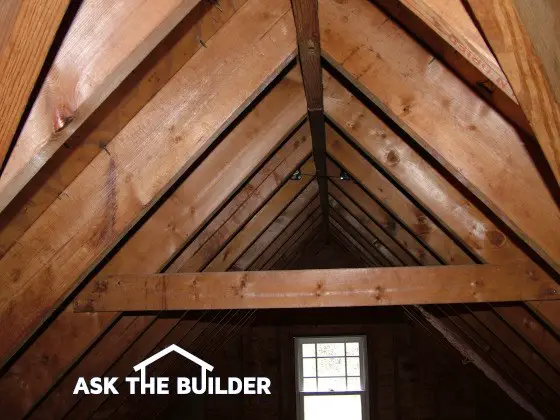
collar tie

CLICK or TAP HERE to see if your answer is correct.

Yesterday, Evelyn needed a fast answer about a few of these in her garage she was about to REMOVE. Fortunately, she had the smarts to reach out to me before she got out the reciprocating saw.

Evelyn got me to answer her desperate question in a hurry.

I created a new product about three months ago that's gaining in popularity.

It's called my VIP Fast Answer. As you might imagine, I get lots of email.

I can only answer so many each day then I must switch gears.

If I spend too much time dealing with all the incoming requests, I'd never be able to invest time in pursuits that pay bills and paychecks for the Ask the Builder team.

I decided to create a simple product where I answer ONE question for you and do it fast - usually within hours.

Keep this in mind if you're ever in a bind and want to know if a certain product is great, if a contractor is about to do something wrong, etc.

It's important to realize that I answer your question and we part ways. There are no follow-up questions. That's why the VIP Fast Answer is so affordable.

If you want to have a discussion about something so you don't lose hundreds or thousands of dollars, I have a separate service for that situation.

That's enough for a Sunday morning.

I've got my red, white, and blue shirt on for church and am wearing a bow tie that resembles the American Flag in that it's got stars and stripes on it.

Don't forget, the USA celebrates its birthday this week!

Tim Carter
Founder - www.AsktheBuilder.com
Order Certified Organic Cleaner - www.StainSolver.com
Dihs and Dahs - www.W3ATB.com

Do It Right, Not Over!