STIHL Electric Chain Saw Review MSA 120 C

stihl saw cutting

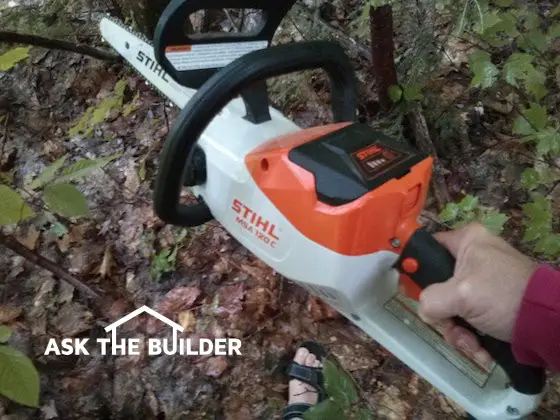
Here it is doing what it does best. Yes, I should have had a glove on for the photo. Yes, I should have had on safety boots with kevlar uppers. Yes, my left hand should have been on the black ring to balance the saw. Guess what? It was being used to take this photograph. ALWAYS READ AND FOLLOW the safety instructions found in the owners manual. NOTE: The saw was NOT in use as this is a beauty photo of the saw. The chain was not in motion while the camera captured this shot. Copyright 2017 Tim Carter

STIHL Electric Chain Saw Review

I took ownership of a STIHL electric chain saw about three months ago. It's the battery-powered MSA 120 C.

Over those ninety days, I've used the saw extensively on all sorts of different jobs around my home.

To the best of my knowledge, I'm one of a very few tool reviewers that puts a tool through rigid testing before sharing the news about it's performance.

I know of one tool reviewer that publishes some tool reviews within hours of the UPS truck pulling away from his apartment. You can't evaluate a tool in just a few hours.

Period.

Sharp & Sassy

This handy STIHL chain saw really surprised me. When you first pick it up, you think it's a toy. It's that lightweight.

It's a great example of the old saying, "You can't tell a book by its cover."

While this micro saw doesn't pack the power found inside its gas-powered big brothers that work in the deep forest all day in the hands of professional loggers, this saw is able to cut down a sizable tree with little effort.

I know as I did it in my own backyard.

The 40-Foot Oak

I decided to go big with the first job. I had a 40-foot-tall oak tree that needed to come down. It's trunk just a foot off the ground was 7 inches in diameter.

After making the suggested cuts in the trunk to fell the tree, it came down exactly where I wanted it to fall and the little STIHL saw never flinched. It's sharp teeth bit into the oak wood like a bald eagle's talons grasp onto a fish from the lake I live on here in central New Hampshire.

Wood chips were flying in all directions, and within a minute the tree was on the ground.

Trimming Branches

This saw is now my go-to tool for trimming any branches on the many trees at my home. Since it weighs so little, you have excellent control and rarely experience fatigue.

Sips Oil

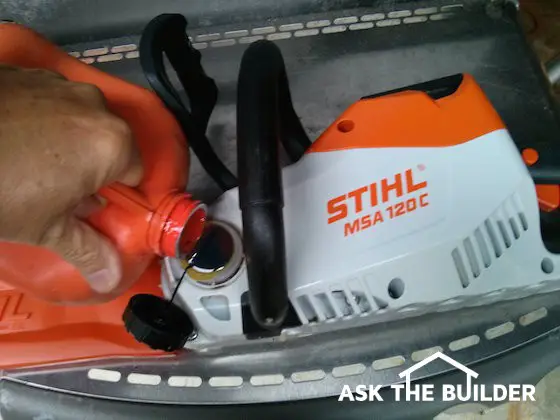
As with any chain saw, you need to fill the oil reservoir with lubricating oil. I prefer to use the oil from STIHL because I know it's been formulated to work best with the saw and chain.

stihl saw cutting

Fill the saw up and check the oil level regularly. Copyright 2017 Tim Carter

The Battery

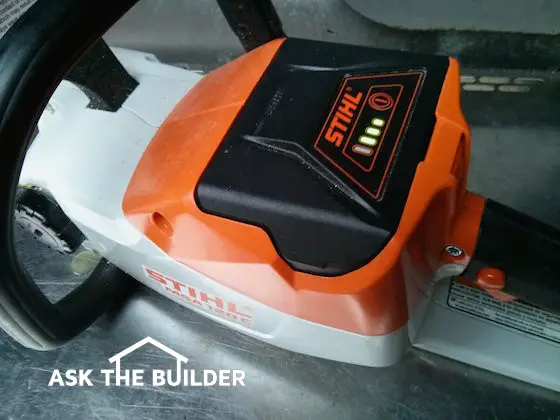
This is a battery-powered saw. It's new technology for STIHL. The battery should last you long enough that you need a break. It charges fast and you can get back to work. If you want to keep working, then purchase a second battery.

stihl saw cutting

Here's the beefy battery. It's got a handy LED power-level meter so you can judge when to stop for some liquid refreshment or a whoppie pie. Copyright 2017 Tim Carter

Five Stars

I've owned STIHL chain saws for decades. It's the first saw I ever used. This new addition to the line rates five stars. If you care for it, it's going to work hard for you for many many years.

How to Clean Vitamix

Vitamix Blender

Your Vitamix blender will look BRAND NEW like this one after using Stain Solver.

How to Clean a Vitamix Blender

I get questions all the time about how to clean a Vitamix blender.  (August 23, 2017 Newsletter)

But the most interesting thing I've received is an email from Molly a year or so ago. Read this:

"I never, never write manufacturers.... Did I say never??? I have a Vitamix I have used once a day for about 7 - 8 years. The blender looks like I had blended car parts in it...

Stained, cloudy, just plain yuck. I had read many websites, including the Vitamix site, saying clean with lemon juice , vinegar etc. None of them worked at all. 

Then I stumbled onto your Stain Solver product. I have a new blender after just a one hour soak!!!

I am just non-plussed ... Truly miraculous. Thank you!!!! You should contact Vitamix and partner with them. Their remedies don't work. Good luck!"

My wife and I developed the fantastic product called Stain Solver Molly loves so much.

Stain Solver is made with FDA-approved food-grade-quality ingredients. There are only two and both are made in the USA.

Oxygen Bleach

Stain Solver is MADE in the USA with USA ingredients that are food-grade quality. CLICK THE IMAGE to order some NOW.

Stain Solver is certified organic, so it's safe to come into contact with your valuable Vitamix blender.

It's very simple to clean a Vitamix mixer and requires NO SCRUBBING.

Step One: Purchase a 2.2-pound container of Stain Solver Certified Organic oxygen bleach.

Step Two: Fill the blender with HOT tap water to the top and set on a level surface.

Step Three: Add two tablespoons of Stain Solver powder and let sit overnight.

Step Four: Wake up to clean blender! Rinse well and make a smoothie!

August 16, 2017 AsktheBuilder Newsletter

I'm sitting at gate 54A here in the San Francisco airport waiting to get back home. I've been out here on the Left Coast of the USA for over two weeks.

Two weeks ago, I was just starting a very interesting tour of the KEEN shoes and boots factory in Portland, Oregon. CLICK HERE to read that story and watch a video of me making boots!

I then had to be in San Francisco yesterday for a small conference at Google's offices at 345 Spear Street. Here was my view from the 7th-floor roof deck as I ate lunch.

In between the two business events I wandered down through Oregon and Northern California. This past weekend, I was blessed to stay with my oldest daughter Meghan and her husband Brent.

We had dinner on Sunday with some of their friends. Tanya was there and she came to the USA from Vietnam about forty years ago. She told us the harrowing story about how she and dozens of people were rescued minutes before their leaky boat sank in the Pacific Ocean. It was a riveting story of survival.

Two days ago, I received a second blessing and got to meet Beth, a long-time subscriber. She uses my Stain Solver for all sorts of cleaning chores around her home, and for several years, I promised to stop by as I drove past her in Palo Alto, CA.

I'm so happy to be going home to see Kathy and get back into a normal routine! My guess is Lady the dog is going to be quite happy to see me tonight.

Steel Beams & Wood

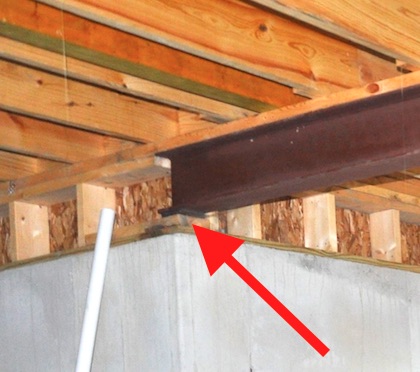
Overnight Dan emailed me. He's building a home in Crown Point, Indiana. Look at a photo he sent me. Pay attention to where the red arrow points. What's wrong there?

What you're looking at is a treated lumber sill plate and an untreated block of wood under the steel I beam. There are some thin steel shims on top of the untreated wood.

Dan wanted to know if this was acceptable.

The answer is NO!

Steel beams must be placed on solid masonry or something else that can't compress or ROT.

Yes, treated lumber ROTS. CLICK HERE for proof.

Building On Solid Rock

Topsoil is often not too thick. You may have to build on solid rock.

What are the challenges and what should you avoid at all costs?

There are quite a few things you need to know when faced with rock.

My college degree is in geology and I was intrigued with hydrogeology while in school. What's that?

CLICK HERE do discover more and how to protect yourself when faced with bedrock.

It's getting close to boarding time. I'll have more news and photos probably this weekend.

Oh, you may want to read about the most exciting thing that happened to me last week! I was deep in a redwood forest in California.

CLICK HERE and tell me what you think about this story!

Tim Carter
Founder - www.AsktheBuilder.com

Do It Right, Not Over!

Bath Remodel Pictures

bath remodel

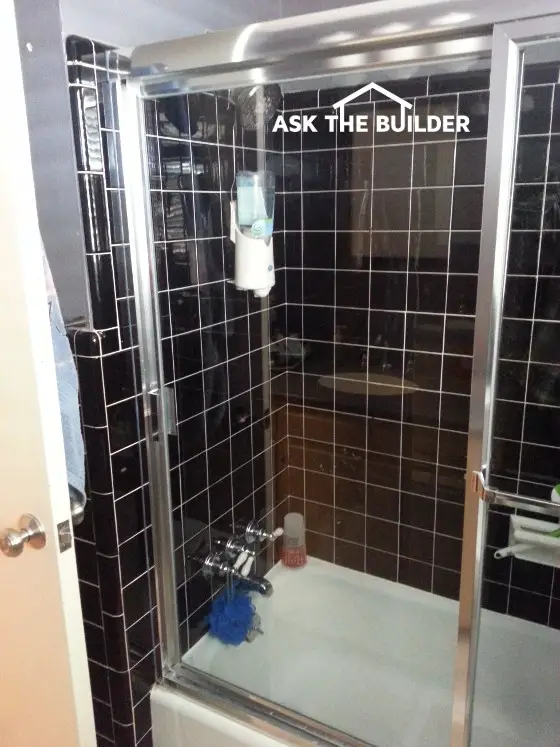
The before view of the shower. Copyright 2017 Tim Carter

Bath Remodel Pictures

Matt works for Ranger Roofing, a roofing company in Oklahoma.  Someone hired his company to complete a bathroom remodeling project. I'm not quite sure how a roofing company got into bath remodeling, but you can be the judge if they should get back up in the hot sun or stay inside!

Free & Fast Bids

CLICK HERE to get FREE & FAST BIDS from local bathroom remodeling contractors.

Below is Matt's story, in his own words. Matt submitted the photos, but he transferred the copyright ownership to me by asking me to publish his story.

"We were tasked with renovating this bathroom and decided to write a bit about it in case you want to do the same.

Remove Old Tub

Starting from the bathtub, we placed a waterproof layer beneath, to prevent any leaks. After making sure it was waterproof, we proceeded to put the tub and started securing it and making sure it was in place.

Silicone and Mold

Later we waterproofed the edges with silicone to prevent the leakage of water beneath; this could cause mold and the structure of the house to become compromised, which we obviously want to avoid.

Test For Leaks

After we tested everything and made sure it's waterproof we installed the faucet and set up the drainage system.

CLICK HERE to get FREE & FAST BIDS from local bathroom remodeling contractors.

bath remodel

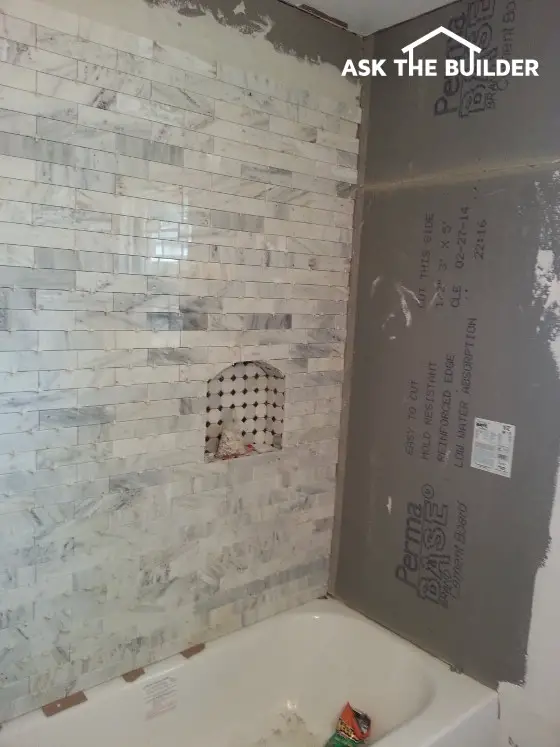
Tile going up. They made a HUGE mistake not protecting the tub with tarps during the install. A dropped tile can CHIP the tub. #FAIL Remember, this job is being done by Ranger Roofing, not me Tim Carter. Copyright 2017 Tim Carter

Trouble Time!

For the shower, we had a bit more trouble, after making sure all of the installations are working we started by leveling the floor. After leveling it we placed a waterproof layer and started layering tiles, we filled the space between the tiles with waterproof silicon made for showers.

Silicone Curing

We left the silicone to dry while we installed the faucet and the shower head, making sure everything is waterproof.  A small leak could mean you have to go under the tiles and dig up the whole thing. In these critical steps, it's better to triple check than to have a mistake force you to dig up everything and start over."

bath remodel

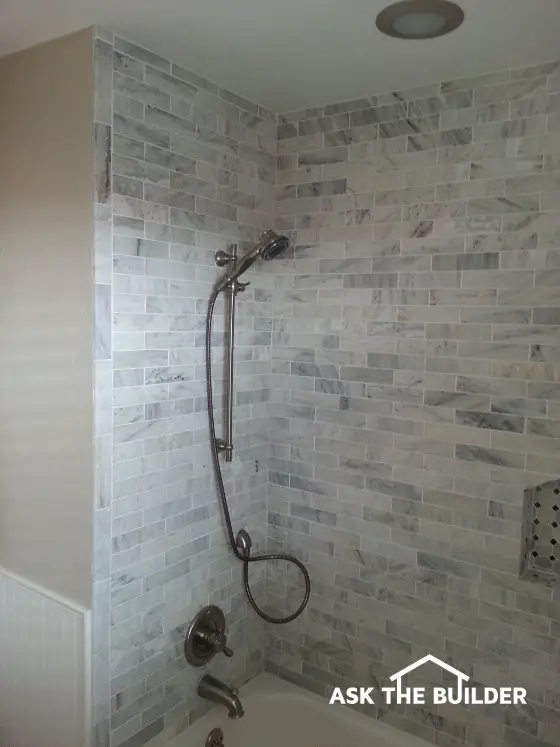
After - the finished shower. It's hard in photos like this to see extreme detail. We have no real idea how well the tile joints are and if everything is excellent workmanship. Copyright 2017 Tim Carter

CLICK HERE to get FREE & FAST BIDS from local bathroom remodeling contractors.

Thanks for sharing Matt.

August 9, 2017 AsktheBuilder Newsletter

If you're a new subscriber in the past two weeks, this is not a normal newsletter. Don't judge my newsletter on what you're about to see.

I'm in the middle of an extended vacation that had a business meeting last week in Portland, OR, and in six days I have another one in San Francisco.

I've been wandering down through Oregon and Northern California since last Friday afternoon.

Here are a few photos. The first one is at Crater Lake in southern Oregon. I had always wanted to see the deep blue water in the crater, but the smoke from giant forest fires in Canada and right in Crater Lake National Park thwarted that dream! This was the best photo I was able to capture but it's still quite smokey.

The next photo was taken yesterday at Humboldt Redwoods State Park in Northern California. That's an old-growth redwood tree just behind me. It had to be over 200 feet tall.

The next one, I took yesterday at Point Cabrillo Light Station along the Pacific Ocean. If you want to see what I was doing sitting at the picnic table with that crazy lime string, CLICK HERE. The story is about me doing radio at the photo below, but I was doing the same thing among the majestic redwood giants.

Roof Ventilation Myths

Ninety minutes ago, I had a fascinating conversation with a man in Canada about what he *thinks* you feel about roof ventilation.

I decided I'd go to the source - that's you - and find out.

Would you humor me and please take a two-question survey?

It will take you LESS than 30 seconds.

CLICK HERE to get to the survey.

KEEN Shoes and Boots Factory Tour

Last week, I was in the record HEAT up in Portland, OR. Let me tell you it was HOT. I think it got to 105 F last Wednesday.

I was invited there to visit the fascinating KEEN shoe and boot factory as well as their headquarters and infamous KEEN Garage.

CLICK HERE to read my story about the adventure. There are TWO videos in the story and one of them is me working on the assembly line!!! How cool was THAT???? Three people are going to be wearing boots that I helped make!!!

CLICK HERE to see what I think of KEEN boots. Read my review of one of their boots.

Latest Columns

I had to write four columns before leaving on this trip. Here they are:

Polymeric Sand Installation - WHAT is that Tim?

Building on Rocky Land

SELLING Used Building Materials - Not Donating

Brick Mortar Repair Mix - Guess the MAGIC Ingredient!!

Okay, that's enough. I need to scoot out the door to do more amateur radio today.

I'll report in when I get back to New Hampshire.

Tim Carter
Founder - www.AsktheBuilder.com

Do It Right, Not Over!

KEEN Factory Tour Summary

keen footwear

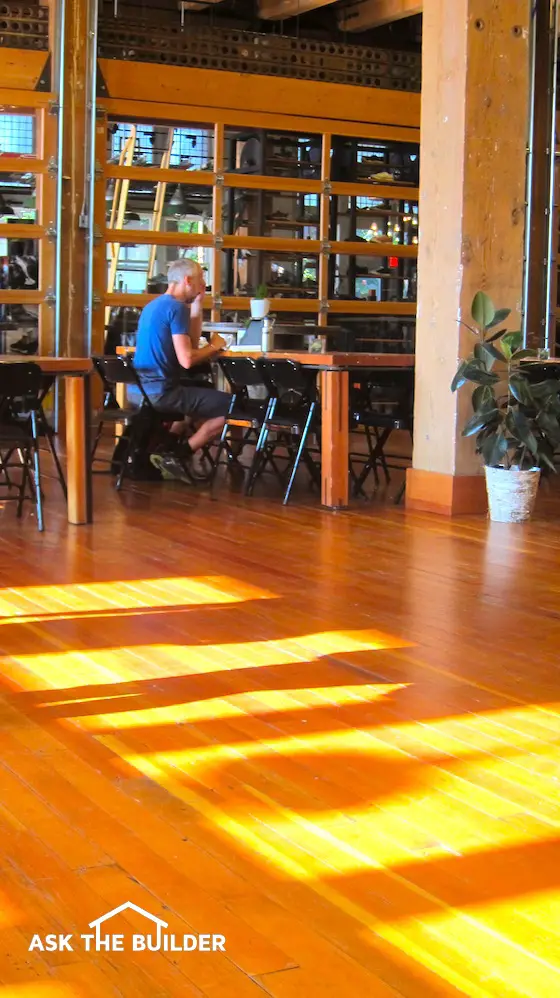
This is the company canteen side of the KEEN Garage. On the other side of those garage doors with the glass panels is the retail store. CLICK HERE to read a story about the amazing restoration of this historic building built in 1907. Copyright 2017 Tim Carter

KEEN Footwear Factory Tour

The first week of August, 2017, I found myself in Portland, Oregon. As fate would have it, I arrived in the midst of an historic heat spell.

I had been invited to visit the KEEN Utility factory, headquarters and epic KEEN Garage where they have a retail store in downtown Portland's Pearl district. About ten other hobby bloggers and one or two full-time professional members of the media like myself were part of the tour group.

Best Tour Ever

I hate to admit it, but I've been a member of the working media for so long that I've lost count of the number of factory tours I've attended. The reason is I cover an industry that makes lots of tools and products.

The company owners are always proud of what they make and they invite media to see and share with their audiences how things are done. Some tours have been fascinating as you sometimes don't realize how many aspects of building a thing are still done by humans. That may change moving forward, but that's a story for another day.

This KEEN tour was the best ever for a number of reasons. KEEN is a family-owned business. Rory Fuerst, Sr. started the business just a mere fifteen years ago in 2003. Two of his sons work each day in the factory, Rory Jr. and Connor.

keen footwear

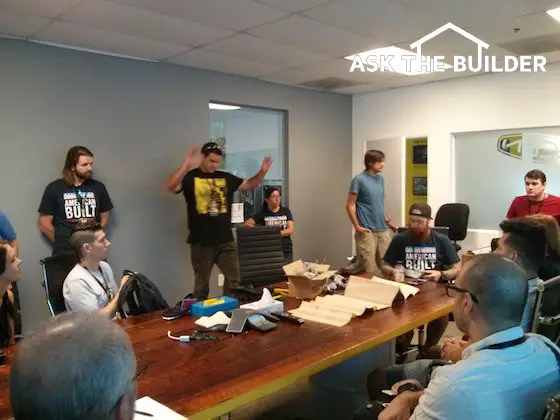
Connor Fuerst is holding his arms up praising the members of the media. No, seriously, I caught him at an awkward moment. His brother Rory, Jr. is in the blue t-shirt opening the door to lead us out to the factory. Marshall Alexander, a member of the KEEN marketing team is on the left against the wall. The woman between Connor and Rory, Jr. runs the quality control lab at KEEN. I forgot her name! Sorry! Copyright 2017, Tim Carter

I got to spend lots of time with them and they are as friendly and normal as can be. Both were wearing t-shirts and you'd never know they were part of the business if you just happened to see them walking around the factory.

On a selfish note, I felt it was the best tour I've ever attended because they allowed me to work on the assembly line! How silly is that, but it meant so much to me.

Three people are going to wear a pair of boots that I helped work on. I was able to fit an upper onto the form before it goes into the assembly line, I got to load two soles into the forms and I got to trim off the urethane flash from one boot.

Connor had to do some extra trimming because my workmanship didn't meet their standards, but he was very understanding of my first attempt!

The Process

Watch this video to get an idea of what it's like to be in a factory that makes amazing boots and shoes. I could write about it, but it's better that you just see it.

The People

At the end of the tour everyone gathered in a conference room at the factory. It's somewhat normal for this to happen. The purpose is for those on the tour to ask follow-up questions.

A few of the hobby bloggers asked some tech questions, but I then jumped in with my over-arching question I always ask. I pointed the question to both Connor and Rory Jr.

"If you could wave a magic wand that would allow you to communicate to all consumers messaging you feel they don't really know about KEEN Utility and what you do, what would that message be?"

You could hear a pin drop. Connor and Rory, Jr. looked at each other and with their eyes said, "Dude, you go first!"

I think Rory, Jr. finally said, "Boy, that's a great question." He shook his head and then said, "Connor, you go first."

Connor thought for a second and replied, "I really would love consumers to know about the dedication and values of the entire team that assembles here each day to make our boots and shoes. These people love to come here and they work hard. They take real pride in what they do and I feel it shows when you open the box and try on your boots."

Rory, Jr. then jumped in. Rory runs the Fuerst Innovation Lab where all the conceptual ideas are born about all new products and processes. They often look at failure points of products made by others and try to solve them with a new KEEN product.

"I think that our customers need to know that money doesn't drive all decisions. We try to remember that all the time. I'd like them to know that we thrive on doing things that are challenging. It's easy to do easy things.

What's more, I'd love for them to know that sometimes you have to ignore the experts and consultants who say you're going to lose money on something. In certain situations you need to do what's right, not what's going to make you the most money. Finally, I'd like our consumers to know we have fun here."

The Takeaway

I think Rory Jr.'s comments hit the nail on the head for me. After all, the AsktheBuilder.com motto is:

Do It Right, Not Over!

I could see the workers at the factory trying to do it right. Everyone was diligent that I saw. They want your boots and shoes to fit perfectly, be comfortable and last a long time.

It's also about fun. What a dream to have a job that's fun. I've got that with my AsktheBuilder.com vocation and it's obvious Connor, Rory, Jr. and the other dedicated employees at KEEN Utility in Portland have this rare gift where work is fun.

keen footwear

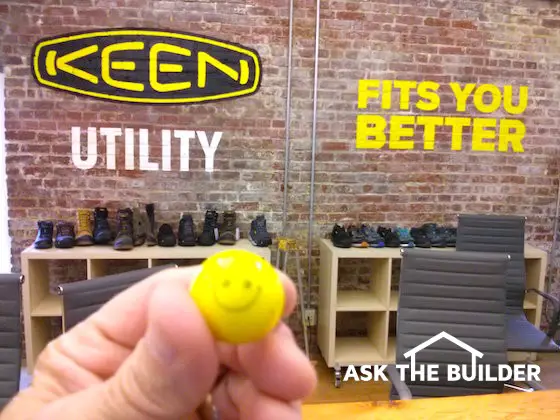
What you see under the signs is a tiny fraction of the KEEN product line. CLICK THIS PHOTO now, buy a pair and you'll get them delivered to your home in days. You'll have a similar smile on your face once you try them on!

CLICK HERE now to purchase a pair of KEEN shoes or boots and put a similar smile on your face when you insert your foot into the cocoon of pleasure. That's what I call my KEEN boots!


KEEN Factory Tour Video

KEEN Footwear Factory Tour

I had the distinct pleasure to attend a media event at the KEEN Utility factory in Portland, OR in August 2017.

I've been on many factory tours over the past twenty years and this was the BEST ONE ever. 

First, it's a smaller factory with about eighty people working diligently to make some of the best work, hiking and casual shoes I've ever worn. Read my review about one of their boots I own.

Another reason it was a great tour is we were allowed to help make actual boots and shoes that you might wear! Yes, I got to put an upper on a form at the beginning of the line, I got to put a sole in the machine before it gets bonded to the upper and I got to trim off the urethane flash that oozes out the sides of the lower part of the upper after the boot is made.

KEEN - Made in the USA and you'll LOVE them. They make them for women, men and kids!

CLICK HERE to see a variety of them you can buy right now.

CLICK HERE to go to the KEEN website.


Deck Material List

Decking Material List & Cost Comparison for a 12 x 10 Foot Deck

The following is material list that will enable you to construct a simple 12-foot-wide by 10-foot-deep deck. Your situation may require some specialized hardware, however, this list will get you 98% of the way.

The deck in question sits only several feet off the ground. If yours is higher, you may require longer posts to reach the ground.

6x6s Baby - The Only Post To Use

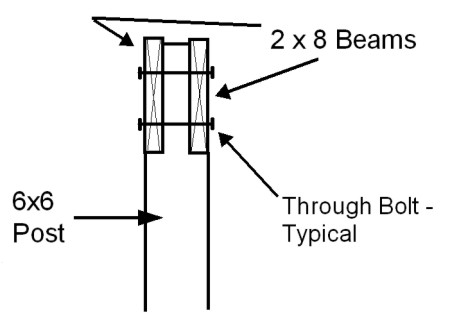
I prefer to use 6x6 posts instead of 4x4s. Six x six posts allow you to create a notch so the beams rest on a wood ledge. I then through bolt the beams through the remaining 3 inches or so of lumber that is left of the post.

The diagram below is a side view of a beam as it runs over the 6x6. If you build it this way, the floor joists sit on top of the two beams.

deck material list

Free & Fast Bids

CLICK HERE to get FREE AND FAST BIDS from local deck contractors. You may be shocked how cheap it is to hire a pro.


If you choose to keep the beam in the same plane as the joists, you would make a 3 inch deep singular notch in the 6x6. The two beam boards would end up side by side. This would allow joist hanger nails to penetrate both beams.

Material List & Prices (Cincinnati Prices - August, 1996)

Yes, I left in the prices for 1996 to show those in the future what lumber used to cost! It gives you an appreciation for inflation.

Prices in ( ) are for substitute material in Construction Heart Redwood. The first item on each line is the quantity of material. The second entry is the description of the item. The third item is what it is used for. The final item is the total prices for the items on that line.


Rough Framing / Below Decking Materials EB015 Cleaning & Sealing Deck Cover

(10) 2x6x10 foot CCA Treated Floor Joists $74.00

(2) 2x6x12 foot CCA Treated Band Boards 17.90

(2) 2x8x12 foot CCA Treated Beam at Posts 23.98

(1) 6x6x12 foot CCA Treated Post(s) cut into 2 lengths 17.50

(5) 80 lb. Bags Concrete Mix Piers at Posts 21.25

(6) 1/2 inch x 8 inch Carriage Bolts Bolts for Band Board at house 9.30

(4) 1/2 inch x 6 inch Carriage Bolts Bolts for Beam at Posts 6.20

(10) 2x6 Single Joist Hangers Attach Joists to House Band 5.45

(1) Box Galvanized Joist Hanger Nails Attach Joist Hangers 2.95

(5) lbs. 16 CC Galv. Ringed Nails Nail joists, beam, etc. 6.95

(15) lbs. 2 1/2 inch Galvanized Screws Decking Screws 45.00


Decking & Railing Materials

(22) 5/4 x 6 x 12 CCA Decking Deck Boards 209.00 (277.20)

(70) 2x2x 42 inch CCA Pickets Railing Pickets 76.30 (140.00)

(32) Lineal Feet 2x6 Railing Railing 25.60 (46.40)

Note the small premium to upgrade to redwood for the Deck Surface and Railing System

CLICK HERE to get FREE AND FAST BIDS from local deck contractors. You may be shocked how cheap it is to hire a pro.

Column B142

Polymeric Sand Installation Instructions

Polymeric Sand Installation

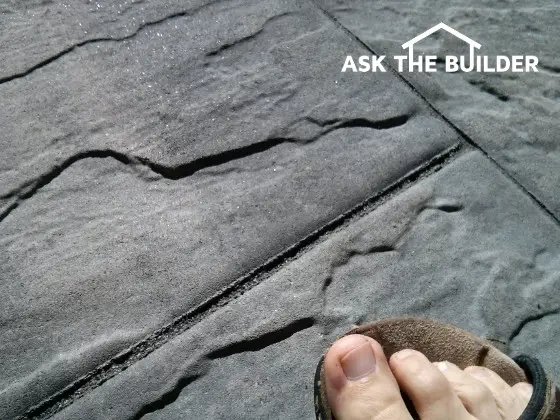
You can see the hardened polymeric sand in the joint between the two pavers. It comes in different colors to complement the color of the pavers. Toes in photo for scale. (C) Copyright 2017 Tim Carter


IMPORTANT UPDATE:

This column was authored in 2017. It's now 2025. The polymeric sand I used on my patio failed within four years. It looked good for about three years, but then it started to succumb to the harsh New England winters. I never pressure-washed the patio, so that's not the reason for the failure.

In my opinion, the water-activated glue that bonds the sand together is inferior. It's no match for traditional Portland cement that you'd use to grout exterior tile. The polymeric sand advocates promote the EASE of installation. Yes, it's much faster to install it, but I GUARANTEE you that you'll be redoing the job in just a few years.

I will NEVER again use polymeric sand.

"Polymeric sand is best described as outdoor grout. Depending on the manufacturer, it’s a blend of different colored sand grains as well as chemical binders or glues that are activated by water."

Polymeric Sand Installation TIPS

DEAR TIM: I need to use polymeric sand on an upcoming job. I’ve never used it before and some of the instructions and videos I’ve watched are confusing and have conflicting information in them.

Have you used this material before? Did you find it hard to work with?

I’m terrified of having mottled stains on my new pavers! What did you do to ensure your job came out perfect? Diane K., Roselle, IL

What is Polymeric Sand?

Polymeric sand is a newer product that’s creating lots of interest among homeowners, contractors and material suppliers that sell the product. It’s fascinating to me to see how many building products mature as they march through time.

What Sand Was Used Before Polymeric?

When paving brick were first brought to market back in the early 1980s, the joints between the brick were just filled with fine sand.

It didn’t take long for homeowners to grow weary of this methodology because weeds would quickly grow and any cleaning efforts washed away the sand.
paver weed control

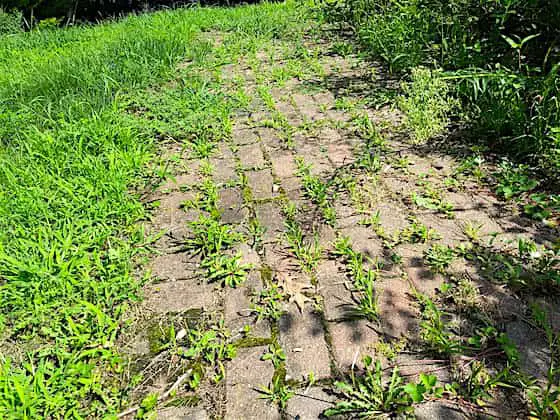
This is a paver sidewalk with out-of-control weeds growing out of the normal sand. The sand can be removed with a pressure washer and replaced with polymeric sandy. Copyright 2018 Tim Carter

Is Polymeric Sand Like Grout?

Polymeric sand is best described as outdoor grout. Depending on the manufacturer, it’s a blend of different colored sand grains as well as chemical binders or glues that are activated by water.

When the polymers dry and cure the sand between the joints gets quite hard and it cements the pavers together. Weeds won’t grow between the joints and the sand doesn’t wash away.


What Ingredients Make Polymeric Sand Hard?

Some polymeric sand might have a blend of Portland cement, dry colored pigments as well as the polymer adhesives. The key thing to realize is you can get the sand mixture in different colors that will match or compliment the color of your pavers.

You can even use the polymeric sand on existing paver installations that have just sand in the joints, but it’s quite a bit of work to remove the existing sand without disturbing the pavers.

Have You Used Polymeric Sand?

It just so happens that I recently had the good fortune to use polymeric sand at my own home. I constantly preach to my free newsletter followers to read product label instructions before using a product.

Are the Polymeric Sand Instructions Confusing?

I did that with my bags of sand and came away quite confused myself. I then went online to watch a few videos, some done by my manufacturer, and discovered they had a few oversights that I felt were very important to mention.

Should the Pavers Be Dry Before the Polymeric Sand Installation?

First and foremost, to get a great job the pavers need to be dry. The dryer the pavers are, the better the job’s going to turn out. You want even the sides of the joints dry if possible so no moisture inhibits the dry polymeric sand from flowing to the bottom of each joint.

Should the Pavers Be Clean?

The top surface of the pavers needs to be clean. If somehow the pavers got muddy during the installation, you need to clean off that mud. If you don't clean off the mud, the mud will get mixed in with sand as you brush it into the joints.

The mud will cause the sand to not bond as well and it will create color differences in the finished sand.

You'll have to use water to clean off the mud and this may mean it could take days for the pavers to dry after you wash the tops of the pavers. So be it. I can’t emphasize enough how dry pavers are mission critical.

CLICK HERE  to get FREE & FAST BIDS from local patio contractors who'll use polymeric sand on your job.

How Important are the Polymeric Sand Batch Numbers?

Be sure all bags of the polymeric sand come from the same batch. Look at the labels to ensure they all were made at the same time. If you have any doubt, open the bags and mix the dry sand all together in a large container to ensure the color is the same.
Polymeric Sand Installation

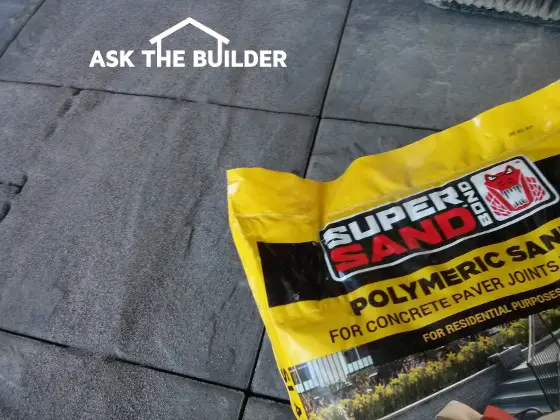
This is the polymeric sand I used on my pavers. I've poured some sand on the pavers to the left of the bag. It's such a close color match you might not have seen it! You can see it flowing into the joints between the pavers in the upper left corner of the photo. (C) Copyright 2017 Tim Carter

How Do You Spread the Sand?

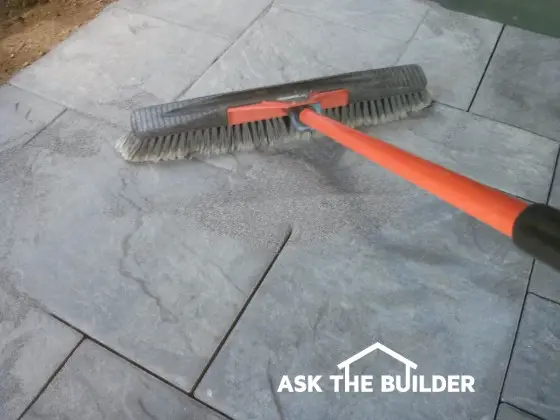
I used a large floor broom with medium bristles to install the sand. The dry sand flowed into the joints with no effort at all.

How Do You Keep the Sand Even with the Pavers?

I went back and forth across the joints at a 45-degree angle. Most of the videos I watched showed the broom strokes parallel or at a 90-degree angle. Doing it that way can cause the broom to dig out some of the sand from the joints.
Polymeric Sand Installation

Sweep across the joints at a 45-degree angle. (C) Copyright 2017 Tim Carter

You want light finish strokes as you try to brush the sand from the pavers. Don’t dig the sand out of the joints.

How Do You Prevent Staining?

I read many nightmare stories online about stained pavers during installations gone bad. The common cause was the installer failed to get off all the sand and dust from the pavers before activating the sand with the water.

What is the Best Brush to Use?

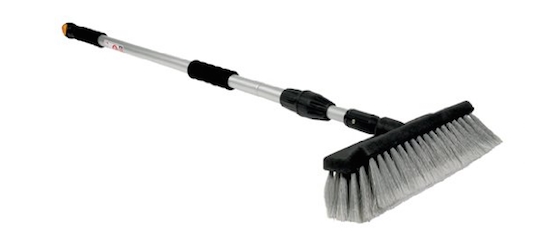
I own a fantastic brush I bought years ago to wash the side of my house. It’s a brush made to wash RVs. The bristles are stiff enough that they don’t flop but soft enough that they don’t scratch automotive paint. It’s a perfect brush to do a fine brushing of the pavers.
rv-brush

This is a perfect brush to clean vinyl siding. It's got an adjustable handle and the perfect bristles that remove dirt loosened by using Stain Solver oxygen bleach. CLICK THE IMAGE NOW TO HAVE THIS BRUSH DELIVERED TO YOUR HOME.

How Much Sand Must be Brushed Away?

I took my time and carefully brushed all the sand grains and as much dust as possible off each paver. I was careful to not dig any sand out of the joints.

Should You Use a BackPack Blower To Remove Dust?

After doing this, I used a backpack leaf blower to blow off any of the colored pigment dust. I was shocked to see how much dust came off the pavers even though I thought I had brushed them well.

IMPORTANT TIP: Do NOT skip this step - use a blower.

How Do You Activate the Polymeric Sand?

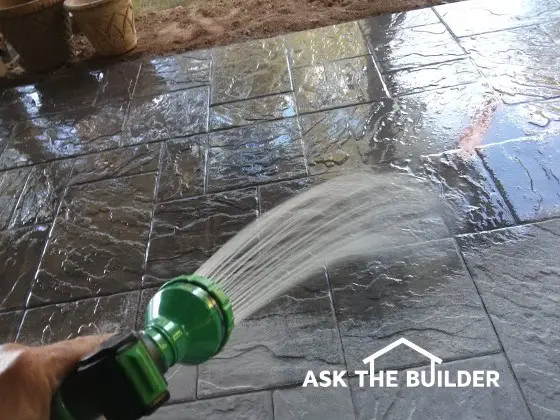
Wetting the sand with a gentle nozzle that acts like a soft rain shower is what activates the polymeric sand. You don’t want a direct stream that can dig sand out of the joints.
Polymeric Sand Installation

Use a hose nozzle that produces a gentle shower. Move it back and forth and just put a light amount of water on the pavers. (C) Copyright 2017 Tim Carter

Move the nozzle across the pavers back and forth and just put a light amount of water down. Most instructions say to wet the pavers several times. I did it three times in about fifteen minutes.

Should I Remove Standing Water?

After turning off the hose, I immediately fired up my backpack leaf blower. I blew off all standing water from my pavers to complete the job.

Standing water will have the color pigments in it and can foul the pavers. If you allow this pigmented water to dry in puddles, you'll end up with blotchy pavers.

Get all the water off the pavers and be careful not to blow any sand out of the joints. Do all this and you’re pavers will look perfect in two hours!
finished-paver-patio

Here's my finished paver patio. It's going to last decades so long as no one pressure washes it. Pressure washing removes the colored cement paste that's coating the sand and gravel in the concrete. Copyright 2017 Tim Carter


Column 1210
Building on Rocky Land

building on rocky land

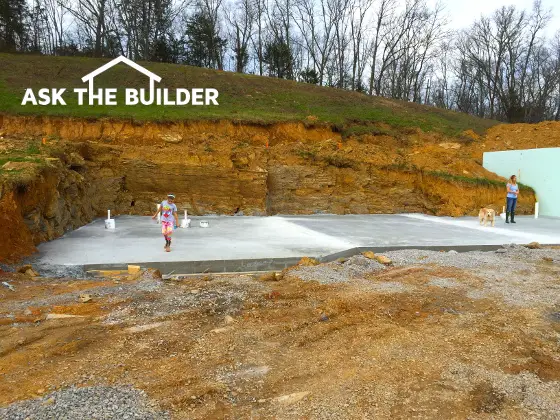
You can clearly see the bedrock in the hillside where this new home is being built. (C) Copyright 2017 Tim Carter

Building On Rocky Land TIPS

This article led to Tim doing a video conference with Ms. Chantell Mason's school classes. They had questions on building on rocky soil. Read about this amazing video conference in Tim's April 29, 2018 Newsletter.

DEAR TIM: The lot where I’m building my new home is quite rocky. The soil cover is somewhat thin, perhaps only 3 feet deep at most.

Fortunately there’s no blasting required to dig into the rock. What are some of the challenges I’ll face dealing with this rock?

What are a few of the best practices to ensure I’ll have a dry basement for years to come? What’s the biggest mistake my builder could make and how do I prevent it? Tim J., Spring Hill, TN

DEAR TIM: Congratulations on your new home project!

Power Is In The Question

You’re asking all the right questions so far and it’s my hope all goes well throughout the entire process. My college degree is in geology and I had quite an interest in both hydrogeology and engineering geology while in school.

Free & Fast Bids

CLICK HERE to get FREE & FAST BIDS from local builders who can help you.

My Geology Degree

Hydrogeology is the study of groundwater and engineering geology focuses on how man-made structures of all types interact with soil and rock. If you’ve ever had the pleasure to fill a water jug or bottle from a natural spring, then you know that water loves to follow tilted and flat pathways within bedrock.

TNT / Dynamite

It’s not too hard to build a home when you’re dealing with rock unless you need to blast. Blasting can be quite expensive.

Two lots above my own home have never been built on because several previous owners have spent tens of thousands of dollars blasting holes in solid granite only to exhaust their budget and go bankrupt. You’re lucky that excavators can dig through your rock.

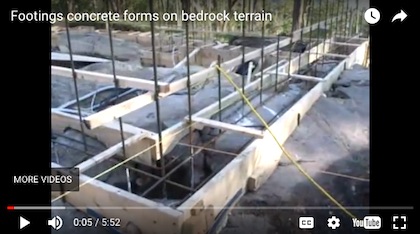
Footings On Rock Video

Watch this video to see how to put a foundation on solid rock.


Groundwater Moves Sideways

I feel the biggest thing you need to understand is rainwater penetrates topsoil and starts to head down into the ground. But depending on the subsoil makeup and depth to bedrock the water tends to begin to travel sideways or downslope along the contact zone between the soil and bedrock.

Your builder’s job is to install a fantastic foundation drainage system that collects this water as it gets close to your foundation and then channels it away from your home to a low spot on your land.

CLICK HERE to get FREE & FAST BIDS from local builders who can help you.

Create A Sluiceway

Not too long ago, I was sent a photograph where an uniformed builder poured a structural concrete basement slab directly up against the bedrock at a building site. He then placed the foundation on top of this slab.

This poor design allowed water to pool on the footing slab. Immediately ground water collected against the foundation and seeped into the basement. Be sure your builder doesn’t make this rookie mistake.

The builder should have kept the footing away from the solid rock so a trench or sluice was created that could capture and channel the water.

One Foot Rule

It’s best to place the footing of the foundation at least one foot away from the side of the excavated hole. This spacing gives you plenty of room to place a perforated drain pipe alongside the poured or cast-concrete footing.

The drain pipe is then covered with clean washed gravel that’s similar in size to a large grape.

Solid Pipe With Holes

I prefer to use the solid plastic pipe that has 1/2-inch holes drilled in it in two rows. The holes should face down and the pipe should be placed on a 2-inch-thick layer of the clean gravel.

Backfill With Gravel & Straw

This pipe should then be backfilled with the clean washed gravel that has no sand in it. The thicker this layer of gravel, the better. Before it gets covered with soil, put a thick layer of straw on it or cover it with a layer of roofing felt paper. This prevents the gravel from getting clogged with silt from the soil.

Waterproof Foundation Walls

The foundation walls need to be waterproofed, not just damproofed. Damproofing is just a spray coating of hot asphalt. It does a great job of stopping water vapor passing through the foundation walls, but if the concrete foundation cracks, the thin asphalt coating will not bridge the crack.

CLICK HERE to get FREE & FAST BIDS from local builders who can help you.

Membrane Bridges Cracks

Waterproofing foundation systems are designed to deal with foundation cracks. I used a magnificent system on my last house that was a blend of rubber and asphalt.

It was applied about 1/4-inch thick on the foundation walls and then covered with a rigid dense fiberglass panel. This fiberglass protected the rubberized asphalt from backfill damage and it channeled water directly down to the foundation drain tile.

Sharp Rocks Ruin Utilities

You need to be very careful when backfilling any trenches that contain utilities. Buried water, gas, electric, cable, etc. lines need to have a 6-inch bedding layer of sand that they lay on in the trench. Never put a utility line in a trench in direct contact with rocks.

Then once the utility lines are laid, an 18-inch protective layer of sand should cover them. Sharp rocks coming into contact with these lines can injure them and cause lots of pain and suffering.

Foundation Too Deep

Each week I’m reminded of the biggest mistake most builders make when they build. Many builders, no matter what the soil type, dig the foundation hole too deep and set the house too far into the ground.

All too often the top of the foundation is just a few inches above the grade line around the house.

building on rocky land

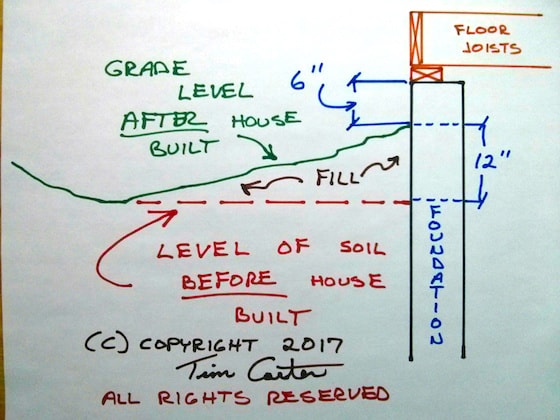
I made this drawing. You can see the foundation wall with a typical sill plate and floor joist. The red line is the lot before the excavator shows up. The top of the foundation should end up 18 inches ABOVE the red line. Use the dirt from the hole to create the slope away from the foundation. (C) Copyright 2017 Tim Carter ALL RIGHTS RESERVED

If you look at homes built around the early 1900s in many cities you’ll discover the top of the foundation was often 3 feet out of the ground! This was done for any number of reasons and it might be considered extreme today.

18 Inches

The top of the foundation should, in my opinion, be no less than 18 inches above the highest point of land within ten feet of the foundation. This allows you to have plenty of foundation above the grade line and create a good slope so water drains away from the foundation.

Email Pain

If you could read my incoming email each week you’d agree this is a primary pain point felt by many new homeowners. I see photographs each week of foundations that are only 3 or 4 inches above grade and the soil around the house is flat or slopes towards the house. No wonder these homeowners have water pouring into their basements and crawlspaces! Don’t let it happen to you.

CLICK HERE to get FREE & FAST BIDS from local builders who can help you.

Column 1208