House Grading Slope

DEAR TIM: My new house foundation was just poured on a sloping lot. I stopped by just after the forms were stripped from the foundation and I think they poured the foundation too deep. The ground on one side of the house is about 5 feet higher than the top of the foundation. I think water is going to flood against the house. What needs to happen to prevent this? Also, I saw a long narrow concrete pad and a square concrete pad in the basement area. What are those for? It seems like a waste of concrete to me. Mark K., Waltham, MA

DEAR MARK: Building on a sloping lot is somewhat common in certain parts of the nation. My own house sits on a fairly steep lot. As such, the bottom level of my home is open to daylight and each of the rooms there has a wonderful wall of windows or a set of glass doors that allow lots of natural light to stream into the rooms. What’s more, my lot is so steep my basement ceiling height is over 11 feet! That also makes the basement rooms seem far more spacious than they are.

You’re right in thinking that storm water flowing down the hillside towards your house is going to cause problems. I’m hoping your building plans show a new retaining wall on that side of the house to help provide part of the solution to prevent the flooding problem that will happen without the wall.

I had a phone consult last week with a woman who has a wet basement problem at her home. During the call, I told her that she should think of her home as the top of a volcano. All of the ground around the top of the cone of a volcano slopes away and down from the cone. This is what your builder needs to do around your new home.
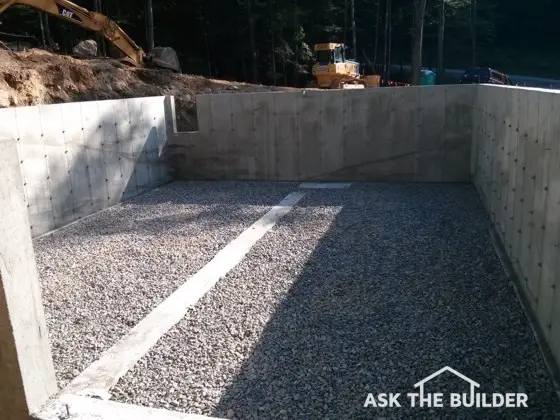
The ground to the left of the foundation must be cut back. A retaining wall will have to be built and the ground between the house and the wall must slope towards the retaining wall. Photo Credit: Tim Carter

The ground to the left of the foundation must be cut back. A retaining wall will have to be built and the ground between the house and the wall must slope towards the retaining wall. Photo Credit: Tim Carter

Years ago the building code, a set of minimum requirements, said that the ground around a house needs to drop at least 6 inches in the first 10 feet of horizontal distance away from a house. I think it should be a minimum of 9 inches, perhaps one foot.

If I were building your home, I’d have a retaining wall built about 15 feet away from your home on that side where the ground is higher than the top of the foundation. The bottom of the retaining wall where it comes out of the ground would be about 18 inches lower than the top of your foundation wall.

This would allow you to have 6 inches of foundation showing above the ground and give you the 12 inches of fall from the house towards the base of the retaining wall. Your builder needs to slope the ground one way or the other all along this side of the house so the rain water flows away from the house and doesn’t create a lake along the base of the retaining wall.

I would also make sure that you have superb foundation waterproofing installed on the exterior of the foundation. Spraying liquid asphalt is not enough. This is just damp proofing. You need superb perforated foundation drain tile pipe down at the footer covered by lots of washed larger gravel that has no sand in it. This gravel should extend up five or more feet and then be covered by a foot of straw or felt paper so the gravel is not clogged by silt from the fluffed backfill soil that covers the gravel.

The drain tile pipe needs to extend away from the house and it should eventually pop out of the ground because of the sloping ground. In wet weather, water that would normally flow through the soil will drop down the gravel around your home, enter into the drain pipe and then exit the end of the pipe much like a natural spring. This is how you create a bone-dry basement.

The concrete you see inside the basement area of your house is no doubt interior footers. They are there to spread out the weight of parts of your home that have yet to be built. The long narrow strip of concrete is for an interior load-bearing wall that will no doubt support the floor joists on your first floor.

Instead of building a load-bearing wall in your basement, a steel I-beam could have been installed and it would have been supported at regular intervals by steel columns. Under each of these columns a concrete footer pad would be poured to support and distribute the weight onto the soil below.

The larger pad you saw is probably a footer for a masonry fireplace. You’d be surprised how much these weigh and that weight needs to be supported by more than just a concrete slab in the basement.

If you obtain a copy of your blueprints they should have a foundation plan as a page. On this page, you should see the concrete building elements you see with your eyes. The plan should tell you how wide they are, how thick and what kind of reinforcing steel is inside the concrete.

Column 1101
Foundation Footing Detail

footing detail
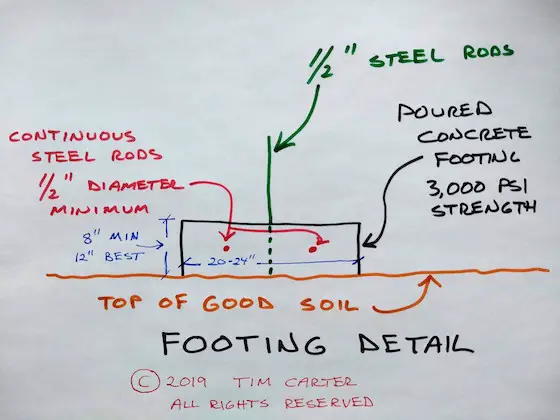
This is a footing detail. Note the thickness and the vertical steel bars that will connect to the foundation. What you can't see are the continuous steel rods that are encapsulated with concrete now. Copyright 2019 Tim Carter

Foundation Footing Detail - It's All About Great Soil & Steel

"That's what a house footer does. Its job is to provide a nice flat and level surface to set foundation wall panels and to spread out the weight of the entire house onto the ground."

Tim Carter - Look below

DEAR TIM: I stopped by my new home construction site the night before the foundation footer was going to be poured to start to take photos. I saw several white pipes inside the forms and wondered what they were for.

Will these compromise the strength of the footer since the concrete thickness will be less where they're located? The steel rods are suspended above the ground too. Is that right? What's the exact purpose of the footer and will it support the house if a hollow spot develops under it for some reason? Cindy S., Buffalo, NY

Related Columns

Great Footing Design Tips

Poured or Concrete Block Foundation? Which is Best?

DEAR CINDY: Congratulations to you on your new home. It's exciting to build a home. I remember building my new home for my wife, and it was fascinating to see our dreams turn into reality each day. You're also very, very smart to take photos of each step of the process.

With digital photography, you can take thousands of photos for free. Take countless photos, many up close, of each detail of the job. Even though you might not know what you're looking at, a professional, at a later date, can gather very important data from your photos.

When possible, include something in the photo for scale. It can be a small plastic ruler, a set of car keys or a common soda pop can or bottle of water. This is very important when taking photos of defects in things like a concrete slab crack, a scratch on siding or a door, etc.

Let's talk about foundation footers. A footer got its name from our own anatomy. Think about it. Your foot is that part of your body that's normally in contact with the earth during the day. It also helps support you and spreads out your body weight on the ground or a floor.

What Does a Footing Do?

That's what a house footer does. Its job is to provide a nice flat and level surface to set foundation wall panels and to spread out the weight of the entire house onto the ground.

Think of a knife and butter. If you try to cut through butter with a knife blade laid flat across the butter, you don't get far. If you put the edge of the knife on the butter and push down, you cut right through it.

Imagine if narrow 8-inch-wide foundation walls were poured directly on the soil. There's a very good possibility the foundation would start to slice down through the soil over time. That would be very bad.

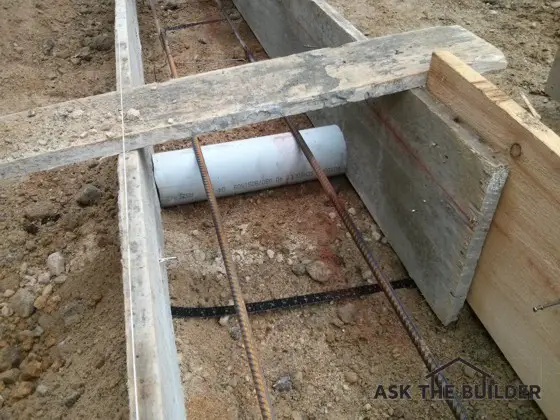
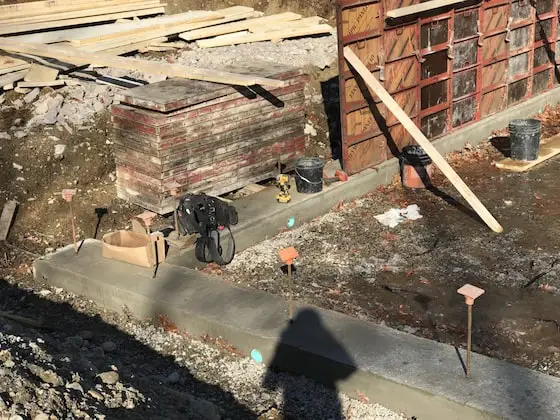
All that’s missing is the concrete for this foundation footing. The white pipe allows water to pass from under the house to the low spot on the lot. Photo Credit: Tim Carter

All that’s missing is the concrete for this foundation footing. The white pipe allows water to pass from under the house to the low spot on the lot. Photo Credit: Tim Carter

Should Sleeve Pipes Be In a Footing Design?

The pipes that you see are a very good thing. That tells me the builder or architect knows how to alleviate tiny artesian water wells inside the basement of your home. Those pipes will allow any ground water that might build up under your basement slab to drain, by gravity, to the soil around your home. The pipes will not compromise the strength of the footer or its ability to spread the weight of your house onto the ground.

Should Drain Tile Be Outside the Footing?

If the builder installs great foundation drain tile outside the footer once it's poured and this pipe continues beyond the house to a low point on your lot where it comes to the surface as the ground falls away, any and all groundwater around and under your slab will naturally drain away and not enter your basement.

What is the Best Lot for Foundation Drainage?

This is why I always tried to purchase and build on lots where at least one part of the lot was lower in elevation than the bottom of the footer. I wanted Mother Nature to provide part of my basement waterproofing for free. When you can drain the water to the low spot of a lot using gravity instead of pumping it out of a sump, you're so much better off.

Why Are Steel Reinforcing Rods Important?

The steel rods you see are supposed to be encased in the concrete. The steel provides tens of thousands of pounds of tensile strength to the footers. Concrete is very strong when you compress it, but when you bend or try to stretch it, it only has ten percent of the strength it has when compressed.

If the ground below the footer does settle, the steel rods will help hold the footer together. The footer itself is not designed to bridge large hollow spots or soft spots in the ground or soil. Think about how steel I-beams and floor joists are made. The vertical web of a steel I-beam is what allows it to support things. The same is true for a floor joist. If you lay a floor joist flat, it bends easily.

Your tall concrete foundation walls are just like the webs of a steel I-beam. This is why it's very important for there to be continuous steel bars about 16 inches from the bottom of the foundation wall and 12 or 16 inches down from the top of the wall inside the poured concrete.

This steel holds, in most cases, the foundation wall together in the event the soil beneath it starts to fail. I hope your plans call for four total steel bars in the foundation. I'd love for them to be 5/8-inch in diameter too.

Based on the photo you sent me, it appears the foundation contractor is not cutting any corners. I'll bet that he'll be putting in the required steel in the foundation, but go ahead and ask him what he's got planned just to be sure.

Column 1100

July 12, 2015 AsktheBuilder Weekend News

If you're new to this newsletter, I think you'll like this Sunday e-blast.

The first thing new subscribers need to know is that the link just above - the AsktheBuilder.com one just before the date - is a SECRET MYSTERY link.

I do that each issue taking you to a page at my site that should really help you. This is a different page each newsletter.

Go ahead, CLICK IT.

I've been crazy busy.

My train schedule has kicked in for the season and that's eating up three days a week.

Be sure to read the Kissing Conductor short story just below!

Two days ago, I left for Maine with my good friend Jim Cluett for 36 hours at Lobstercon. That's an annual gathering of ham radio operators that prefer to operate at low power.

I'm W3ATB. Get it? It's a vanity call sign about my business. w w w AskTheBuilder.com

This coming week I leave on Thursday for another three days in Maine working the prestigious New England Forest Rally.

It's an exhilarating two-day race car event where the top rally drivers in North America - and the world - streak down tiny gravel roads at very high speeds drifting around corners and going airborne.

If you're a ham radio operator that likes to do public service work, this is an event that tests all your skills.

Then there's my roof. I'm continuing to make great progress on replacing my failed asphalt shingle roof with distinctive and wonderful DaVinci Roofscapes synthetic slate.

Suffice it to say, I'm REALLY BUSY.


.
CLICK HERE for Stain Solver - the Certified Organic Oxygen Bleach!
.


Kissing Conductor

I have, perhaps, the coolest seasonal part-time job ever. People would PAY to do what I get to do.

It helps to have a magic hat and real bow tie.

CLICK HERE to read about me and Christina.

There's a GREAT PHOTO once you click. Read the short story and scroll down!

Don't worry, Kathy knows all about it.

Concrete and Blacktop Crack Repair

If you live in the northern hemisphere of the planet, now's the time to be patching cracks and filling holes in concrete and blacktop.

About two months ago, I taped a video showing a REMARKABLE PRODUCT that works for both.

The links to BUY the product are at the two pages below. CLICK BOTH links:

CLICK HERE to see how to work with this product for concrete.

CLICK HERE to read about how to use it to disguise blacktop cracks.

I love this product. You will too.


.
CLICK HERE to SEARCH AsktheBuilder.com for the answers to LIFE and Your Home.
.


New Q and A's for You!

Secrets to Plaster Wall Repair

Matching Brick Color - Rare Tim Carter Secret Revealed!

Galvanized Nails Rust - Yes They Can!

That's enough for now. I'm off to church with Kathy and you have a great day!

Tim Carter
Founder - www.AsktheBuilder.com

Do It Right, Not Over!

Kissing Conductor Tim Carter

Christina & Tim, Train Conductor

The Kissing Conductor was featured in the July 12, 2015 AsktheBuilder Weekend News.

I'm a part-time train conductor in the summer and fall here in Meredith, NH. You can click here for even a better photo of me in my uniform.

Last year, 2014, was my first year and my first week on the job one of my fellow employees, Theresa Drury, bestowed upon me the moniker of the Kissing Conductor.

It happened because on one trip a vacationing Italian family wanted to take my photo. The daughter, in her late 20's, blushed when I asked if she would like to have her photo taken with me. Her parents got huge smiles so we took the photo.

Next I asked her, "May I give you a small kiss on the cheek??"

The young woman got a huge smile on her face, as did her parents, they shot the photo and so it began.

Theresa was one car away at on the boardwalk at Weirs Beach and witnessed the entire encounter. She couldn't believe her eyes.

Last week Christina, visiting from Florida, was on the train with three of her friends. She grew up in New Hampshire and was back for a visit.

We got to talking as I punched tickets and the next thing you know she told me about her love for trains.

"Have you ever had the chance to blow a train whistle?"

"Oh no. Never."

"Would you like to?"

"Are you serious? You can make that happen?"

"Follow me."

Just steps away was the vestibule of one of our historic Lackawana passenger cars. At the north end of the car is the handle to blow the whistle that still works on the car. It's a multi-tone whistle that's the best one on the train.

Think steamboat whistle.

"Watch how I just have to pull this lever a small amount to activate it."

I pulled down ever so slightly and there was the rich tone.

"Now it's your turn."

I moved out of the way and Christina grabbed the lever.

"Toooooooot  Toooooooooot!"

I wish I could have captured her smile.

"Oh that was amazing! THANK YOU SO MUCH!"

"Well, I have a small favor to ask."

Sure, what is it? Christina replied.

"Well, you see, I have this reputation as a ......."

Here's what happened a minute later: (See photo above.)

Thank You Christina, and hurry back to the Winnipesaukee Scenic Railroad!

Plaster Repair Wall

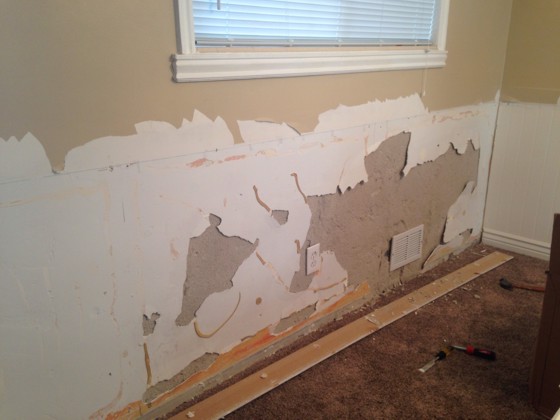
The white coat of finish plaster has delaminated from the coarse brown coat. If you’ve got intestinal fortitude, you might be able to rescue this wall. Photo Credit: Travis Boyer

Plaster Repair Wall | The white coat of finish plaster has delaminated from the coarse brown coat. If you’ve got intestinal fortitude, you might be able to rescue this wall. Photo Credit: Travis Boyer

DEAR TIM: My wife and I removed beadboard wainscoating in a house we just bought. In the process, we destroyed the wall.

The beadboard was glued on and when it came down so did a thin coat of something. I think it's plaster. Why are there two different materials and why did the wall fall apart? How do I repair it?

We were thinking of putting up walnut paneling over the mess to hide it. What would you do? Travis B., Holladay, UT

DEAR TRAVIS: Based on your photo, you're neck deep in a tough repair job. The walls in your house are indeed plaster. It's a superb wall and ceiling finish material that's slowly marching down the timeline from history, to legend to myth. Many ancient buildings have plaster walls and just about every church I know of, including the Sistine Chapel has plaster finishes. Years ago, plaster was put in every house. Now I'd estimate that less than 0.0001% of new houses have plaster.

What is a plaster wall?

Plaster can last hundreds, even thousands, of years because it's rock. Plaster is simply gypsum rock that's mined from the ground. The rock is crushed and heated in a mill to drive out the natural water hidden in the mineral. This chemically unstable gypsum is then ground up and put into bags. When you mix it at a job site with water, you start a chemical reaction that transforms the powder back into solid rock as tiny crystals begin to form, interlock and harden.

This is why it's so hard to pound a nail into a well-built plaster wall. You're trying to drive a soft-steel nail into rock! Plaster is also wonderful because it won't burn. It's easy to paint and it's very durable.

How are traditional plaster walls made?

Traditional plaster walls were always two or three-coat systems. A base coat of plaster was put over wood or metal lath. About eighty years ago, plaster lath was invented. These were small sheets of drywall that measured 16 by 48 inches.

This base coat plaster had sand added to it much like you have larger stones in concrete. The sand added volume and strength. The final thin coat was lime putty mixed with very fine gypsum plaster. The consistency of this material was much like cake icing. Skilled master craftsmen would trowel this on over the rougher brown or base coat. As the crystals grow, the troweling action would transform this white-coat plaster into a hard surface as smooth as glass.

Your wall fell apart because of the adhesive chain. When you have certain things glued to one another in layers, the weakest bond is what falls apart when you subject the layers to tension or pulling.

In your case, the top or final coat of plaster came off where it contacted the rougher base coat. But on other places of the wall I can see where the bond was weakest within the base coat of plaster.

How can you repair a damaged plaster wall?

You can repair this horrible mess if you possess some decent hand-eye coordination. The first step is to remove all the loose material by chipping and scrapping it away. You can buy base coat plaster called Structolite that can be used to fill in the deep areas where the original base coat is missing. You trowel on this new sandy plaster and rub it with a coarse rubber or sponge float.

It's surprisingly easy to apply and finish this Structolite. Start with a small amount and play with it. Only mix up enough that you can use in 15 minutes and might cover just a couple of square feet. Get the hang of working with it.

I'd not recommend you try to use traditional lime putty and plaster as that requires some training. You can buy dry setting joint compound that's the baby brother of real plaster. This gypsum product has a small amount of real plaster in it and when you mix it with water it starts the same chemical reaction. As the joint compound gets hard, you can smooth it with a trowel and wet sponge.

I don't know if I'd install the walnut paneling. Based on your photo the room seems small and there's not a great amount of natural light. The walnut paneling will make the room feel even smaller than it is.

Realize you'll have to strip all the baseboard from the room before you do the paneling. You'll also have to do that with all the window trim and any door trim. What do you intend to do with the painted window? It won't match the walnut paneling.

You'll also have to install a custom extension jamb at all windows and doors as the paneling will extend beyond the face of the existing plaster. This is not as easy as it seems and requires some good carpentry skills.

If it were me, I'd futz around repairing the damaged plaster and paint the room a nice bright color. You can also wallpaper the room if your plaster repair is a little bumpy. Select the right wallpaper and the bumps will be mostly hidden by the wall covering.

This column was so popular, Tim featured it as the Mystery Link in his September 13, 2015 AsktheBuilder Newsletter.

Column 1099

July 3, 2015 AsktheBuilder Weekend Warrior

"Are you doing the roof job yourself?"

"Yeah, I needed a project to keep me busy all summer."

Howard shook his head vigorously while he chuckled. He undoubtedly thought I was either extreme, insane, or who-knows-what.

Howard had just finished loading into his giant SUV with something he had just bought from me on Craigslist.

He and his wife are summer residents up here in my town of Meredith, NH. The rest of the year, they live down in the People's Republic of Massachusetts.

That's a joke as many, many NH residents fume at lots of the MA residents who come up here in the summer.

I've met some great folks doing business on Craigslist, but some very bad people lurk there, so if you decide to sell or buy in this marketplace, be sure you protect yourself.

Believe me, when someone shows up, I'm always able to react in just a few seconds if the deal blows up.

As for the roof job, if you're a new subscriber, I'm in the process of putting a new roof on my home.

Why?

Because a 30-year-old dimensional shingle made by a major manufacturer began to FAIL CATASTROPHICALLY in just 10 years.

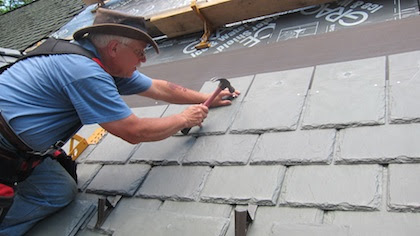
I'm putting on an amazing synthetic slate advanced polymer roof made by DaVinci Roofscapes.

CLICK HERE to see the product I'm using.

It's been a DREAM to work with. Here's a photo of me with my official Australian Outback hat to keep the sun off my face and head.

I NEED HELP

I decided to do a very large investigative written piece on the failure of my asphalt shingle roof.

I produced a set of questions I put to the Asphalt Roofing Manufacturers Association, GAF, Certainteed and Owens Corning.

So far all but one company in the above list has DECLINED to answer my questions. (Read the January 11, 2015 AsktheBuilder Alert to read when I discovered a Class Action Lawsuit.)

They're circling the wagons.

What does that telegraph to you?

Here's what I need.

I need to speak - either ON or OFF the record - with you or a friend if:

  • you're a chemical engineer in the asphalt industry
  • you worked in an asphalt shingle plant
  • have any professional background in the asphalt shingle manufacturing process

I believe I know exactly why asphalt shingles are failing and I need help in getting answers so you have the best chance at getting a product that works for you.

Please CONTACT ME if you can help me.


.
CLICK HERE to SHOP in my Store!
.


Thermal Camera for Smart Phones

Yesterday, I participated in a live private webinar about the latest thermal imaging camera you just plug into your smart phone.

The camera is made by FLIR.

It's going to be called the FLIR ONE.

WOW is all I can say.

Moments ago, I just downloaded the app for my phone and I intend to try the camera out today on my roof.

I'm keenly interested to see how HOT the DaVinci Roofscapes synthetic slate shingles get.

I'm guesstimating they'll be over 150 F. I know as I've been burned about three times not paying attention!

Soon, after testing, I'll get back with you about how this.


.
STAIN SOLVER cleans ALGAE off your Stuff! Get Some NOW.
.


Fireworks Safety

Tomorrow is our big USA national holiday - July 4th.

It celebrates the day we, as colonists, decided to stop putting up with tyranny. I asked a UK citizen yesterday if they've gotten over it yet. He sort of mumbled.

Anyway, lots of people set off fireworks at home.

The home displays rival some professional ones as MANY people up here at the lake shoot them off. Thousands of dollars go up in smoke here around my lake every year.

Two years ago, my neighbor set my yard on fire down at the shoreline of the lake with one of his fireworks. There were a bunch of dried leaves and pine needles that covered the ground. It could have started a serious brush fire but didn't.

Years ago, a similar thing happened at my in-laws house.

We set off a spinning saucer thing and it set a dried bush on fire next to the house. I was STUNNED at how BIG and how FAST the bush went up in smoke.

Fortunately, the house was brick and nothing happened.

In the time it took us to react, get the garden hose in position and turned ON, it was TOO LATE.

Here's my list of tips:

  • Wet down ALL dried landscaping
  • Keep the hose out, ON and CHARGED ready to go
  • Move cars away from fireworks
  • Don't set neighbors houses on FIRE
  • Try to use common sense

Other than that, have a BLAST and be safe.

I'll be back next week. I'm working all weekend on the roof.

Oh, I'll share a pretty cool story about my first two real days back on the train as a Conductor.

Yes, I'm a real conductor on a real train.

CLICK HERE to see.

Here's the story tease:

The Happiness Store is OPEN for business.

Tim Carter
Founder - www.AsktheBuilder.com

Do It Right, Not Over!


.
Go to TOP of Newsletter and CLICK the MAGIC SECRET link! It's right before the words Weekend Warrior. Or JUST CLICK HERE!
.

Matching Brick Color

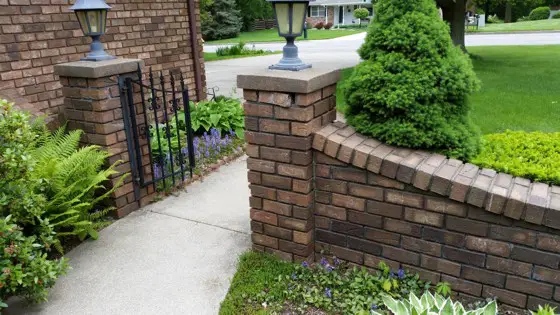
DEAR TIM: Our house has a free-standing decorative brick wall with an iron gate. In various places, the bricks are crumbling. In some places, the entire face of the brick has come off. I do not have enough replacement bricks to replace the damaged bricks. Must I replace the bricks that are merely crumbling or could sealants and mortar repair preserve them in their present state? I have had three contractors out for estimates and they all say they cannot match the brick, mostly because it is oversize. What would you do to solve this problem and prevent future brick disintegration? Boyd B. Kalamazoo, MI

DEAR BOYD: While I've never been to your city, it's name is branded in my memory forever because my first electric guitar was a Kalamazoo. I believe Gibson had a plant in your fine town. That powder-blue guitar is long gone, but I still have my Gibson 12-string acoustical guitar. Fortunately for you, I was a so-so guitar player and instead of becoming a rock star, I sauntered down the building and home improvement path so I'm now here to help you!

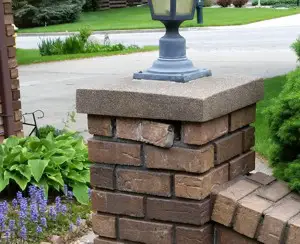
The brick just under the concrete cap to the right of the gate is falling apart. The challenge is to locate replacement brick to match. Photo Credit: Boyd Bronson

The brick just under the concrete cap to the right of the gate is falling apart. The challenge is to locate replacement brick to match. Photo Credit: Boyd Bronson

Based on the photo that you sent to me, I'd render the opinion that you're not going to be able to repair most of the damaged brick in their present state. If you're lucky enough to have a few brick where the entire face is loose and you can remove it with no damage to the visible face, there's an amazing epoxy you can use to permanently attach the brick back again. You can discover more about this multipurpose masonry epoxy and how to use it by watching a video at my AsktheBuilder.com website. CLICK on concrete epoxy repair video to watch the video.

The odds are you're going to have to use existing brick you have or locate some of the original brick. I realize the contractors told you they couldn't match the brick, but from your photo your home seems newer and there's a very good chance the brick suppliers in your area can help you. You're going to have to take several of your brick around and visit each and every brick supplier to discover the truth if the brick, indeed, are no longer made. Your search may have to be expanded to a 50 or 100-mile radius to every brick supplier you can find. It will be well worth a few short road trips to find the brick.

Photo Credit: Boyd Bronson

Photo Credit: Boyd Bronson

Let's talk about why the brick in the decorative wall are failing. Not all brick are the same to start with. Brick starts out as clay and when it's fired in a kiln the heat changes the mineralogy transforming the soft clay into an artificial rock. The type of clay, the temperature in the kiln and the length of time the brick is fired all combine to control how hard and weather resistant the brick becomes. Some paving brick becomes so hard it almost resembles granite cobblestones with respect to hardness and ability to resist decades of being installed horizontally in a roadway that's exposed to ice and snow.

Softer brick doesn't fair well when installed in an exposed wall like you have. The same brick on the walls of your home do quite well because the roof overhang helps minimize water infiltration into the brick. But the rain that falls on the top of your wall in the late fall or during the winter can soak deep into the brick. When the water freezes, it expands and the brick is just not hard enough to prevent fracturing.

You can minimize future damage, once you repair the damaged brick, by applying high-quality clear sealants paying particular attention to the brick-mortar interface. Lots of the water is entering the brick through the mortar and where the mortar and brick touch one another. You may not see micro cracks here, but they exist.

The sealants I prefer are breathable silane-siloxane water repellents. Let price be your guideline for the best ones. I'd also locate a specialty store in your area that sells masonry products to commercial contractors. These businesses tend to carry the absolute best masonry sealants specified by commercial and institutional architects. Avoid the temptation to purchase a sealant from a big box store or home center. That's the absolute last place I'd go to purchase a brick sealant.

If you run into difficulty finding the exact brick to match what you have, you do have an option you may not have thought of. You can harvest enough brick from a face of the garden wall that's hidden, or will be, by a dense evergreen shrub. The thought of doing this makes most shudder and I agree that it introduces a permanent scar on your garden wall, but the brick are there. Do this at some location in your garden wall where it faces a neighbor and the shrub that's planted looks like it belongs. No one will be the wiser. Replace the brick you harvest with ones that are the same size and as close in color as you can find.

There's another trick you can employ that will help minimize future damage to the wall. I'd purchase some treated plywood that has the same chemicals in it that's forced into dimensional deck lumber and posts. I'd allow this plywood to dry in a garage out of the sun. After sixty days, I'd cut the plywood into pieces that are six inches wider than the garden wall. I'd then paint the plywood strips in a camouflage manner so they somewhat look like the mottled appearance of the top of the brick walls.

I'd lay these panels over the top of the wall with 3 inches extending over each face of the wall in early November and weight them down so they don't blow away. These pieces of wood will stop most of the rain from soaking into the brick even though you've sprayed them with the clear water repellent. They provide the same protection to the wall that your roof provides the brick on your home. The panels may not look the best over the winter, but you want the wall looking fantastic is the spring, summer and early fall when you can be outdoors to enjoy it.

Column 1098

June 23, 2015 AsktheBuilder Newsletter

Summer's here! It's official.

The summer solstice was a few days ago. Now we're experiencing a solar storm that's messing up my amateur radio bands.

The solar storm, however, is creating some great auroras in the night sky for some in the USA, so if it's clear at night, go out and look north!

I worked on the train this past weekend for the storied Laconia Bike Week, but the traffic was way down.

You may have responded to me about wanting to see my colorful bow tie and my new tattoo.

CLICK HERE to see both!

.
CLICK HERE for a Walk Through Checklist!
.


Water Bottle Review

With me working up on my HOT roof, I've sort of become a water bottle expert the past month. I've got all sorts of water bottles around, and have tried them all to slake my unquenchable thirst.

But two days ago, I received some very innovative water bottles from Contigo.

They are the Autospout water bottles.

Here's what I really like about these water bottles:

  • assortment of vivid colors
  • angled straw that gets out the last drop
  • hinged carry clip to snap onto a backpack loops, etc.
  • protective spout cover!
  • button lock prevents accidental opening
  • 100% BPA-free baby

The bottom line is they're innovative - seriously. I thought my Camelback was the cat's meow. It's now just a squeaky mouse.

CLICK HERE to buy these great water bottles.

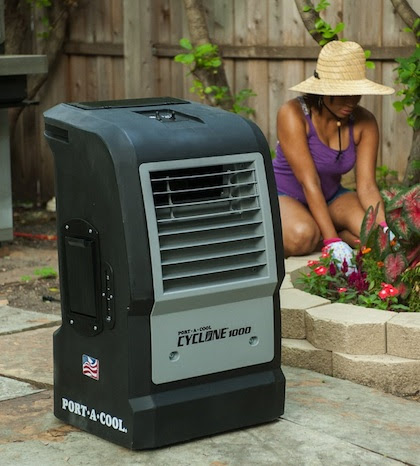
Portacool Cyclone 1000 Review

Late last summer, I had a chance to test a portable evaporative cooler.

This is a cooler that uses water flowing over a filter to extract heat from the air.

They work great the higher the temperature and the LOWER the humidity of the air. This means they're of little use in Florida or NOLA but can save the day if you're just about anywhere west of the foothills of the Rocky Mountains.

The first unit that was shipped to me was damaged.

The outer plastic case seemed to me to be made from a low-quality plastic, but I'm no plastics expert.

This is a device you can put outdoors to blow cooler air over you, your family and your friends as you sit on your patio or screened porch.

The woman in the photo would be cooler working in her garden if she had it pointed at her. (Yes, I know it was a photo shoot and you want to see the front of the machine.) 😉

I filled the unit with water, turned it on and in just a few minutes it was blowing cool air.

It's a very basic design as any cooling engineer will tell you. A pump carries water from a reservoir up to a tray where the water then is distributed over a paper filter.

A fan draws hot dry air through this filter and the heat is absorbed into the water. Since evaporation is a natural cooling process, the air coming out of the unit is cooler.

As with anything like this, be sure to read other consumer reviews before you make a purchasing decision.

It's a rather imposing unit so it's like having R2D2 at your Sunday picnic. All that's missing are chirps, buzzes and other electronic sounds!

CLICK HERE to get the specs on the unit or to consider buying it.

The Mystery Link Clue

Scroll back up to the top of this newsletter.

See the word AsktheBuilder.com just above your name and right next to it is the date June 23, 2015? (Not shown in this online column.)

That's a link to this issue's mystery link!

Here's a clue of what you'll discover when you click the above link:

Something is 100 times stronger than something else when you try to stretch it.

CLICK THAT LINK for this issue's mystery column!

.
Yo! CLICK HERE and see PAST Newsletter Issues!
.


Asphalt Shingle FAILURE Update

Last issue I told you that I decided to do an investigative report on asphalt shingles - the most popular roofing material in the USA.

I decided to do this because my IKO brand 40-year-guarantee shingles began to disintegrate after just 12 years. They're crumbling, brittle, cupping and losing granules with each drop of rain that falls on them.

The Asphalt Roofing Manufacturers Association (ARMA) refuses to answer questions I've submitted.

I received an email from the Certainteed PR rep this morning that they're also declining to answer my questions.

Fortunately, I had a positive conversation with a PR person from Owens Corning last week.

Here's one of the things I pointed to in my questions to the top three manufacturers:

Prior to the 1960's many houses, if not all, had no soffit ventilation and most certainly no ridge ventilation. Most houses just had simplistic triangular small gable-end vents.

Back then, shingles you'd see that did have large patches of exposed mat with no granules were almost always shingles that had far outlived their useful life.

Why is it that many shingle manufacturers are now saying shingle failure is directly related to poor ventilation? Historical facts don't support this claim.

Sometimes you need to go back in time to put things into perspective.

I'm pretty sure I know why modern shingles are failing and we'll see if I can get good answers to my questions.

STATUS UPDATE!

I was about to send this newsletter when the ARMA rep reached out to me telling me the manufacturer of my shingles wanted to talk with me.

Derek Fee from IKO called me, and to make a long story short, he's coming to my house on Sunday to inspect my defective shingles.

It's going to be interesting to see what happens next.

New Q & A's for You

Cheri's Washed Out Driveway

Truth About Galvanized Nails

Bernadette's Garden Wall Repair

Remove Foundation Waterproofing

That's enough for today.

I hope to have something for you on Friday.

Tim Carter
Founder - www.AsktheBuilder.com

Do It Right, Not Over!

Driveway Repair

Cheri Bednarck lives in  McAlester, OK.

She's got a driveway issue and needs a repair.

Here's what she told me:

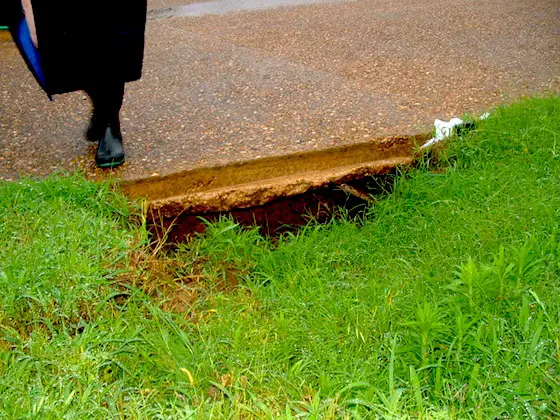
"My property sits on a sandbar. My driveway has been cracking and slipping for years.

During the latest downpour a large undermining area has washed a lot of the sand between the driveway and the street.

Here's the washout on Cheri's driveway. It's easy to fix. Photo credit: Cheri Bednarck

Here's the washout on Cheri's driveway. It's easy to fix. Photo credit: Cheri Bednarck

Is there a way to fill under the driveway with gravel? I'm trying to avoid a complete new driveway for awhile."

Here's my answer:

Cheri, yes!

Just use large angular rocks about the size of grapefruit. It takes lots of water to move those rocks.

Red Dragon Tattoo Tim Carter

red dragon tattoo

I'm about to board passengers for the trip from Meredith, NH to Weirs Beach. My, what a handsome tattoo, Mr. Conductor! Photo credit: Theresa Drury

"Oh, I see you've got some fresh ink," uttered my youngest daughter's very good friend Andrea as she admired, I think, my tattoo.

Her outburst of scoffing laughter telegraphed immediately that she was mocking my gorgeous temporary red dragon tattoo. My sarcasm meter obviously was on the fritz. But it was all in good fun. She wasn't being mean.

Red Dragon Tattoo Fools Many But Not All

I had applied it two days earlier to try to blend in with the crowds that would be riding the train back and forth between Meredith, NH and the Weirs. It's Bike Week in Laconia and tens of thousands of people with real ink injected into their skin would be in the area sporting their body art.

Andrea and my daughter Kelly had just boarded my train and were on their way to see what was going on down at Weirs Beach on Saturday night, June 20, 2015. Read more on this story in my June 23, 2015 and  August 16, 2015 Newsletter.

I've applied this temporary tattoo lots of times over the past few years. I feel it's pretty handsome, but anyone who knows anything about tattoos realizes, upon close inspection, that it's just not real.

red dragon tatoo

There it is! The red dragon! Photo credit: Theresa Drury

Temporary tattoos look horrible just after they're applied. They have a very shiny high-gloss appearance. But that dulls down after 24-48 hours. The trick is to not rub the tattoo with a towel. If you abrade your skin, you'll ruin the thin acrylic coating. Just pat it dry after a shower.

From five or ten feet away, you'll fool most people. Those who have real tattoos will think you're a baby and a poser since you don't have what it takes to commit to a real tattoo.

Oh well, it's still fun and quite a few people look at it.

CLICK HERE to buy an assortment of red dragon tattoos and many other designs.

What I like about having the tattoo is the prejudicial looks you'll get from some people who have known you, but never seen you without long sleeves on. I often do it in social situations to just sort of get a rise out of acquaintances.

You can see their eyes taking rapid-fire glances down at the shocking site as they think I'd NEVER have a tattoo. You can absolutely have some fun with them.

The social stigma of tattoos still is powerful, but rapidly fading, and many people pigeonhole people with visible ink into a different subset.

For me, I feel they're colorful and some tattoo artists produce stunning works of body art.

Lots of people on the train had real ones, but not me.