Tiny Titan Water Heater Video

Tiny Titan Water Heater Checklist

  • easy to install
  • 2.5-gallon capacity
  • electric power
  • compact

Hi, I’m Tim Carter and I am here with Tom Fairbrother of Lakeside Plumbing in Meredith, NH. We are going to install this fantastic, point of use, Tiny Titan Water Heater. It is electric and just plugs in and is really easy to install.

Is the Tiny Titan Water Heater Easy to Install?

The heater is easy to install. It comes with a handy mounting bracket and screws. You just put it on the wall, level it and tighten down the screws. The mounting bracket acts as a French cleat and the water heater just sits down onto the bracket and gravity holds it in place.

What are The Installation Steps?

Now, all that needs to be done is install the cold water supply line and the hot water outlet line. These connections at the heater are standard 1/2-inch iron pipe nipple connections.

Do You Need Female Adapters?

You will need to sweat on a half-inch female adapter on to a piece of copper pipe. That is what Tom has just finished doing.

This one is still extremely hot. You need to solder these on first so you don’t put any unnecessary heat near the top of the water heater.

How Big is the Tiny Titan Water Heater?

This Tiny Titan Compact Water Heater is 2-1/2 gallons. Installation was simple, a wall bracket, cold water supply line, hot water outlet line and an electrical outlet.

Does It Come with a Factory-Installed P&T Valve?

This comes with a temperature - pressure release valve preinstalled from the factory. All you need to do is run a 3/4" copper line from the valve down to the ground, leaving an air gap at the bottom of the line. This line is in case of a pressure malfunction in the water heater, the water comes out of this pipe.

Does the Heater Have an On/Off Switch?

One quick thing - this model has a thermostat with an off switch. You will notice that it is plugged it. But you never want to plug in this water heater until after the water lines are connected and it has water inside the heater.

Since this is an electric water heater and you make a mistake and plug it in before it has water in it and if the thermostat is on, the elements will instantly burn up. So never plug it in until after it has water in it, all the air is out of the system and there are no leaks. Then you can plug it in.

The Tiny Titan Water Heaters are great if you have a need for just a small amount of hot water.

Tub Caulk Tips

tub caulk

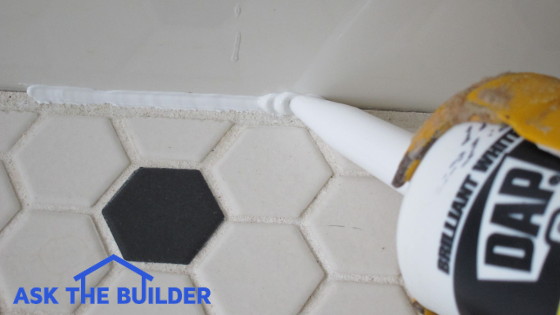
The contact point between the tub and floor tile in the bathroom is but one place you need to caulk when sealing a tub correctly. PHOTO CREDIT: Tim Carter

DEAR TIM: The caulk around my tub is pretty gross. It’s missing in places where the ceramic tile meets the tub. What’s an easy way to remove old caulk? What are the secret tips to caulking a tub? What kind of caulk should I use? Where should I caulk? What are the biggest mistakes a person makes when recaulking a tub? Lafawnduh S., Boise, ID

DEAR LAFAWNDUH: Leaks around tubs can often be traced to bad caulk jobs or missing caulk. The trouble is, many people are unaware how to properly caulk tubs. While it’s not hard to do, don’t be fooled by many of those TV shows and smiling personalities that promise you it’s so easy to do! There is some skill involved, and indeed you need to know a few secrets.

Let’s start with removing the old caulk. Using a razor knife, you should try to cut away as much of the hardened caulk as possible. The flat razor scrapers that are used by painters to remove paint from glass work pretty well for this job. Just take your time and slide the blade between the caulk and the surfaces it touches.

Make repeated light strokes with the razor knife, not one cut stroke using lots of force. If the knife slips, you can damage yourself quickly or something in the room. You want the tool under control at all times.

If the caulk is too hard to cut, it can be softened with liquid caulk removers. These work best if you soak narrow strips of paper towels in the solvent and lay them on the caulk. Then immediately cover the paper towels and caulk with a wide piece of blue painter’s tape so the solvent doesn’t evaporate. Come back the next day and the caulk should be easy to remove.

Once the old caulk is gone, then it’s time to clean the tile and tub and dry it. Use small amounts of water and the cleaner of your choice to remove any traces of dirt, soap film, grease, etc. from the tile and the tub. Use white vinegar to remove hard water deposits. All surfaces that are going to receive caulk need to be clean and dry.

Here’s one of the secrets. In some situations, water can get behind the tile and tub and soak the substrate. If this happens, it will be virtually impossible to get the new caulk to dry and cure. The water behind the wall will keep the new caulk in a semi-liquid state and when you next use the shower or tub, the caulk will wash out. I’ve seen this happen.

You can use a fan, a hair dryer, or some other blower to get the crack between the tub and the tile to dry. If left to dry without these aids, it can take a week or more! This means you’ll need to have another location to bathe and shower.

The places that need caulk are the joints where the tub and tile meet up with one another, and where the tile abuts faucets, spigots, shower arm pipes, floor tile, etc. Think about where water splashes and where you might see it outside the tub after you use it.

All these places need to be sealed so water can’t flow or seep behind walls, under floor tile or migrate to where it can cause mold and wood rot.

I like to use water-based caulks that are labeled for tub and shower use. There are general-purpose caulks, but they don’t seem to be formulated for the high-moisture environment you have in a regular home shower and tub area.

The biggest mistakes you can make while caulking a tub are failure to have the surfaces clean and dry. Remember, caulk is basically just glue. It’s sticky. It adheres to things, but if the surface is not clean, it will not bond well.

Failure to tool the caulk so it’s feathered out well at the edges is another big mistake. The caulk joint needs to be smooth. Avoid smears on the surfaces. Caulk must needs to look professional. This end result comes with practice. I suggest you actually set up two scrap pieces of ceramic tile at a 90-degree angle and practice.

Watch the video I have at my website that shows you how to tool caulk. Type: Caulking Video into the search engine at www.AsktheBuilder.com to find it quickly.

It also helps to have a fantastic caulk gun. All too often, I see homeowners use cheap inexpensive caulk guns. They squeeze the handle and the caulk blasts out of the caulk tube making a huge mess.

I’ve used for years a professional caulk gun that has a 26:1 mechanical advantage lever. I just have to gently squeeze the handle and a precise amount of caulk flows evenly from the tube. You’ll be stunned how much difference it makes in the finished product when you use a great caulk gun.

Column 909

Gift Guide


Gift Guide

I've assembled a boat load of gift ideas for you. I discovered long ago that quality tools help ensure a great job and they can last for generations.

That's what you'll discover in this Gift Guide - quality tools, many I own and use on a regular basis. If one of my gift suggestions is of interest to you, simply CLICK the blue amazon word at each listing to be taken directly to that gift. You’ll be able to see re-views, get technical specs and much more!

The gift guide is broken down into the following web pages, or you can download it in PDF format by clicking here or on the image at the top of the page.

Smaller Tools Cordless Drills Cordless Circular Saws For the DIYer with Everything

The links in the Guide take you to Amazon.com where I do lots of shopping. I trust Amazon and so should you. If you do purchase from them, I get a very small commission. That helps me continue to offer to you all the free content and videos you see at AsktheBuilder.com.

Thanks for your support!

Tim Carter

AsktheBuilder Logo

November 8, 2011 AsktheBuilder Newsletter And Tips

What's in This Newsletter?

Latest News
Christmas Gift Guide
Quick Window Cleaning Tips
Smudgy Granite Countertops
FAQ About Floor Grout Sealers
Facebook News

We're experiencing some magnificent Indian Summer weather right now here in New Hampshire. I'm going outdoors in about an hour for the rest of the day. It's sunny and a crazy 61 F as I type this. It could get to 64 F possibly. It feels like a spring day.

About 90 minutes ago, I was up the street taping a video featuring a Tiny Titan compact electric water heater. These are great devices if you need just a small amount of hot water. I'll be editing that video in the next few days and hope to have it for you very soon. It's so easy to install, you can't believe it. I mean caveman simple.

Christmas Gift Guide!

AsktheBuilder Christmas Gift Guide

Thanks to my wonderful daughter Meghan, my Christmas Gift Guide is ready for you. It contains suggestions for tools of all sorts and all budgets.

Many, if not all, of the tools in the guide I own and use. I could have put in hundreds more, but that would just be too overwhelming.

Be sure to download and open it. You'll love some of the captions I wrote.

When you click to see more about each tool, I take you to Amazon.com. You can not only do comparison shopping there for similar tools, but everything under the sun is also at Amazon.com.

I'd appreciate it if you would do some/all of your shopping at the same time you go there after you click. I do get a very small commission if you buy, and that helps keep the content and videos at AsktheBuilder.com free for you!

You can also help me by forwarding the link to my Gift Guide to all you know. Relatives, friends, co-workers, etc. might appreciate the suggestions.

Thanks for your support, I really, really appreciate it.


Quick Window Cleaning Tip for Holidays

Are you having company over for the holidays? Are you TIRED of smeared and foggy glass windows and doors?

Would you like it if I showed you how EASY it is to get glass crystal clear like pros do? You're not going to believe how easy it is.

Watch this Window Cleaning video of mine.

Please read this Window Cleaning column at my website.

The simple tools you need to clean windows can be found at most hardware stores or on Amazon.com. If you open my Gift Guide and click to look at tools, search for the window cleaning tools while you're at it and put them in your shopping cart right away. Order now so the tools get to you in plenty of time.


Smudgy Granite Countertops

Alica from Farmington, Minnesota wrote to me:

"Hi Tim, We have black granite countertops in our home but they are always smudgy looking. I feel like I'm wiping them down constantly with dish soap and water to get rid of somebody's hand prints. I also use granite wipes to clean them off. But, they always seem to look plain messy to me. Am I doing something wrong? I've never had granite before so I'm not sure if the "smudginess" is normal. Thank you!"

Alica, your question is excellent, and I believe you gave me the needed clue to unravel your mystery. First, granite should not appear smudged unless there's a film on it or people in the house have greasy hands.

Most liquid dish soaps contain vegetable or animal fats. Isn't that crazy, as you use these products to get rid of oils from cooking and food preparation.

I believe the problem you're having is that there may be a slight film of soap left from when you clean.

Here's how to test if I'm right. Mix up some of the liquid soap and water as if you were going to wash dishes. Make sure the water is warm or hot.

Take a new dishrag and soak it in the solution. Wring it out and wipe down HALF of a smudged countertop. Really clean it.

Take a new dry dishrag and get it wet with clear water. Wipe down the part of the top you just cleaned. Rinse it three times. Rinse out the rag each time with clear water to ensure there is absolutely no soap residue on the granite.

Immediately take a clean bath towel or other soft cotton CLEAN rag and dry and buff the granite. It should look shiny, clean and be smudge free.

If not, there's some other product on the granite, perhaps too much sealer?

Please let me know how this works. I'm willing to bet the part you clean and dry will look spectacular.


FAQ About Floor Grout Sealers

Thanksgiving, Christmas and New Years are just around the corner. I'm sure there's going to be an accident at your home with some food or drink. Read this to be prepared and to lower the stress around your home.

If I had a quarter for every time I was asked, "Should I seal the floor tile grout that was just installed?", I'd be able to fill lots of those orange coin wrappers!

Grout sealers are a wonderful product, but as with most products, there's often an unintended consequence when you use it.

In the case of grout sealers, they interfere with cleaners that try to deep clean stains that get behind and under sealed grout.

But you say, "Tim, the sealer STOPS the red wine, cranberry juice or grape juice from getting to the grout!"

"But what about where the grout ends and the tile stops? You know, that interface where there is a very tiny crack," I retort.

When the red wine, grease, grape juice, chocolate sauce, kid's spilled juice box gets UNDER the sealer and into the grout, what then? Let me tell you, it can be VERY hard to clean the stain.

This is why I'll NEVER seal my floor grout. I want to be able to easily clean it. I don't want a sealer in my way when I try to clean.

Watch the video at this page in my shopping cart to see how easy it is to clean grout that's NOT been sealed. The same product works for carpet, heirloom table clothes, upholstery, etc.


Facebook News!

AsktheBuilder on FacebookDo you use Facebook? I've got a Facebook Fan Page that really sees some action during the week.

There's LOTS of tips there that never make it into this newsletter.

Please go there now and LIKE me so you can start to get FREE tips from me when you login to your Facebook page.

Drainage System Tips

DEAR TIM: I live on a slight grade and my yard is very wet when we get days of rain or after the snow melt in early spring. Do you think there’s a spring in my yard? Is there an affordable way to dry out my yard so it becomes something other than a mud pit?

Surely I’m not the only person with this dilemma. Can you explain why some yards are well drained and others are not? Susan E., Akron, OH

DEAR SUSAN: You’ve come to the right place for this advice. My college degree was in geology, and two of my favorite subjects were geomorphology and engineering geology. Suffice it to say, I know a little bit about land forms and what you can do to intercept and divert the flow of underground water. It’s absolutely possible you have a seasonal spring in your yard.

trench nearly 5 feet deep

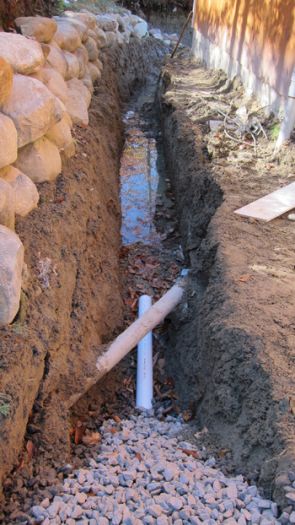
This is a trench nearly 5 feet deep. The coarse gravel allows water flowing through the soil to fall rapidly to the bottom and flow into the drain pipe. PHOTO CREDIT: Tim Carter

Let’s first explore what’s happening in the ground. Think of soil as a giant sponge, and I mean giant. If you have a dry or slightly damp sponge sitting on a dry countertop and drip water into it, the water drop disappears into the sponge. If the sponge is really dry, the water would never make it to the countertop. It’s absorbed into the dry sponge matrix. The same thing happens in dry soil when it rains.

But when soil starts to get too much water, the weight of the water and gravity act to pull water through soil. Because this is happening below the surface, it’s invisible. Believe me, water is on the move through soil and it can happen for days or even months after a rain. This is what causes real springs to produce water 24 hours a day.

Some soils have a clay component or a dense hard clay deep in the soil sometimes called hardpan. Clay and hardpan block water from moving down deeper into soil. This is one reason it’s used to line pond bottoms and it’s a great raw material for pottery that holds liquids.

Add to this the fact that most soils have a vertical profile that changes the deeper you go into the soil. The very spongy top of the soil that you often call topsoil, is the part that really absorbs water. But below it, the soil becomes more dense and water can have a very hard time traveling through it if there’s lots of clay. In these cases, and those of hardpan, the water moving through the soil starts to travel sideways along the border between the topsoil and the denser zone. If the ground is sloped then the water moves sideways and downslope.

This is undoubtedly what’s happening in your yard. I happen to know the soil profile where you live as it was victimized by one or more continental glaciers that left layers of clay behind many feet thick.

To solve your problem, you need to use the same engineering technology that we’ve used for years to collect rainwater from roofs. You need a gutter and downspout solution, but inside your soil. You’re going to install a drainage trench in your yard that collects the subsurface water and transports it to the lowest part of your land where it would end up by default if you didn’t live there.

Think of it on a big scale. The slope of your land and that above your property is like a roof. Many thousands of gallons of water could be flowing downslope in the soil towards your property and you need to capture it just like a gutter collects rainwater. You do this with a simple trench that can be anywhere from 2 feet deep up to 8 feet or more.

The depth of the trench is a function of many things. The most important one is the elevation of the lowest spot on your property. Since you’ll rely on gravity to move the water, you need to make sure the water can flow by itself through the trench to the lowest part of your land.

This trench will have a perforated drain pipe in it and will be filled with clean washed stones or gravel that are the size of golf balls or slightly smaller, perhaps the size of a large glass marble.

The trench is dug so that it protects your yard, your basement, your crawlspace, etc. like a moat protects a castle. The trench may only need to be L or U-shaped so that one or both ends eventually daylight. This happens if you keep the bottom of the trench level or just with a slight slope and the ground falls away. Eventually, just like a cave or mine entrance on a hillside, the trench ends.

If you want to really make your yard dry, you should fill the trench up to nearly the top with the stone. This makes for a highly effective gutter in the ground.

The drainage system works because water finds it infinitely easier to flow down through the gravel than push its way through the soil. Water always wants to travel the path of least resistance.

The trench only needs to be a foot wide, and can often be just 6 inches wide to be wildly successful. If you need to use a digging machine, you may end up with a trench 16 or 24 inches wide. There is nothing wrong with this, it’s just that you’ll end up buying more gravel.

Column 908

Want a step-by-step procedure on installing a Linear French Drain? Tim's Linear French Drain Streaming Video shows you how to keep your basement and crawl spaces dry. CLICK HERE or on the image below to order Tim's Streaming Video.

Linear French Drain Streaming Video

Do your own DIY install of a Linear French Drain with Tim Carter's time-tested methods and materials! CLICK IMAGE TO ORDER NOW!


November 2, 2011 AsktheBuilder Newsletter And Tips

What's in This Newsletter?

Latest News
Drywall Plug Video
Kitchen Ripoff
Tool Survey
Builders Speak Up
SquareNTape
Facebook

I'm pretty stoked. CAPS below for emphasis, not screaming.An hour ago, I finished the 2011 AsktheBuilder Christmas Gift Guide. It's being formatted now. I'll give you the link to it next week.

As I was creating the Gift Guide, I ran into something that drives me crazy. Pay attention if you or the company you work for sells ANYTHING and want more sales of your product.

Ten days ago, I got a really great tool from the Sears PR team. It's a simple tool that holds one of their Nextec lithium-ion batteries.

This tool is a remote power source for your cell phone, iPod, or any other device that you would recharge using a 120-volt transformer or cigarette lighter plug in your car or truck.

The tool has one socket for a cigarette lighter and two standard-sized USB sockets. Can see how convenient this would be when you're on the move and can't let your device sit still next to a wall plug? It's a GREAT tool to have while traveling, camping, hiking, stuck on the tarmac for 8 hours in a plane, etc.

But this great tool is NOWHERE to be found on the Sears website much less on Amazon.com. It's AWOL.

They're not alone. Ryobi has a similar remote power supply that accepts their Tek4 batteries. You can find other Ryobi tools on Amazon.com, but not this one.

Think about it. What products does YOUR company sell that hundreds or thousands are actively LOOKING for on Amazon.com? I'll bet more than you'd ever imagine.

A year ago we put Stain Solver on Amazon.com. The first month it sold so much that Amazon thought we were a fraud. They locked down our account and would not transfer money to us until they were confident that customers would be happy with it. I was not angry, but I was amazed at how much we sold!

If you have products you sell, for goodness sake get them on Amazon right now. Here's a handy link for you.


Drywall Plug Video

You know that saying, "Be careful what you wish for?"

Well, I heard you loud and clear. You want to see me create my own drywall plug using a scrap piece of drywall. I promise you that video will be done by next issue. Wow - thousands of requests for that video!


Canadian Kitchen RIP OFF Autopsy

Anita  from Cambridge, Ontario Canada emailed me. Oh, it was hard to stomach:

Hi Tim, I enjoy reading your newsletters. I'm hoping you can give me some advice with this issue.

I hired a company to re-do my kitchen. It was to be a three-week project. It began in July and now it's the end of October. The job is still not complete.

They took the old set of cupboards out. I hired another company to re-do the floor. Cabinets arrived weeks later. The workmanship is awful.

Nothing but bad cuts in and around the cupboards, doors not fitting, wrong holes made, poor spray jobs, sagging shelves, etc.

The latest was a granite company that they suggested. The granite is not level and a joint has lifted.

The most recent disaster happened when they put my wall oven next to the patio doors. I could not open the oven because it hit the door trim.

They have since re-located the oven, only to move the cupboards down 1 foot and they cracked the granite while doing this job.

I just don't know what to do.  This kitchen has cost me $35,000. I'm a quality inspector at a food factory. So of course, I noticed a lot of problems. Please give me your advice on what my rights are as a consumer. I'm looking forward to hearing from you.

Thanks, Anita

Anita, oh my goodness. You've suffered enough.

Do you watch the CSI shown on TV if they're up in Canada? They basically do an autopsy on a crime to explain all the details.

Let's do an autopsy on your kitchen job.

The obvious thing is the fact the contractor is not a professional. You've supplied all the facts to prove that.

DO NOT pay him another penny until all problems are fixed.

Money is the only real lever you have once a job starts. Payments of money should always be fixed to distinct points in the job.

You never want to give more money to the contractor than he deserves for work completed in a satisfactory manner.

You do have to sometimes put deposits down on custom items, but realize that you can bypass the contractor and give the money directly to the supplier - so the contractor doesn't give it to someone else.

Schedule a meeting with the contractor now. Discuss your dissatisfaction. Ask him when he'll fix the mistakes and complete the job. Take notes of the talk. Have him sign the notes at the end of the talk.

If he fails to satisfy or meet the deadline, contact your local TV stations to see if they have a Consumer Reporter. See if you can get on the news.

I could go on and on.

The sad thing is that all of your pain and suffering could have been avoided. I'm absolutely certain I could find a real pro kitchen remodeling contractor in about four hours if I was anywhere near Hamilton, Brampton or Mississauga. Those are all nearby towns that undoubtedly have pros.

All you needed to do was use my Kitchen Remodel Checklist to discover the professional in your area.

Anita, you can have the checklist for free because of what you went through. It will help you on other similar jobs.

If you don't want to suffer like Anita, I just DROPPED the price of this checklist to $7. That's nearly a 60 percent discount. I'll hold it at that price until midnight on Sunday in case you're going to remodel your kitchen soon.


Quick 3-Question Tool Survey

How do you feel about tools and their quality?

Can you please take this 30-second three question survey?

I'll publish the results for you next week so you can see how you stack up with those who take it.

Builders and Remodelers Speak Up!

Are you a builder or remodeler? Can you help me? Do you find my columns, videos and/or my newsletters helpful? Would you be kind enough to write me and tell me what you like and what I can do to improve your experience at AsktheBuilder.com? Please Reply and change the Subject Line to: Builder Feedback


Sneak Peek Gift - SquareNTape

Here's a gift idea that didn't make it into my Christmas Gift Guide. I wanted to share it with you early so you can get an idea of some of the COOL things in the guide.

I can tell you that I would have died to have this cool tape measure back when I was building! Talk about a time saver.

This is like three or four tools in one!

The best part is that you can get just the plastic frame if you want to adapt a tape measure you already use. Brilliant!


Facebook News

AsktheBuilder on FacebookThis past week I answered questions on my Facebook AsktheBuilder Fan Page about:

Work Bench Plans

Ice Dams

DeWALT Router

and more. BECOME a FAN now!

Drywall Corner Tips

Drywall Corner Tips

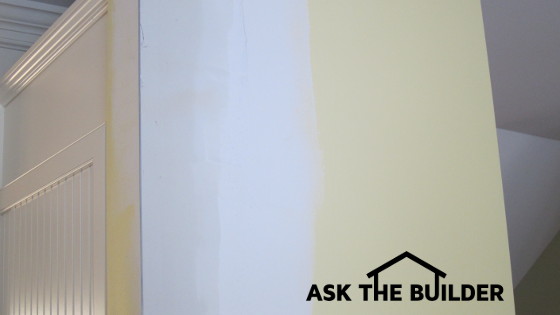
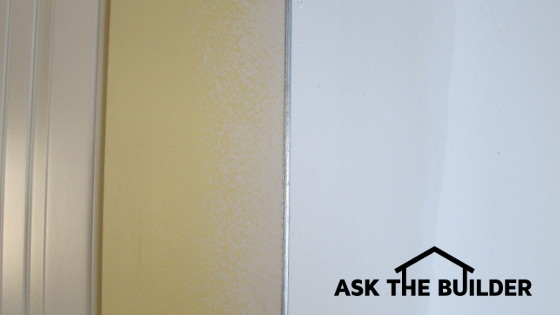
You can't see it because it's covered with drywall compound, but there's a metal corner bead at each end of this small wall. It needs to be expertly installed for pro results. PHOTO CREDIT: Tim Carter

DEAR TIM: It's time to hang and finish some drywall in a small room. This room has a pipe chase in it which means I have to finish an outside corner. I know how to do inside corners with tape, but every time I try an outside corner, the metal corner bead shows through. It looks horrible. Can you share some secret tips on how to install and finish an outside drywall corner? Sharon T., Palm Coast, FL

DEAR SHARON: Your challenge reminds me of the first few times I had to finish an outside drywall corner. Oh, did I ever struggle! I didn't have a pro show me how to do it, so it took some trial and error. Besides, back in the 1970's, we didn't have the Internet and all the wonderful free videos to watch. I've taped quite a few videos to show how this is done, and they are at my website.

The first thing to realize, and this could be out of your control, is the rough framing lumber on outside corners needs to be as straight as possible to achieve great results. Much of today's lumber is twisted, bowed and has very bad crowns to it. If you're building an outside corner, pick the best lumber for this location. The same is true for doorway rough openings.

The next issue you can have with outside corners is the actual drywall itself. There are two common mistakes that rookies make. The most common is jagged drywall hanging out past the plane of the wall on either side of the corner.

If you don't use a sharp razor knife and make a deep cut when you score the drywall, when you snap the drywall to make the finish cut on the backside, the edge of the drywall looks like a miniature mountain range. If this ragged drywall hangs over the wall plane, the metal corner bead will not lay flat on the wall surface on each side of the corner.

The second mistake you can make is hanging a sheet of drywall vertically that has a factory tapered edge. You may feel that putting the tapered edge of the drywall up at each corner is a good thing. In most cases, it makes finishing the metal corner bead more of a challenge. If you're an expert finisher, you can do corners this way as it makes it far easier for a finish carpenter to install ceiling crown molding. But let's not go there right now.

Once you have the drywall installed correctly, it's time to install the metal corner bead. Pros use a special tool that centers and pinches in the metal so the bead fits perfect. I'd invest in one of these tools if you were going to do lots of corner bead, but not for just one corner in one room.

Drywall Corner Tips

The mistake I made many years ago, and I feel you've made before, is flattening out the bead on the corner and/or twisting it as you apply it. The real trick is to create an acute angle with the corner bead. This means the finished corner would not be 90 degrees, but some angle slightly less than 90 degrees.

You achieve this acute angle by pinching the metal bead ever so slightly on the corner so the outside corner of the metal bead is puckering just a little bit and it actually is not in contact with the drywall as you near the corner.

In most corner beads, you'll see tiny holes out at the edge of the metal. These are the holes for the nails. Don't nail through the larger diameter holes. Those are for the joint compound to ooze through.

Always nail both sides of the bead at the same elevation. Don't nail one side of the bead top to bottom and then move to the other side. Tack the bead in place just partially securing it to the drywall and use an 8-inch broad knife on its edge to ensure the blade only touches the actual outside corner of the metal bead and then the drywall about 3 inches away from the corner. The void space is what you fill with joint compound.

If you have to do an archway or a soffit corner where two or more outside corners meet one another, always miter cut the metal corner bead so it doesn't overlap the adjacent piece. You can't have layers of metal on top of one another.

Hammer the nails slowly so you never strike the actual outside corner of the metal bead. Don't beat the nails in at the edge of the bead. This is finish work. They just have to be recessed enough so they're covered with about 1/16th inch of drywall compound.

You can't check the position of the bead often enough as you nail. Constantly use the broad knife to ensure the beat is pinched and it's centered on the corner. If you start to twist the bead, one side of the corner will end up with exposed metal and never get covered properly with drywall finishing compound.

Column 907

October 28, 2011 AsktheBuilder Tips And Newsletter

What's in This Newsletter?

Latest News
Buying a Lot
Hydraulic Cement & Front Steps
My Christmas Gift Guide
Repairing Drywall
Facebook News

This past weekend I had the enormous pleasure to stroll down memory lane. I was in Bar Harbor, Maine.

Thirty-seven years ago, I was there with my new bride of a week. This time Kathy stayed home to have some quiet time while I went up there with my oldest daughter Meghan. She wanted me to look at some land she's thinking of buying.

On our first afternoon there, we went to Sand Beach in Acadia National Park. This is the place my wife got wife's remorse.

Kathy and I were standing at water's edge and I looked down. Right there was a round doughnut-shaped object. I picked it up. "What is it?" Kathy questioned. "Some DUMB *** (rhymes with bass) lost the eye cushion to his binoculars," I quipped.

Wanting to show her how strong I was, I tried to throw the part about a quarter-mile out into the surf. As it was sailing through the air, I got wide-eyed and looked down at the binoculars hanging from my neck. She saw me look. Can you hear Kathy's voice?

Without hesitation she blurted out, "I married a DUMB ***."

So last Saturday afternoon standing at the same spot, I tried to find the part. Surely Neptune would return it along with some of my dignity. Needless to say it wasn't there. It long ago was pulverized or went down a whale's blow hole.

Buying a Lot or Raw Land Tips

Looking at the lot that Meghan wants, I was reminded that years ago I wrote a column about buying a vacant lot or land.

It was a pretty big hit so I created a 25-point checklist to help you avoid buying the wrong piece of land.

I get emails all the time from folks who have purchased a really bad piece of ground. You can prevent that using my checklist.

Here are some extra things that are not in the checklist:

It's dangerous to buy a snow-covered lot. What's under all that snow?

What about things nearby? How about a local airport and the land you want is on or immediately adjacent to final approach?

If the land is next to a lake or other body of water, are there special setbacks, building guidelines, etc. that make construction very expensive?

If the land is on a private road, what are the costs associated with maintaining the roadway?

The list goes on and on.

If you're thinking of buying some land, you may want to look at my Lot Selection checklist.

Perhaps one of the best buys you'll ever get for seven bucks.

Hydraulic Cement and Front Steps

"My front stairs are breaking down. Chunks of cement around the railing are broken off. A cement person told me he could repair the stairs with hydraulic cement.  Is this what hydraulic cement is good for? I'm not talking filling holes. I'm talking replacing the cement where chunks have broken off."

Maureen, don't hire this person. They're giving you bad advice. Hydraulic cement is one that usually contains some bentonite clay. This cement expands when it hardens. It's the material to use to plug a hole in a foundation or set an anchor bolt.

If you want to repair all the missing chunks, I have a great past column about Repairing Concrete  that tells you how to do it.

My Christmas Gift Guide!

I'll be finishing my new Christmas Gift Guide this weekend. Oh boy, is it loaded with some great ideas no matter what your budget is.

If you're looking for the perfect gift for that HARD-TO-BUY-FOR person on your list, I'm going to be your life preserver.

What's more, my daughter Meghan has created a gift guide of her own! It's full of fantastic lifestyle gifts.

We need to get past Halloween before we publish these guides.

No matter what, don't shop until you look at what I have and what Meghan suggests.

Repairing Drywall

Do you have a medium-sized hole in your drywall? Say from a door knob, fist, or maybe a softball? Yes, people hit softballs inside homes.

There are many drywall patching methods. They all achieve the desired result.

One way that works, assuming you have some scrap drywall around, is to cut a plug that will fill the hole. It's not hard to do and the drywall facing paper acts as the built-in tape to do the repair.

But what if you don't have the scrap? That's where this new product comes in. The Drywall Plug.

Go to their website and it will all make sense. If you have scrap drywall of your own, you can make a similar plug but cut the shape of the plug as a square or rectangle, not a circle.

Do you want me to tape a video showing you how to make your own plug? Reply to this email but CHANGE the subject line to: Drywall Plug Video.

Facebook News!

AsktheBuilder on FacebookDo you use Facebook? I've got a Facebook Fan Page that really sees some action during the week.

There's LOTS of tips there that never make it into this newsletter.

Please go there now and LIKE me so you can start to get FREE tips from me when you login to your Facebook page.

October 18, 2011 AsktheBuilder Tips And Newsletter

What's in This Newsletter?

Latest News
Interactive Delta Brizo Showroom
Washing Machine Time Bombs
Christmas Gift Guide
Firewood Storage
Latest Book I Read
Facebook Fan Page

I hate to be the wet blanket, but last week's Remodelers Show in Chicago was pathetic. It's a possibility that your local home and garden show in the spring had a larger convention-center footprint than this show.It's absolutely a sign of the times. What's more, the vast majority of attendees - remodelers - I talked to were within a day's drive. For the most part, the aisles were wide open.

I did see a few interesting things, and was able to do some business there, but the low attendance, lack of major name-brand exhibitors, etc. is a telling tale of how stressed the industry is. Last winter's National Builders Show was no different. It was just a shadow of it's former self.

Here are some links to videos I shot on the floor of the convention center:

Deck Pier Video

LED Lights for a Deck

Camouflage Vinyl Siding


Interactive Delta Brizo Showroom

Brizo Delta Faucet ShowroomWhile in Chicago I made my first-ever trip to the historic Merchandise Mart. It's the largest commercial building in the world I was told.
After you walk in the front door and go past the elevators, you'll see Delta and Brizo's new showroom. It's open to the public and you can see, touch and use all of their new faucets. The best part is you can operate all of them!

Ms. Kelly Litton, the store manager, took me on a tour. Watch this video I shot on the fly. Thanks to Todd Fratzel for his videography skills.


Washing Machine Time Bombs

Stainless Steel Washing Machine HosesA very good friend of mine, Bryan, lives in San Francisco. He rents an apartment and last week he had a major plumbing disaster. Luckily he was home when it happened. Had he been gone or at work, oh my.

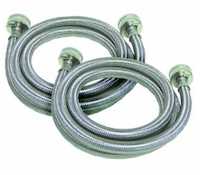
One of the supply hoses to the washing machine burst. Bryan does not own the machine nor the connecting hoses. They are the property of the building owner. But right now the owner is blaming Bryan for messing with an overflow alarm. It's a long story.

Water flowed for ten minutes before he discovered the problem. I get at least one email a month from subscribers like you where this has happened.

A mold remediation company was called in to cut away the damaged drywall and set up heaters and dehumidifiers to prevent a mold bloom.

The question is, if you're renting do you have adequate liability insurance? If you live in a home and have homeowner's insurance, are you completely covered if something like this happens to you? Call your insurance agent. Get out your policy and have the agent PROVE to you that you have coverage.

The entire incident could have been prevented with washing machine supply hoses that are clad with braided stainless steel to prevent blowout leaks. If your washing machine is anywhere OTHER than a basement with a concrete floor and a floor drain, you NEED these. Here are the stainless-steel washing machine hoses I use at my own home.


Christmas Gift Guide!

I'm starting to put together a DELUXE Christmas Gift Guide for that handywoman, handyman or pro around your home that's so hard to buy for.

It's going to be broken down into sections and list my favorite tools at different price points so no matter what your budget is, you'll be able to find that special gift that comes with the AsktheBuilder Seal of Approval!

This is a first ever for me. Look for it the second week of November. You'll not believe some of the things that will be in there!


Firewood Storage

I just wrote a new column about firewood storage tips. It talks about an inexpensive way to keep firewood dry. I know there are many other methods. If you want to share your method, just reply to this newsletter. Send high resolution photos if you can.

But if you want to see some spectacular photos of stacked firewood, then you just click that link. Wow! The one of the fake downed tree is my favorite, although it would be cool to be in that Hershey's kiss structure at night!


Latest Book I Read

Not Without Peril BookI live about 50 miles due south of one of the most dangerous mountains in the USA - Mt. Washington. Hundreds of people have died on this tiny mountain because the weather conditions near the summit are almost always radically different than they are in the valley at the trailheads.

By most standards, it's a tiny mountain, only 6,288 feet tall. This means many non-mountaineers try to climb thinking it's no big deal. Guess what? This past week the temperature at the summit was in the low 20sF and 100 mph winds were howling. Down at the base at the parking lot - it was mild weather.

Not Without Peril is a book I got for my birthday that tells fascinating stories, starting with the first person who died, about the conditions and poor decisions hikers made. If you like to read true suspense stories and want to gain a real respect for Mother Nature and Mt. Washington, you'll love this book.


Facebook Fan Page

AsktheBuilder on FacebookIf you were a fan of mine on Facebook last week, you were getting all my updates about the Remodelers Show. You could have even joined me at The Gage Restaurant on Thursday night! We had a blast. Please go LIKE me now and get ready for lots of new tips each week.

Firewood Storage Tips

firewood storage

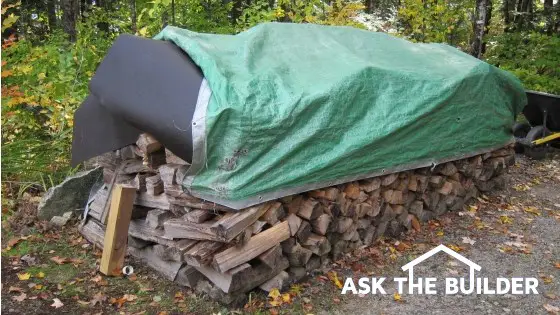
This firewood is protected from rain and snow. You can easily see the tar paper that covers the top of the firewood that's under the green tarp. PHOTO CREDIT: Tim Carter

DEAR TIM: I'm tired of trying to burn damp firewood. Neighbors of mine leave their wood unprotected as well. Right now I can't afford to build a nice firewood storage shed. I can't put it in my garage either as I'm worried about termites and insects. What are some affordable and effective methods to store firewood outdoors? I'm looking for stacking tips, and ways to help air dry the wood as well as keep it dry. Kelly L., Apple Valley, MN

DEAR KELLY: I see unprotected firewood piles all the time where I live here in New Hampshire. In fact, I see lots of neatly stacked firewood that has no top cover. I've always wondered how well that wood burns. No doubt you get a much hotter fire if the wood is dry, as some of the combustion BTUs are absorbed by the water and water vapor that is created as the damp wood cooks in the fire.

As you might imagine, I've seen, as I'm sure you have, all sorts of gorgeous and practical methods of covering firewood. A friend of mine has his own wonderful firewood shed that's adjacent to his home. I had plans drawn up for a new detached garage that had an extended shed roof at one end that was to be a giant firewood storage area.

There are endless possibilities with respect to firewood storage. But when money is tight and you need dry firewood stored outdoors, I'm a firm believer that some inexpensive tar paper and a fiberglass tarp are quite possibly one of the most practical methods to achieve the goal.

Many years ago, a retired engineer taught me how to stack firewood so it air dries quickly. The first thing to do is to split all the firewood to the size you intend to use when you burn it. Be sure when it's cut that it's the correct length to fit in your fireplace, wood stove or fireplace insert. You'd be surprised how many people try to maximize the length only to discover it's too long by an inch.

It's best to store the firewood off the ground. If you can afford some treated lumber 4x4s, these work great and can last decades. If you have access to some younger straight trees like some birch, you can cut those to make runners that are about 14 inches apart center to center. If you use trees, it's very important they be the same diameter. You want the stacked wood to be plumb so the piles don't tip over.

If you can't afford the treated lumber or don't have access to the trees, then at least store the wood on well-drained gravel. You just don't want the wood in contact with damp soil. This will allow the lower row of firewood to rot over time.

Think about the prevailing wind direction at your house. It's ideal to stack the wood so the long rows are parallel with the prevailing wind direction. Once the wood is covered, the piles act like a miniature wind tunnel as the wind blows through and across the wood.

At the end of each row of firewood, I usually have three stacks next to one another, you want to stack each successive layer at 90 degree angles to one another. This tower of firewood offers very good stability at each end so that the weight of the pile doesn't cause the wood at the end to tumble off the row.

I also keep about 6 inches of space between each row to promote air circulation. If you stack all the wood tightly, it takes longer to dry. If you do three rows of wood, try to make sure the center row is higher than the other two by about 4 inches.

Once you've got the wood all stacked, I usually go no higher than about 54 inches, then I cover the wood with two long pieces of overlapping tar paper. The higher center row of wood help ensure any water drains to the sides of the pile. I then cover the wood with a fiberglass tarp so the top is covered and it extends partially down the sides. I try to keep the ends of the rows uncovered as much as possible to promote great ventilation.

Don't cover the stack of firewood completely with a tarp. This traps water vapor and makes it nearly impossible for the wood to dry.

It's best to install some stakes and rope at the sides of the tarp to extend the tarp out away from the stacked wood much like a camping tent rain fly. These tarp wings ensure the sides of the wood stack don't get wet from all but the worst driving rain.

It's vitally important that you do everything possible to promote the movement of air through the wood if you want it to dry rapidly.

The real firewood pros stack and cover their wood for at least a year before they intend to burn it. This means you typically have two years worth of wood on site at the beginning of each wood-burning season.

Don't forget that some wood is easier to split when it's partially dry. Other wood is best split as soon as it's cut into links from the fallen tree. Talk to a professional woodsman to determine when it's best to split your wood. A hydraulic wood splitter will become your best friend if you intend to burn lots of firewood. I love my 27-ton hydraulic wood splitter.

Column 905