Bathroom Mirror

DEAR TIM: The bathroom mirror in my existing home is not installed correctly. There are two problems. The bathroom wall mirror is not attached securely, and the bathroom mirror lighting is off center. It drives me crazy. What does it take to make things right? How could this problem have been avoided when the house was built or last remodeled? Is there an easy way to fix these problems now without tearing into the wall? Marlene H., Anderson, SC

DEAR MARLENE: You need to fix that mirror in the bathroom immediately before someone gets hurt. Glass is very heavy, and it’s possible the mirror can come crashing down on the vanity or the floor without warning. Not only can you get hurt, but the finishes of the top, vanity and floor can also be damaged.

A bathroom vanity mirror is a conundrum when building or remodeling. The problems you’re having can be traced to poor planning, poor construction and/or poor supervision. You can see why it’s so important to select all fixtures for a job long before you start. When this is done, and the technical specifications, as well as photos of the products, are on the jobsite as the framing, plumbing and electric is being installed, the workmen can make sure that wood blocking is in place to support the fasteners for the heavy mirror. The specifications also allow the installers to get the bathroom mirror lights perfectly centered with the bathroom vanity mirror.
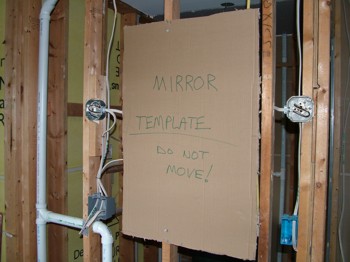
The piece of cardboard is the exact shape of the mirror that will be installed as soon as the room is finished. Using a template like this ensures the bathroom mirror lighting is installed perfectly. PHOTO CREDIT:  Tim Carter

The piece of cardboard is the exact shape of the mirror that will be installed as soon as the room is finished. Using a template like this ensures the bathroom mirror lighting is installed perfectly. PHOTO CREDIT: Tim Carter

There are all sorts of mistakes that can happen if this isn’t done. Perhaps the biggest one I’ve seen happens when the bathroom mirror light is so big it overhangs on the sides of the mirror. In some cases, you can’t even open a bathroom mirror cabinet that has a swinging door. When faced with this dilemma, you often have to rip into the wall to make the necessary modifications to the electric boxes. You hope that no plumbing vent pipes are in the way when you do this type of repair work.

One way that’s worked best for me over the years so I never have to tear into a wall at the end of a job is to make a simple cardboard template of the mirror. I cut the cardboard to the precise size of the finished mirror and attach it to the wall in the exact location it will be when the room is finished. I do this just after the wall is framed so the plumber and electrician can see it.

The plumber knows to keep his vent pipe for the vanity as far away as possible because there’s a great chance there might be wall sconce lights on either side of the cabinet. If the plans for the job have great interior elevations of the bathrooms, they will show the exact location of the bathroom mirror lighting. Keep in mind that the plumber is usually on the job long before the electrician, so it’s very important to communicate to the plumber where the electric boxes will be.

The other benefit of creating the mirror template is that it shows you where any wood blocking needs to be installed so the mirror never pulls away from the wall. Hollow-wall anchors are great things, but my experience has shown me that solid wood blocking is the best thing to screw into when dealing with heavy items. There are heavy-duty anchors for fixtures, but sometimes the hole required for the anchor is so large the trim plate of the fixture will not cover it.

To fix your current problems, you may have to take the drywall or plaster down. Your biggest challenge will be relocating the electric boxes for the bathroom mirror lights. Since you know the width of the mirror and how far away you want the light fixtures from the mirror, you can move the electric boxes to the right locations. However, you may run into a problem if the electric cable that feeds the boxes doesn’t have enough slack.

If you don’t have much electrical experience, I urge you to work with a professional electrician. I would call this person in now before you do anything. See if he or she has a creative solution to the problem that doesn’t involve tearing into the wall. I know you would like to avoid this demolition, but it’s probably necessary to install the wood blocking to support your mirror.

Bathroom wall mirrors cause all sorts of headaches. Don’t forget how tall people are, and how high the backsplash behind the sink will be. I’ve seen many a mirror hung too low and mirrors that are too short.

Another big mistake is underestimating the importance of bathroom mirror lighting. If you’ve ever watched a Hollywood star in a dressing-room scene, you’ve undoubtedly seen the large mirrors surrounded with lights. It’s vitally important to have lights flooding your face if you intend to apply makeup. Down lighting in a bathroom at a mirror is not sufficient as it creates all sorts of shadows. You need lighting that is flooding your face from the mirror to take away all shadows.

Column 788

How To Grout Video

How to Grout

You have come this far, the tile is down and cut to size, you have mixed the grout, and you don’t want to mess up the ceramic tile project now. It could all blow up in your face at this point. The grout in the joints is still soft, since you just put it down.

To avoid making a mistake, you have to strike the grout joints the correct way. As seen in the older grout, there are no holes or imperfections in the tile joints. In the new grout (1:15), there are some holes or low or high spots. To smooth out the grout joints, get a large bucket of clean water and a large grout sponge. A grout sponge is a special sponge with rounded corners. It has no sharp edges like a standard sponge.

Wet the sponge and squeeze all the water out of it. It is critical to get out as much water as possible. You don’t want to put extra water on the grout. Too much water will dilute the cement in the grout and ruin it. It will crumble and fall apart.

Once all the water is out of the sponge, take it and lightly rub across the grout joint. You will notice that the rough, sandy grout now takes on a smooth, even finish. Just barely touch the sponge to the grout. If you are matching new grout with old grout, you have to blend it. Push a little of the new over onto the old to blend it together.

Be sure to rinse the sponge frequently. Keep it clean. Use a light circular motion over the grout joints. Use very little pressure - just a gently wiping to smooth the grout. Flip the sponge over to get another clean side. If you push down hard on the sponge, you will dig the grout out of the crack.

Be sure not to grout too large of an area. If you grout too much, you won’t be able to clean up and smooth the excess grout before it starts to set up. If it dries before you get to it, the project can be ruined.

At this point, the surface of the ceramic tiles will still be covered with lots of grout residue. This film needs to be cleaned up before it dries and you have a nightmare on your hands. To clean the surface, wet and squeeze the water out of the sponge and gently wipe in long strokes across the tiles. The grout residue will start to come up in the sponge. Repeat until the tile is cleaned. Pull across the tile very light and let it float over the joints. You need to remove as much of the grout film off as possible.

Video 4 of 4 | How to Grout Tile

Even after this is complete, there will be one final cleanup step. Watch the Finishing Floor Grout Video for this final step.

Grouting Video

How to Floor Grout Video 2 of 4

When getting ready to grout floor tile, there are a few steps to take to ensure a proper job. There are many ways to grout tile floors. Here are some tips that have worked for Tim, for the past 35 years!

First, take a damp sponge and lightly dampen some of the tiles. Not dripping wet, but just damp. That helps lubricate the tile so when the sanded grout is poured onto the tile, it won’t scratch. The grout powder contains little silica particles in it that are sharp. By lubricating the tile surfaces with water, it makes the grout move around easier.

After the grout is mixed to the consistency of bricklayers mortar, use a broad knife to put some of the grout onto the tiles. Use a rubber float to spread the grout. But don’t make a rookie mistake by using the rubber float dry. Get it damp first by dipping the surface in a bucket of water. Remove any excess water with your hand. The damp rubber float will help spread the grout easier.

Don’t spread the grout with the float parallel to the gap between the tiles. This allows the back edge of the float to drop down into the crack. Pull the rubber float at an angle across the crack. Push the grout down into the crack as you spread it. Don’t worry about leaving a little grout on the tile surface. It might make you nervous to leave it on the tile, but it will be okay.

Spread and push the grout in the gaps between the tiles, always moving the rubber float at an angle to the crack. To remove excess grout, hold the rubber float at a higher angle and strike it across the tile. The grout will be pushed off the tile. Use two hands if needed, but be sure that the crack is completely filled with grout. You can’t have any depressions in the joints.

Work on an area of about 3 feet by 3 feet. That is about the best size for working since you have to strike the joints with a sponge. But you can’t use the sponge right away, so work in a small area that is easy to reach. Once it is completed with spreading the grout, it will be ready for the sponge. Working in this size area will allow you to reach all the tiles without stepping on tiles that have not been cleaned off yet.

In the next video, you will see how to clean the grout off the ceramic tiles. Stay tuned.

Mixing Grout Video

Mixing Grout


When you are getting ready to grout floor tile, there can be a color match problem. The problem arises when there is an existing tile floor that has already been grouted. The new tile matches the existing tile, but how do you match the grout? The new grout will be installed and hopefully it will match.

First of all, you have to use sanded grout when you grout floor tile as shown. This is because the joints on this floor are so big, 3/8 of an inch wide. If you would use regular grout, which is just Portland cement, it would crack in these wide joints. The sanded grout contains small pieces of silica sand that acts like the rocks you can see in regular concrete. Therefore, the sanded grout is like miniature concrete. In addition, the silica sand is extremely hard and that gives sanded grout its durability.

SS02 Stain Solver Bottle with scoop

To match the grout color, first be sure to clean the existing tile floor. The grout has to be clean to match colors. It would be a mistake to match the new grout to the dirty color of the existing grout. One of the best cleaners for floor tile grout is oxygen bleach. So go to StainSolver.com and find out about oxygen bleach and how to clean grout and tile floors.

Another thing after cleaning the floor don’t try to match it right away. The grout is a different color when it is wet. Be sure the grout is completely dry before color matching. As you can see in the video (2:28), water on the grout makes it darker then the dry grout. It might take a day or two for the cleaned grout to complete dry. When clean and dry, get the little sample color cards and match the color. Or take a small section, if available, of the existing grout to the store to match the color.

The next step is to take a little bit of the sanded grout and pour it on the existing tile. The color of the grout right out of the bag is very close to the color of the grout when it is installed, cured and dried. The final tip is as soon as the grout is installed, it will be very dark because it is wet. Don’t freak out. If you matched it close from the bag, it will match once it is dried.

Now, how do you mix the grout? Use a smaller bucket, not a 5-gallon bucket, and pour about half the bag of sanded grout into the bucket. Next pour in some clear water, not too much. Using a nice stiff putty knife, mix up the water and grout. If you add too much water, the grout might be too thin to use. If you added too much water and you have some grout left in the bag, pour some more out of the bag into the bucket. This will allow you to thicken-up the mixture. Keep adding more powered grout until you achieve the proper thickness. The mixture should be nice and stiff, and doesn’t want to flow when the bucket is rotated. Scrape the sides of the bucket to be sure all the powered grout is mixed with the water.

Safety Warning: Due to the dust nature of the grout, be sure to wear a particle mask when working with grout. I am not wearing one in the video so you can hear what I am saying.

Be sure the existing floor grout is clean, and you get a good color match when purchasing the sanded grout. Then you will be good to go.

Read Ryan's comments on this video series in the August 31, 2010 Newsletter.

Outdoor Porch

DEAR TIM: I saw what’s being called an outdoor porch at a model home. It looked to me like a room without walls and was for the most part open to the elements. I’m puzzled by this concept as it doesn’t seem practical to have so many possessions sitting outdoors unprotected. Can you install outdoor porch swings in a room like this? I’m also stuck on what might be the best outdoor porch lights to illuminate these spaces once it’s dark. Gwen P., Wrightwood, CA

DEAR GWEN: You’re not the only one to be perplexed by this newer outdoor-porch trend. I have a traditional wrap-around outdoor porch on my home that provides shade and shelter during rain showers, but it’s not like the porches I ‘m seeing on new homes. While I don’t have an outdoor porch swing at my home now, it would take less than an hour to install the hangers for one.

This outdoor porch is more traditional. While not as big as a room, you can still sit on it most of the year in comfort. PHOTO CREDIT:  Tim Carter

This outdoor porch is more traditional. While not as big as a room, you can still sit on it most of the year in comfort. PHOTO CREDIT: Tim Carter

I agree with you about practicality with respect to these odd rooms. The outdoor porches I’ve seen in magazines, articles and at home shows would never survive the weather and interlopers I know to exist in many areas I’m familiar with. Driving rains, dust, birds, animals and thieves would ruin or rip off many of the things found in these spaces when you’re not around to watch or protect them. Large roof overhangs might protect the contents from most rainstorms, but blowing dust or snow surely could get to many of the furnishings I’ve seen in many of these rooms.

Outdoor porch lighting is something you really need to plan for no matter what size your porch may be. Recently I replaced the glaring traditional light bulbs on my outdoor patio with red light bulbs. The red light casts an eerie glow on the patio, but it allows me to see everything and not ruin my night vision whatsoever. White light, even when turned down with a rheostat, causes the pupils in your eyes to contract ruining your night vision.

You may want to test a single red bulb in one outdoor porch light to see how it works. Don’t make your final decision until you’ve spent several nights relaxing on the porch. You may be surprised as to how effective the red light is in illuminating the space while allowing you to look out at things beyond your porch. The red light on my patio allows me to gaze out upon the lake at my home seeing anything that’s on the water.

If red light is too radical for you, then you need to use very soft lighting that’s either indirect or is pointed down towards the ground. The softer lighting will be easy on your eyes and not cause strain at night. Indirect lighting that bounces off the ceiling can help create a very cozy mood.

The outdoor porch lights that you choose should match the overall feel of the room and the architecture of your home if at all possible. Be aware that inexpensive lights may have a finish that can pit or tarnish quickly. Pay attention to the warranty if you live in an area that has lots of pollution or salt mist that might corrode cheaper coated metal finishes.

Outdoor porch swings can be exceedingly comfortable, especially when they are designed properly. But they can come crashing to the porch floor if not hung properly. I don’t feel the use of a eyelet lag bolt is proper. This is a hardware item that simply screws into an overhead ceiling joist on your porch. They are prone to failure because of the weight of the swings and occupants.

I feel the better method is to use an eyelet through bolt. This is a longer bolt that passes through the entire ceiling joist or adjacent solid blocking and is held in place with washers and a nut. This hardware will only fail if the threads strip on the metal shaft or the nut pulls through the drilled hole. Both events are highly unlikely. To install an eyelet bolt such as this, you need to have access to the outdoor-porch framing. This can be a challenge if you’re trying to install the bolts on an already existing porch.

If you do decide to have an outdoor porch that’s like the one you saw at the home show, consider installing motion detectors that operate outdoor spotlights and an alarm. The spotlights could come on at night when an uninvited trespasser sneaks up and tries to take any of the items from the porch. If he’s so bold as to ignore the glare of the lights, then perhaps an alarm that activates as he walks into the space will cause him to run away.

The weather and other things that Mother Nature provides will probably be your bigger threat. Bird droppings, small mammals that move in and dust and pollen in the spring will surely become bothersome after you find yourself constantly dealing with these things. But if you furnish the room with things that can survive the direct blast from a garden hose, maybe it won’t be so bad!

Column 787

Garden Storage Sheds

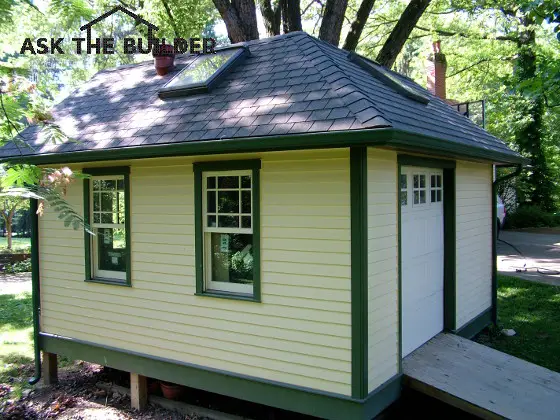
This Queen Anne Victorian garden storage shed was built to match the owners house. The soffit material is real stained bead board! ©2017 Tim Carter

DEAR TIM: I’ve seen several garden storage sheds, and now have decided to build one for my wife as a surprise. I want to make sure this garden shed is the correct size and not cramped. What are some mission-critical components you feel a garden storage shed should have? My wife is going to be gone for two weeks in several months visiting one of our kids. Do you think I can build this shed start to finish in that amount of time? Glenn B., White Plains, NY

DEAR GLENN: As crazy as this sounds, garden and storage sheds are one of my favorite projects. If I had to choose my building career path over again, I might have just concentrated on deluxe storage sheds. It’s very rewarding building wooden garden sheds, as you are exposed to about 80 percent of the skill sets you need to know when building a house from start to finish.

If you can enlist the help of a friend for a few days and the garden shed you decide to build is not too large or complicated, I feel you can do this job start to finish in two weeks. The weather will need to cooperate, and you will need to be on top of your game each day. All materials and tools will need to be onsite hours after your wife leaves for the airport.

The first thing you need to do is make sure you can build the shed. Check with your local zoning officials to see if outdoor buildings are allowed and if you need a building permit. If you need a permit, you’ll need garden-shed plans. If you live in an association of any type, you may have private restrictions that limit outdoor sheds, their size, location and design. Be sure to investigate that as well.

The way to determine the size of the shed is to take all the things that will be stored in it and place these neatly on your lawn in the manner in which you’ll see them in the shed. Then plan for enough space for some cabinets and a countertop for potting and such. I would expect the countertop to be at least 5-feet long, if not longer. Make sure there is plenty of open space in front of the cabinets so your wife doesn’t trip over things in the shed. My guess is that you’ll quickly determine you need a shed that’s at least 10 feet by 12 feet. You’ll never regret having a shed that’s too big.

If you want to really impress your wife, try to get from her the style of shed she may want. There are any number of books that have all different sheds in them to generate ideas. Have her give you clues as to exactly what she wants. Don’t guess and hope you’re right.

Natural light is really important inside sheds. If at all possible, try to plan for a window centered on the countertop where your wife will stand and work. Imagine how happy she’ll be inside the shed gazing through the window to her garden while working on new plants or restoring existing ones. One or two skylights in the roof will brighten the space and make for a cheery interior, even on overcast days.

If you’re not a skilled mason, I’d suggest you construct a wooden garden shed. This means building a deck frame close to the ground and covering the joists with treated plywood. This takes away all the worry of rotting wood as water vapor coming from the soil or water that gets on the floor from rain or wet implements will not harm treated lumber.

Give serious consideration to a narrow overhead door instead of swinging doors. The overhead door is easier to install and many are very handsome. I have a lightweight metal door that’s only 6-feet wide and 7-feet high in my wife’s Queen Anne Victorian garden shed. It took only two hours to install it, and it’s wide enough for my riding mower to get in and out with no issues.

Be sure you plan for storage shelves for pots, hand tools, supplies and any other things that will be stored in this shed. These shelves can be built with plywood and framing lumber in just a few hours.

You’ll be on a tight schedule trying to build this garden shed in two weeks. But that’s no excuse not to have the floor square. Taking the extra few minutes to do this will save you hours as you build the walls and frame the roof. If you’re shed is a square or a rectangle in shape, it’s square when the parallel walls are the same length and the diagonal measurements from corner to corner both ways are equal.

Now is the time to study up on what you don’t know how to do. If roof framing is a weakness, practice cutting rafters and making a small roof now. Try building a dog house for a neighbor or to donate for some local pet shelter. Building a dog house that’s a scale model of your shed is actually the best way to practice for the big event!

The dog house will test nearly every skill you’ll have to master, including applying shingles. I’ll warn you now. Building a medium-sized dog house in this manner will result in a structure that may weigh over 100 pounds. Be sure that you have help when you move it!

If you store garden tools outdoors in a garage or shed, and you live where it gets cold in the winter, you'll have to deal with rust. Read my tip on preventing rusty garden tools.

Column 786

July 2, 2009 AsktheBuilder News And Tips

What's in This Issue?

Mom Laid to Rest
Beware of Clever Air-Cooler Ads
Forensic Shower-Pan Discovery
Concrete and Masonry Sealers
Framing a Pocket Door
New Stain Solver Web Site
Latest Columns

FOLLOW ME ON TWITTER

Friendly Question Reminder!

If you have a question for me, don't hit the Reply button just yet. Go immediately to my web site and type in the keywords about your problem into my Search engine. The search box is at the top of every page of my web site. You could have your answer in seconds if you do this! Please pay attention to all links you see at my web site. The exact products and services you often need are right in front of you, and you might be ignoring them.   Each week I add about 1,000 new subscribers to this list. I haven't sent a newsletter in about two weeks because of a death in my immediate family. If you're a new subscriber, please understand that this is a pretty unusual newsletter, as I've decided to dedicate a good part of it to my Mom.

Mom Laid to Rest

A little over a week ago, I was driving to the church with Kathy and the kids for Mom's visitation and funeral mass. Afterwards, we took her to Spring Grove Cemetery to place her next to Dad. It was a gorgeous day, sunny and sticky. Not much different than many summer days Mom and Dad would take Lynn, my sister, and me to Coney Island.pfc melvin carter & wife photograph

The first few days after her death, I had this overwhelming urge to go visit her at the nursing home. The feeling must be what it's like for an amputee to feel their missing limb. I've heard that happens.

I wanted to share with you one of the rays of sunshine that came as a result of all of this - my new understanding and respect for those devoted souls who work for any Hospice organization. Before the funeral mass, I finally got to meet the nurse who was in charge of my Mom's case - Vicky. Mary Jo, the Hospice social worker was there, as was Yumi the harpist. Yumi played at the mass.

After mass in the receiving line, I was hugged by Vicky and at that instant broke down sobbing in her arms. I'm tearing up now writing this. The emotion bubbled to the surface because it was crystal clear that Vicky really cared for my Mom. I mean she *cared* about her. Vicky's comfort each week took the place of what I couldn't do being 1,000 miles away in New Hampshire. Vicky hugged me tenderly and cried as well. I'll never forget that moment. It's as if she were a dear old friend, but realize that an hour before I had never met her. That's the psychic powers many Hospice employees have.

The week before Mom died, I told her what a great woman she was and that I was thankful for all she taught me. Mary Jo, the Hospice social worker, pointed out to me that Mom was a true trailblazer for women. It's something that I totally overlooked. You see, my Mom was a registered pharmacist. But realize, she got her degree and license back in the late 1940's. It's quite possible she was one of the first women to graduate from the University of Cincinnati College of Pharmacy. I'm going to check into that. One thing is for certain, the pharmacy profession in the 1950's and 1960's was an intensely male-dominated vocation.

I made sure to apologize and ask for forgiveness for all the bad things I did. Just 12 hours before she passed, I saved the best one for last. Growing up we used to have sleepovers at different houses on the street. About 45 years ago, I had a summer sleepover at my own home. We had many of those on our street, but this one was in my new bedroom that months before had been the garage in our basement.

In the middle of the night, we had a pillow fight that spilled outdoors. The fight went up the driveway and onto our next-door neighbor, Ms. Zint's front yard. Ms. Zint was the first cousin of the Wicked Witch of the West in the Wizard of Oz movie. Needless to say, several pillows exploded at this point and the thousands of feathers made her lawn looked like it had snowed overnight.

Our phone rang early the next morning and Ms. Zint hissed fire over the phone demanding that the feathers be cleaned up. My mom was angry, of course, and woke all of us sleepy pubescent boys up enlisting us in the cleanup effort. Ms. Zint stood on her front porch wearing her midcalf-length dress and thick support stockings glaring at Mom and us not saying a word. At one point, Mom whispered in my ear with gritted teeth to go inside and get our vacuum cleaner. Minutes later, I was vacuuming her yard.

I don't think I ever apologized to Mom for doing that. It no doubt caused her great embarrassment, humiliation and shame. I shouldn't have waited so long to apologize, as Mom was comatose at that point. I can only hope her hearing still worked and she could process my apology.

Note to Self: Go apologize to all I've wronged before they become comatose.

Finally, I want to sincerely Thank You for the condolences you sent to me over the past two weeks. Within minutes of me sending out my Mom's death notice, I started to receive warm thoughts from around the globe. Yes, I said around the globe. Some had me sobbing. Some told about deaths in their families - deaths of young people who didn't get to do all the things my 86-year-old Mom got to do.

At last count, I got well over 2,000 emails. It was simply impossible to write back to everyone individually. Thanks so much again.

BEWARE of Clever Air-Cooler Ads

Earlier this week, I was reading the magazine supplement in our Sunday Paper. You might get this full color tabloid rag with the USA Weekend title, if your paper is owned by the huge Gannett chain.

Inside was a huge two-page ad from Universal Media Syndicate that was typeset to look like a *story* inside this insert. In medium gray above the copy and photos there was the word Advertisement at the top of each page. But that was cleverly disguised as well.

This ad was about a product called the Cool Surge - Portable Air Cooler. The ad made, what I believe to be, some outrageous claims. The standout one was: "... costs about a penny an hour to operate and it cools an average-sized room up to ten degrees."

Nowhere in this ad does it tell you how it operates. There were two places where it says it comes with two glacier ice blocks. Something tells me that those are things you put in your freezer to solidify. My suspicion is that you insert these into the appliance, and a simple fan blows room air over the frozen blocks producing a cooling effect.

If this is true, the heat is NOT REMOVED from your house. The heat from the air is soaked up by the glacier blocks. You then take the blocks and insert them back into your freezer to solidify. Your refrigerator or freezer takes the heat out of the blocks and throws it back into your kitchen. PLUS it adds heat to your home as the refrigerator runs its compressor and fan.

Real air conditioners actually transfer the heat outdoors via the outdoor coils. I'm hoping that you haven't become a victim of this very slick advertising that's not telling you the whole story. If you want a real education about this company, just Google "Universal Media Syndicate". In the winter, they hawk Amish-built heaters. Ugh......

Remember the saying: Half a Truth is a Whole Lie.

Forensic Shower-Pan Discovery

Several days ago, I tore out a ceramic-tile shower. The tile floor in the shower was laid on a cement-mortar bed that was placed in a waterproof membrane. What I discovered during the demolition shocked me. The mortar had glued itself to the membrane as if it had been epoxied in place. That wasn't supposed to happen as it absolutely can interfere with the water that's heading to the drain.

Because of this discovery, I've come up with a new way to install a shower liner and the cement-mortar bed. I have an eBook series on that now, but it WILL BE REVISED in the next month. Wait until you see the fail-safe method I've devised ensuring water that gets through the floor immediately is transferred to the shower drain.

I'll let you know when the revised eBook is ready with stunning new photos and even a video or two.

Concrete and Masonry Sealers

If you live in a place that gets cold and freezing temperatures, you may want to do a summer project. I've written extensively about freeze / thaw cycles and what that can do to concrete that's not as strong as it could be.

Unless you personally installed your concrete or watched it like a hawk going in, you don't know if your concrete will stand the test of time. To protect your investment, you can apply a clear silane / siloxane water repellent. Summer is the best time to do this as the concrete should be warm and dry. If you decide to do this job, it's best to clean the drive and allow it to dry before you apply the sealer.

Framing a Pocket Door

In the next few days, I'll be installing a pocket-door frame. I intend to tape a video or two about the process, so watch for that. To ensure the door never rubs the frame and that it doesn't jump off the track, I'm using the pocket door hardware I've used for years. Great stuff. Watch for the videos!!

http://go.askthebuilder.com/pocketdoors

NEW Stain Solver Web Site!

Woo Hoo! I want to thank my daughter Meghan, Brent Walter my in-house IT guy, Roger Henthorn, Molly Sandquist and Vicky Bradley for all the hard work they did to completely renovate the Stain Solver web site.

Check out two sections for sure:

The Photo Gallery

and Cleaning Tips

In the cleaning tips section, you'll discover hundreds - yes HUNDREDS - of uses of Stain Solver.

Don't forget to read all the FAQ entries as well.

I'm really stoked about the new web site design. It should be easier to navigate for you.  Oh, if you've never been to the Stain Solver website before, there is a special treat that I have for you just before a minute goes by. Watch for it!

Latest Columns

I'll have a boatload of new columns for you next week.

Click here to read past copies of my newsletters.

AsktheBuilder.com

Home Plumbing

DEAR TIM: Home plumbing is the main task I’m tackling on my vacation since money is tight. I have several home-improvement plumbing jobs, the largest a bathroom I want to completely remodel where I change the location of fixtures. Various home plumbing repair projects like dripping faucets and toilets that seem to flush on their own are also on my list. What tips can you share so I can hopefully avoid hiring home plumbers? My building department has given me the go ahead so long as I install the piping to code. Kevin S., Bangor, ME

DEAR KEVIN: I’m quite sure you can use lots of home-plumbing help. I’ve been a master plumber for years and can tell you that while much about plumbing is somewhat easy, you need to have a crisp understanding of the physics of water movement as well as some specialized tools to get professional results. There are many great resources available that may turn you into a fine home plumber of your own right!

The first obstacle you’ll have is reading and understanding the plumbing code. You’ll discover words and terms that simply won’t make too much sense. However, you need to glean enough information from it so you successfully pass the inspections that you’ll need as you’ll be relocating drainage and venting piping. Be sure you talk to your inspector about how you’ll pass the rough-in inspection as it will be difficult to put an air test on that bathroom while the rest of the house is in use.

This maze of drain and vent pipes is just the tip of the iceberg as to what lurks behind your walls and under your floors. PHOTO CREDIT:  Tim Carter

This maze of drain and vent pipes is just the tip of the iceberg as to what lurks behind your walls and under your floors. PHOTO CREDIT: Tim Carter

If you get into trouble, you may have to hire a home plumber. They need work in these tough economic times, and you may be surprised to discover they are affordable. Perhaps you’ll have them do the most technical aspects, and they will gladly let you set and connect the fixtures. You can usually get quotes for free, and the quotes will be very realistic if you open up the walls as much as possible so they can see what needs to be moved where.

If you’ve not done much plumbing before, I recommend you practice completing joints in both drainage and water lines before you start on the real pipes in your home. If you’re using plastic PVC piping, try priming and gluing some joints together. You’ll discover that the pipe will sometimes pop back out of the fitting socket a little bit after it’s glued. This means you need to hold the pipe in position until the weld resists that force. Often this means holding the pipe in place for five or ten seconds.

If you need to solder copper pipe, you really need to practice that. Be sure the copper pipe is clean an well as the inside of the fitting. They need to have all oxidation removed. Apply a small amount of soldering flux and then heat with a torch. Wait about 15 seconds before applying the lead-free solder. Pull the torch away as you solder. The copper pipe and fitting should be hot enough on their own to melt the solder. Wipe excess solder from the joint and clean the joint with mineral spirits after it’s cooled to remove any flux.

Your dripping faucets may be very simple things to repair. If the faucets are less than 25-years old, there is a good possibility they have washerless cartridges in them. You can replace the cartridge by taking off the faucet handle and then removing the decorative bonnet that holds the cartridge in place. Use a rubberized strap wrench to remove the bonnet as a pipe wrench will ruin it. Some faucets have a hex-head shape under the handle that allows you to use an adjustable wrench.

The phantom flushing toilet may just need a new flapper valve in the tank. If water is slowly leaking past the existing valve, the tank will suddenly start to fill with water as the float drops down. Be sure you orient the new flapper valve so that its moving parts don’t hit anything inside the tank. The instructions on the package are usually pretty good, so be sure to read them.

Connecting new plumbing piping to old piping can be a significant challenge. You absolutely must use approved connectors. You can get these parts and fantastic advice from businesses that sell plumbing supplies to plumbers. These are not the big box home centers. Plumbers typically only buy emergency parts from a home center when their normal supplier is closed. You may have to hunt in your city or town for these specialty businesses, but it will be well worth it.

Be very careful soldering in an older home. Wood chips, lint dust, dried-out wood can ignite rapidly. Typically you have the water shut off while soldering, so there is nothing to use to extinguish the fire. Be sure you have buckets of water on hand, a fire extinguisher and even a filled, pressurized hand-pump sprayer ready to go in the area where you’re working. Always check for smoldering fires before you leave the work area. Use pieces of sheet metal to protect combustible materials from the intense torch flame.

Column 785

Brick Mortar

Brick mortar

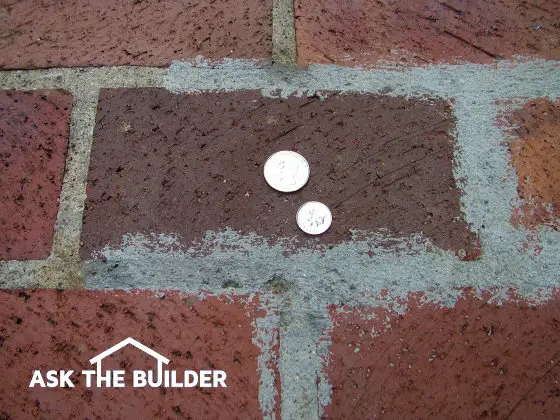
Brick mortar was smeared onto the brick. It’s been there for over two years to test the strength of the cement in the mortar. The climate is the Midwest USA with harsh winters with lots of freeze/thaw cycles. You can see the mortar is holding on like epoxy. That's a US quarter and a dime on the brick for scale. PHOTO CREDIT: Tim Carter

Brick and Mortar - The Perfect Marriage

DEAR TIM: Brick and mortar and I don’t get along. At my house, the brick & mortar are falling apart. It’s happening on the walls and in a brick patio in my rear yard. I desperately need a brick mortar how-to course so I don’t end up with a huge mess.

What are some of the important steps in brick mortar repair? Are there special tools that make the job go faster and look more professional? Steve T., Morris Chapel, TN

DEAR STEVE: Bricklaying mortar is a fantastic product when you stop and think about it. For all intents and purposes, it’s just glue. You use it to stick two or more things together into one object. You may not believe it, but there’s an enormous amount of science that’s involved in mortar for brick. I can’t begin to scratch the surface in this column.

What is Brick and Mortar?

Bricks are solid rectangular blocks made from fired clay or cast concrete. Mortar is a mixture of sand, Portland cement, and hydrated lime if you're able to find it. The mortar has the consistency of apple sauce and it's used to bind the brick together as one solid unit.

brick wall with gray mortar

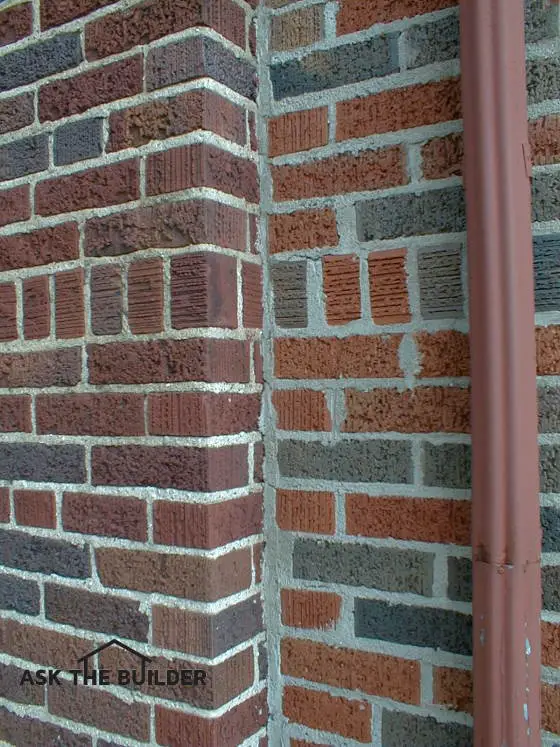
This is a typical installation of brick and mortar in the wall of a house or commercial building. The brick on the right was added years later and it's more orange in color than the brick on the left.

There are many different types of brick mortar, many with different strength properties. A standard mortar used with bricks in a wall often is a mixture of Portland cement, hydrated lime, and some form of clean, washed sand. Note that the sand can have a significant impact on both the strength and final color of the weathered mortar joints. Not all sand looks the same, because the small rock particles that make up the sand are different colors.

How does hydrated lime help mortar?

Many old masonry buildings were made with a mortar that had abundant quantities of hydrated lime or just lime and sand. Typically the more lime that’s in a mortar, the weaker the mortar is. You may think you want a strong mortar, but the lime in the mortar offers a unique self-healing property that may be of great interest to you. If tiny cracks develop in a mortar joint, the hydrated lime can actually grow crystals that seal the crack.

In my opinion, one of the most important steps is to match the mortar to the job. You don’t use the same mortar for your brick walls as you would to patch the mortar joints in your brick patio. The patio mortar needs to be far stronger than the wall mortar as the patio is subjected to more wear and tear, and if you get freezing weather, the mortar must be able to withstand countless freeze-thaw cycles.

David Kullander who hales from Libertyville, Illinois shared this heart-warming story about how he used hydrated lime as a young lad:

"As a 12-13-year-old lad, I labored for my bricklayer dad who belonged to the local mason's union. He made extra money for the family on regular weekend scab jobs for friends and neighbors building garages/fireplaces/additions. I soon was their go-to guy for mixing mortar in a mortar box-trough, using a big hoe with large holes in it. My instructions were 2 shovels of Portland cement, 1 shovel of hydrated lime, 10 shovels of sand, and the needed water to make it the consistency of apple sauce. My dad told me the lime was to make it easier to clean the brickwork when the work was all set and finished. According to him, the muriatic acid solution we brushed the bricks with wouldn't work to get off mortar smears unless the lime was in the mortar to react with the acid. This may be an old wives tale, but who knew- THEY WERE STRENGTHENING THE MORTAR!!  Thanks for the article."

AUTHOR'S NOTE: The addition of the hydrated lime did little to aid in cleaning the smears off. Lime makes the mortar stickier, to be honest. It's always smart to add hydrated lime to the mortar mix.

How do you make a strong mortar?

To make a strong mortar for your brick patio, you just use pure Portland cement, sand and water. I would make the mixture very rich meaning that there is lots of cement in the mix. Try a mixture of two parts sand to one part cement.

Be sure you have all loose mortar out of the joint, and that it’s dust-free. Spritz the joint to be repaired with a little water and add the mortar. Make the mortar stand up a little higher than the brick. Wait until the mortar gets a little stiff and then scrape off the excess with a small pointed trowel. If the mortar smears onto the brick, you’re not waiting long enough.

When repairing mortar, check out the existing mortar joints

To repair the mortar in your brick walls, look very carefully at the existing mortar joints. Pay attention to the small colored grains of sand that are visible. When mortar is first installed and it dries, it’s a uniform gray color. This happens because all of the sand is coated with the mortar-cement paste. But over time, Mother Nature erodes the mortar-cement paste from the sand exposing the different pieces of small rock that make up the sand. You may see brown, red, gray, white, and even green pieces of sand!

You'd do well to read my repairing brick mortar column for additional information.

The trick is to visit a local sandpit and look at the different sands. Note that there can be a difference in both grain size and color. You want to match both as closely as possible. This will be well worth the effort if you intend to restore your brick walls so the repairs match the original work.

You can purchase bags of premixed brick mortar from a business that sells building supplies. Avoid the home centers as they usually will not have a selection of different mortars. You want to match the color of the mortar as well as the strength. The older your home remember that you want a mortar that is weaker.

Get FREE BIDS from local bricklayers to repair your brick and mortar.

Are special tools needed to work with mortar?

You don’t need too many special tools when working with brick mortar. I find that a medium pointed trowel, a small pointed trowel, a narrow pointing trowel that’s only as wide as the width of the mortar joint, and possibly a mortar grouting bag will commonly allow you to do most repairs. You may need a mortar chisel to help you remove crumbling mortar from between brick.

It’s really important to make sure the brick joints are clean, dust-free, and damp before you add the new mortar. The water that you spritz on the brick and old mortar helps make your new mortar that much stronger. Without the spritzed water, the dry brick and old mortar will suck out the water from the mortar too quickly. If this happens, the new mortar will never get as strong as it could be.

Take your time to avoid smearing the mortar on the brick face. If you do make mistakes, try to scrape off as much excess mortar as you can that day. Then wait 30 days before you attempt to clean the mortar paste from the brick. Use a solution of muriatic acid and water mixing one part acid to ten parts water. Dampen the brick to be cleaned with water and add the acid solution. Wear rubber gloves, goggles and old clothes. The acid is very toxic. Allow it to sit and fizzle on the mortar pastes, then scrub the area with a scrub brush after ten minutes. Rinse with plenty of water. Repeat if necessary until all mortar paste is removed from the brick.

This column was mentioned in my January 5, 2017 AsktheBuilder Newsletter.

Column 784

June 18, 2009 AsktheBuilder News

If you're a new subscriber in the last 72 hours, this has to be one of the strangest initial email newsletters you'll probably ever get. Please understand there are tens of thousands of subscribers who get my newsletter on a regular basis who've been waiting to hear this sad news.

Two hours ago, I had to send my Mom back to Heaven to be with my Dad. She hasn't seen him in over 33 years. I'm sure by now they've gotten reacquainted and are gathering up a deck of cards and stacks of poker chips to play five-card stud poker one-eyed cards wild with their brothers and sisters.

I'll share that grand story when the numbness goes away.

I want to thank you now in advance for any sentiments you send to soften the pain of today. My sister and our family deeply appreciate it. I also want to thank the Hospice nursing staff here in Cincinnati.

Rest in Peace Mom, you'll be missed more than you'll ever imagine.

Tim Carter