Lori Ohaco, who lives in stormy Lincoln, Nebraska, has a challenge.
A light bulb broke in an outdoor fixture and she needs to, well how about she tell you:
"I have an outdoor yard light with 40-watt bulb in it. It has started blowing bulbs every two days.
Some of the glass got broken in a storm. How do I clean out the light socket without killing myself?
I don't know which fuse shuts off the power to this light."
Turn Off The Switch
For starters, you want to turn off the switch that operates this outdoor light. If this light is operated by a 3 or 4-way switch that's problematic because the orientation of the switch - up or down - tells you nothing.
Turn Off All Power
Lori, the safest way to do this is to turn off all the power to your home. There should be a huge master breaker at the top of your electrical panel.
Some homes have the main disconnect in another part of the house or garage. My main disconnect is in my garage on the other side of the wall from the outdoor electrical meter, while my electrical panels are in my basement.
You then have to use a needle-nose pliers to remove the aluminum bulb socket from the lamp base. Watch the following video to see what the aluminum threaded base looks like on a bulb. You'll see me point to it at 1:07 in this video:
You may have to break some glass with the pliers and then bend the aluminum bulb base a little bit to get a good purchase on the base with the plier tips.
Needle-Nose Pliers
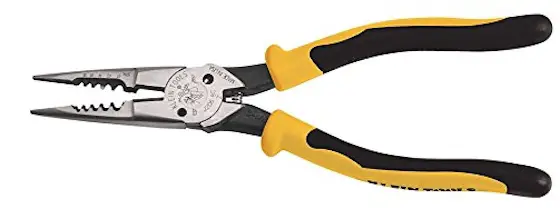
Here are the pliers I'd use for this job:
These are fantastic needle nose pliers. I own this exact one. They're also amazing wire strippers too. Well worth the price. CLICK HERE TO HAVE THESE PLIERS DELIVERED TO YOUR HOME IN DAYS.
Pull Up Brass Tab
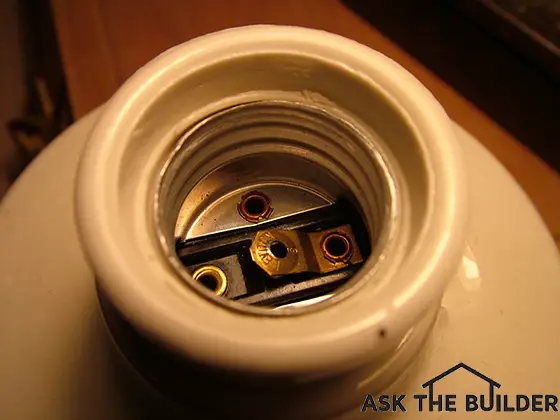
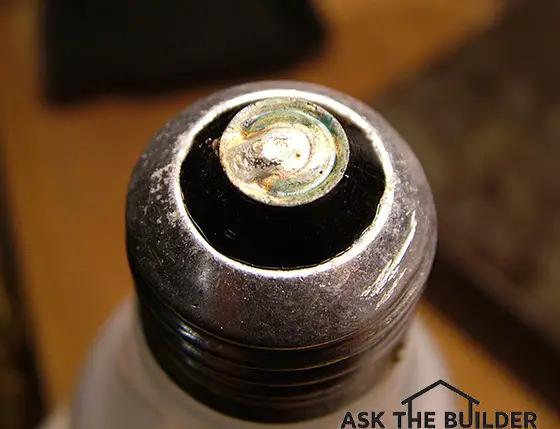
Once you have the bulb base out of the socket, you need to pull up the brass tab at the base of the socket. (Shown in the photo at the beginning of this column.)
If the brass tab gets depressed by screwing in the bulb too tightly, it can lead to arcing that eats a hole in the bottom of the bulb. This could be why you're burning through so many bulbs.
Once you have all this work done and a new bulb in the socket, turn back on the electricity, locate the fuse or circuit breaker to this outdoor lamp and LABEL it.
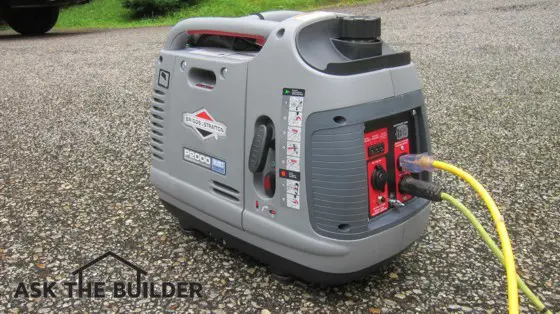
This easy-to-carry electric generator can get you out of a bind in a power outage or make a camping trip or picnic more enjoyable. CLICK THIS PHOTO TO HAVE THIS GREAT GENERATOR DELIVERED TO YOUR HOME NOW. Copyright 2017 - Tim Carter
Portable Electric Generator TIPS
Small generators can do many things but not all at once
DEAR TIM:I've had it with power outages here at my home and I've decided to get an electric generator. I've got several complicating issues.
For starters, my budget is tight. Second, I want this generator to be multi-purpose and take it on family picnics and camping trips.
The generator needs to be quiet. What are my options? Can I satisfy all of my wishes and have clean power that won't hurt my sensitive electronic devices?
What can you tell me about these small generators? Kathleen K., Boulder, CO
DEAR KATHLEEN: I've got great news for you.
Small Generators = Big Benefits
You can get a new portable generator that will satisfy all your requirements! What's more, if you lug in multiple bags of groceries on a routine basis, I believe you'll be able to carry one of the generators a short distance with moderate effort on your part.
As with many things, advancements in technology and micro computers have allowed electric generator manufacturers to produce small generators that produce stable and clean alternating current using an inverter inside the machine. Most new portable generators have an onboard computer that converts the direct current from the generator to a very stable alternating current that will not harm your sensitive electronics and appliances.
My Own Testing
I know this for a fact because in the past two weeks I tested two different portable generators using a sophisticated oscilloscope to measure the quality of the electricity being produced by the generators. Guess what?
Both machines created a more perfect sine wave on the scope than the electricity coming into my home from my local utility!
Size Matters
Here's the scoop on the portable generators. Size does matter.
The bigger the generator, and all it's combined parts, the more power it can produce. If you want portability, meaning a generator you can carry like a five-gallon pail of drywall compound, then you sacrifice total power output.
Hand-Carry = 2,000 Watts
The generators I tested weigh about the same as a pail of drywall compound and produce 2000 watts of power. That may seem like a lot of power, but it's not when you think about the giant standby generator I have next to my garage.
This automatic standby generator comes on automatically if the power fails at my house and will produce 17,000 watts. You can purchase generators that produce far more power than that if you desire. My standby generator weighs hundreds and hundreds of pounds. It's the size of an outside air-conditioning unit.
Large Standby Generator Video
Watch a video about my standby generator.
Tight Budget Means Small Power
Since your budget is tight, you'll probably be able to get one of the 2,000-watt machines. Even though it's power output is not the highest, you can still power many things with it. For example, here's the running wattage of some common tools or appliances:
What I love about the new portable generators is how they automatically adjust the gasoline motor speed in relationship to the power being requested by the devices you have connected. If the generator senses little need for power, then the gasoline motor runs at a lower speed using less fuel and making less noise.
Quite Quiet
The new generators are also very quiet, even when running at full speed. When you take them on a camping trip or a picnic, you'll not have to scream to be heard in a conversation.
Start-Up Power Draw
The issue with small generators is what's called startup power. Certain appliances and tools have a very high starting wattage.
You may have seen this in your home on occasion when a refrigerator, washing machine or air conditioner turns on. The lights in your house may momentarily dim when the electric motors in these things draw lots of power to start spinning.
A portable generator putting out only 2,000 watts can't handle the start-up demand of many things, so you'll have to check into that to see what you can and can't power when your house power goes off.
Frequent Monitoring & Feeding
You'll discover you can use a portable generator at your home in a power outage, but you'll be busy. You'll only be able to power a few things at a time, so you'll be switching out extension cords as you produce your own rolling brown outs within your home.
The portable generators, by default, have smaller fuel tanks so if you have an extended power outage, you'll be refueling on a more frequent basis.
Follow all safety guidelines when refueling a generator and NEVER EVER operate a portable generator indoors, in a garage, near an open window, etc. The carbon monoxide produced by the gasoline engines can and will kill you. Be CAREFUL and read all safety instructions.
Malcom O'Dell, who lives in the land of rainbows and unicorns in Washington, DC, came to my website, saw a column I wrote about portable electric generators - and possibly one about standby generators - and proceeded to take me to the woodshed to bust my chops. Read for yourself:
"Why do you recommend environmentally unfriendly electric generators when for no more money homeowners can buy battery back-up systems that--like the ubiquitous computer UPS backup--instantly restores power with no delay, and can keep basic systems going for hours, even days?
Our family has used these systems in our homes and even large offices for years in developing countries where power goes down routinely. They are simple, cost-effective, and cost no more than a generator.. and they eliminate all the noise and toxic fume pollution of generators.
The batteries charge with a simple trickle charger when power is available from the lines and can be supplemented, for even more environmentally performance, by solar panels. And, with a sizable array of solar panels, the homeowner or office can become substantially or even completely off the grid, never dependent on failing public power utilities.
Time for Tim, Ask the Builder, to look at modern environmentally friendly technology.. and address climate change at the same time.
Can do?"
Home Runs At The Pit
Malcom's soapbox statement reminded me of when I used to play softball with my buddies back in the late 1960's. We played at "The Pit" - the playground behind Clifton School in Cincinnati, OH. I routinely hit pitches over the fence out onto McAlpin Avenue.
Malcom, you just served up a juicy ball that's I'm going to turn into a frozen rope.
The first thing I want to say is I'm in complete agreement with Malcom about the promise of solar. I think the future is extracting clean energy using photovoltaic (PV) panels.
There's going to be some yet-to-be-discovered technology advancement that will cause PV panels to become mainstream. Right now, the average person simply can't make the numbers work to get a payback in a short amount of time.
PV Degradation
The other issue with PV panels is the active photons in sunlight destroy the current panels at a slow rate. Hopefully some future affordable technology will address this issue.
As the panels degrade, they put out less electricity.
Residential Generators
Malcom, the portable generators I wrote about cost less than $1,000 in 2014. The standby generators average about $10,000 installed.
Standby Generator Video
Here's a video showing you the fantastic and reliable Kohler standby generator at my own home.
Massive Batteries For Normal Power
Where in the world can you get a battery backup system that will deliver electricity to a home for " ... hours, even days." as you said for $10,000 or LESS? I'm not talking about a few hundred watts of electricity for hours or days. I'm talking about 2,000 or even 5,000 watts of clean power per hour for hours and hours and hours.
Malcom, are you aware how the power that comes through the lines and enters the batteries' trickle charger is made?
Most commercial power in the USA is made with FOSSIL FUELS. I believe that's your complaint with regular generators - that they use "Unfriendly" environmental liquids.
My guess is you use them - as many of us do - each day when you drive to work, the grocery store, etc.
Possibly More Efficient
Now granted, the massive power plants are probably more efficient at producing a kilowatt of electricity per Btu of fossil fuel than the portable or standby generators, but then there's that pesky voltage loss over the power lines that extend from the power plants to your home and office.
Toxic Mining Tailings
Oh, don't forget the mine tailings from all the mines in the third-world countries where the elements are clawed from the Earth to make the magical batteries you so love. My guess is all the rivers in the area of the mines are poisoned with heavy metals that leach from the mine tailings.
Air Pollution From Smelting!
I almost forgot the air pollution from the smelting process! Once the rocks have been mined for the batteries, they have to be smelted - melted - to extract the lithium, nickel, cadmium, etc.
I doubt those smelters in those third-world countries have all the scrubbers on them that are mandated by our EPA. I guess Mother Nature removes all the pollution out of the air via rain before they'd ever float over us here in the USA.
Time To Help Others
I'm sure I've forgotten something or other major points, but I need to scoot to answer other questions from other AsktheBuilder.com visitors.
If you want to continue the discussion, feel free to do it in the comments below.
Simple light fixtures that you find in basements and garages usually have different colored screws where you attach the wires.
You want to put the HOT black wire on the brass screw and the neutral white wire on the silver screw.
If you do it backwards, you'll energize the threads inside the socket and if you touch the threads on the bulb as you screw it in, you could get ZAPPED!
Silver Screw = White Neutral Wire
Put the white neutral wire on the silver screw.
Ground Wire = Green Screw
Put the bare ground wire on the green screw. If no green screw, attach it to the box if it's metal. If it's a plastic box, just tuck it back into the box away from the fixture screws to prevent a short.
Robert and Sharon need some light on their front porch in Florence, KS.
"We bought a older ranch house that doesn't have a front porch light or switch.
How can we add one? And where would we get the power source from?"
Well, this is an open-ended question to be sure!
Type Of Construction
There are so many variables. It is a solid masonry house? Is it a simple frame home with an open basement where it's easy to fish a cable up into the wall next to the front door?
Location of Light
Is it acceptable to have the light on the wall right next to the door, or do you want it in the ceiling of the porch away from the house's exterior wall?
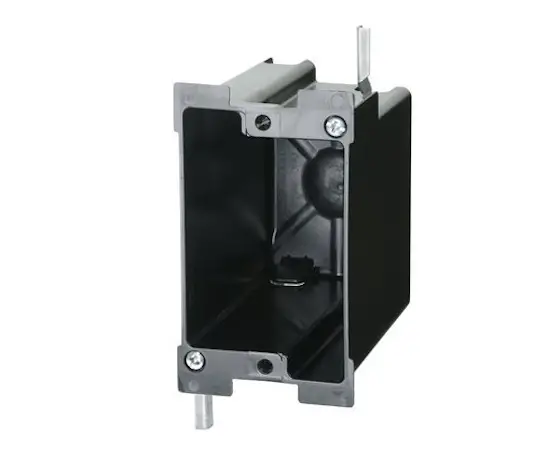
Here's a typical remodeling box you'll probably use for the light switch.
This is a box made to install in an existing wall. See the flip-up tabs that lock behind the drywall? CLICK THE PHOTO NOW TO HAVE THIS BOX DELIVERED TO YOUR HOME.
Simple But Hard Steps
You add one by extending a new electric cable from an outlet or the electric panel to the new switch location. This cable can originate from a wall outlet near the door.
Wall outlets have continuous hot wires and a neutral and that's all you need to get a porch light to work.
A typical porch light will only have a 60-watt bulb in it so there's little chance the new light will overload a common room circuit.
How To Steps
Determine the box you'll get the power from
Extend a proper-sized two-wire cable with ground from this box. Use a 14-gauge wire.
Put cable in new switch box near door.
Extend another two-wire cable from new switch box to new porch light fixture box.
Watch following video to see how to wire it all up
Watch this video to see how to connect the wires to a simple switch that will turn the porch light on and off.
Fishing New Cables
Depending on how your house is built, extending these cables and installing the boxes can range from easy to very difficult.
I'd simply get quotes from three different electricians and have them describe exactly how they intend to solve the problem and have the finished product meet your goals.
DEAR TIM:I’m about to buy a digital multimeter to troubleshoot all sorts of electrical issues around my home. I’ll be blunt.
Do you own one, and if so, which one? What do you like about the one you have?
There seems to be a huge difference in these handy devices and I’m very confused as to what to purchase.
I know you can’t tell me everything about these, but can you go over what I can use one for around the house and why there is such a huge disparity in pricing of these tools? Randy P., Akron, OH
DEAR RANDY: I sure can understand your confusion when looking at these products.
Many Different Multimeter Models
If you visit an online retailer that shows all of them next to one another, they pretty much look alike, but the difference in price from the lowest to the highest can vary by 25X or more! It’s natural for you to wonder if there can be such a huge difference inside the tool.
Guess what? the answer is yes. When it comes to digital multimeters you get what you pay for.
I've Got Several
Over the years, I’ve accumulated quite a few digital multimeters. I started off with a beginner's model from Radio Shack.
It’s smaller than a deck of playing cards and has somewhat limited capabilities. I could go on and on about the detailed electrical specifications of multimeters, but it would probably make your head explode.
What you need to know is that you should get one that’s durable, one that can handle any electrical appliance at your home and one that has a pedigree. The more expensive multimeters can do more.
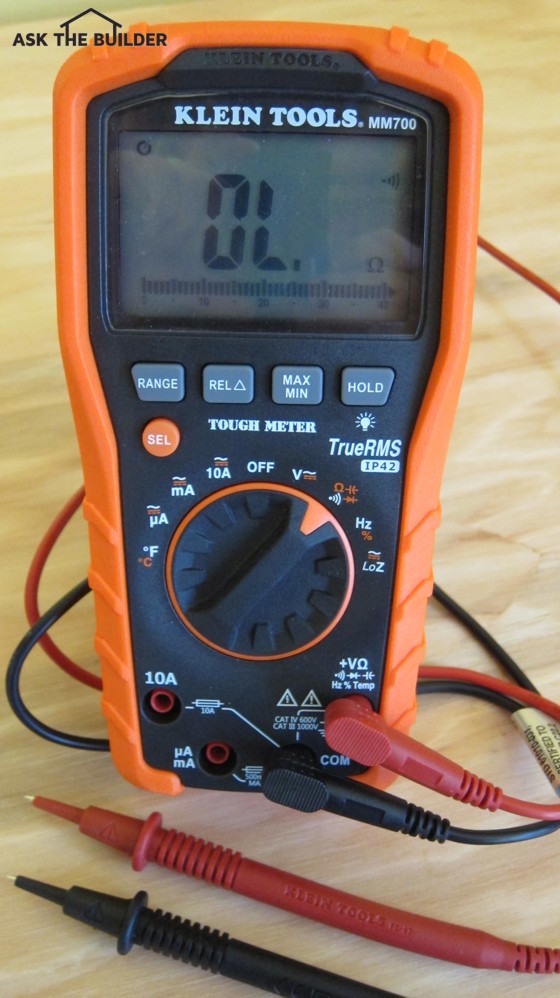
This is one of my multimeters. This one is PERFECT for homeowners. A professional electrician might want a more robust one, but this one will do almost all an electrician could ever want. CLICK THE PHOTO NOW TO HAVE THIS MULTIMETER DELIVERED TO YOUR HOME.
Klein MM700
The digital multimeter I’m now using is a sleek Klein Tools MM700. As you might expect it’s robust and has a full feature set that would impress professional electricians,
HVAC technicians and anyone who tinkers with electronic devices.
Auto Ranging Feature
What I really like about this one is it’s an auto-ranging multimeter. This means it will automatically detect what you want to measure without you guessing the approximate value. I strongly recommend an auto-ranging multimeter for homeowners like you.
Continuity Checkers
Perhaps the most useful thing you’ll do with your new digital multimeter is to check what we call continuity. This refers to checking to see if a wire or circuit is continuous or unbroken.
Here’s a simple example of this. When I take a quarter or a piece of metal, turn on the multimeter, insert the two probes into the proper holes on the tool and touch the quarter with the probes, I hear a nice tone and I see a measurement on the screen. This tells me electricity is flowing through the quarter or metal between the two probes.
Klein MM700 Video Review
Watch this simple video to show a few features of the Klein MM700 Multimeter.
OL = Open Loop
If I had performed the same test but substituted a piece of wire that had a break in it, I would have not heard a thing and my meter would have displayed “OL”. The audible tone in many multimeters is very handy because you can concentrate on what the probes are touching and get the information you need with your ears in some cases.
Jobs For Multimeters
Here’s a few things an auto-ranging multimeter can do around your home that could save you the cost of a service call from an electrician. First things first, when you get your multimeter stop and read the instructions, especially the safety warnings.
Let’s say you have an old-fashioned low-voltage doorbell and it’s not working. You can use the multimeter to see if you’re getting power up to the doorbell switch. If you don’t register power coming to the switch, then you can use the multimeter to check for a break in the wire from the transformer or up to the doorbell.
3-Way Switch Issues
Often people mess up the wires that connect to a 3-way switch. They go nuts trying to figure out what wire connects to what screws on the odd switch. Once again, the multimeter will save you an expensive service call.
You can use it to discover the continuous hot wire that feeds the first switch. Once you know this, it’s pretty easy to get both switches wired the right way.
Bulbs Still Good?
Here’s a simple task many overlook. You can use a multimeter to check to see if light bulbs are burned out.
Realize the small glob of solder at the base of a bulb is connected to one end of the filament. The other end of the filament is connected to the aluminum threads at the base of the bulb.
Turn on the multimeter, touch one probe to the solder glob and one to the threads and check for continuity. If the bulb is still good, you’ll hear a tone if you have my multimeter!
Check Voltage
The most common use you may put the multimeter to is to check for live voltage at a switch or an outlet. Follow the instructions that come with the multimeter and avoid working with live circuits.
You can turn off the circuit breaker that provides power to an outlet and then check to see if it is energized. I can do this easily with my MM700 as it has removable shields so the probes can get into the slots of a standard wall outlet. If you’re unsure how to do this, consult with a pro.
Broken Switches
Let’s say you think a wall switch or dimmer switch is broken. The multimeter can tell you in a jiffy it still works. Disconnect the switch from the power source and use the continuity tester function.
If the switch is in the on position and you don’t hear an audible signal or readout for continuity, then the switch is probably defective.
Check Car Alternator
If you like working on your cars, a multimeter is invaluable. The alternator on my son’s car went bad and in minutes I used my multimeter to confirm the alternator was not producing the needed power to keep the battery topped off.
Check Surface Temperature!
One thing I love about my Klein Tools MM700 is it also can test the surface temperature of something. It has a really wide range from 0 - 1,500 F! There are countless things around your home you may want to know the temperature of, and most would fall within that range.
Tough & Rugged
I also love how durable my MM700 is. It can handle drops from just over 6 feet and sustain no damage. Remember, read the instruction manual that comes with your new digital multimeter!
Bob lives in Saint Peters Missouri and asked a not-so-easy question about wiring recessed lights.
Here's what he sent to me:
"I'm installing seven recessed lights in my living room and they're IC rated. My attic is full of blown in insulation.
Do I have to go up in the attic to secure the wiring to the joist with staples, do I have to drill holes in the joists or can I go over the tops of the joist with the romex wiring?
I would appreciate it very much for any feedback or resources you might have thanks for your response."
National Electric Code Changes
Bob, here's the issue answering electrical code questions like this. The National Electric Code is a moving target.
It's always best to consult with a professional electrician in these matters. People like you die each day from electrical fires because of wiring installed hoping it was right.
Here's why it's tough for me to give great advice. The code officials CHANGE THE CODE every three years. I may give advice here that's relevant right now, it's December of 2016, and in a few years it will be INVALID because of a change in the code.
Staple Romex To Wood Framing
To answer your question Bob, I can tell you that it's important to staple the romex cable to wood members. That's very explicit in the code.
In fact, you have to secure it within so many inches of where it enters the fixture or the electric box where the cable terminates. I believe it used to be 6 inches, but who knows now as it could be 4 inches!
Drill Holes Through Wood May Be Better
What's more, I know it's been accepted to drill holes in joists and run cable through them. The holes need to be sized so the cable can move freely in the hole, but you don't want it too big!
Hole Position Critical - Nail Puncture Danger
The placement of the hole is critical. You need to stay at least 2 inches from the top or bottom of the joist if possible. You don't want a fastener driven into the wood to get to the cable and cause a dead short or arcing in the cable / wires.
Think Ahead For Attics
In years past, it's been perfectly fine to lay cable on top of the joists. That's all fun and games until such time in the future as someone decides they want to put flooring down in the attic space!
Gabriele, who lives in Crofton, Maryland, was worried about putting in the wrong bulb in a recessed light fixture.
She wanted to make sure the bulb wattage was safe. Here's what she asked:
"My recessed light housing reads 60-watt bulb maximum. The GE bulb I have says the 75w "uses only 53w."
Since I just can't grasp electricity and watts and watt hours, will you kindly tell me if it is safe to use the mentioned bulb in the mentioned light fixture?
My sincere apologies if this is covered in one of your older Q&A posts. I searched back about six or seven "pages" and didn't find this. However I found other interesting items, though!"
It was very wise of you to stop and think about this Gabriele. Many people don't ask and some become a number in the National Fire Protection Association statistics that deal with fire deaths. Overheating in recessed lights causes many fires and people die.
Here's what you need to know about light bulbs. When a bulb converts electricity to light, it produces heat as a byproduct.
The brighter the bulb, the greater the amount of heat.
Recessed Fixtures TRAP Heat
This is not so much an issue for normal bulbs that are out in the open and can dissipate the heat. The issue with recessed lights is that they're often in confined spaces and some get covered by insulation that traps the heat.
Regular ceiling-mounted fixtures can also be problematic which is why you'll often see insulation between the bulb and the wiring.
Wall Sconces Or Ceiling Lights Can Melt Wire Insulation
If you install a bulb that has a higher wattage than the fixture recommends, the heat can build up and get so great it can melt the insulation on the wires. If this happens, the bare wires can and do arc starting electrical fires.
The good news is that your new bulb should be safe because it's using less than the 60 watts an older-style incandescent bulb would use.
The only other thing I'd check, and this may require a professional, is to be sure you don't have insulation packed around the recessed light fixture.
I get quite a few questions each week about what size extension cord to use.
You may be one that's very worried about safety and electrical fires when using extension cords.
Talk with any seasoned firefighter and they'll tell you that extension cords are quite often the source of an electrical fire. There's a number of reasons why they're dangerous, but paramount is how it's easy for a cord to get overloaded with too much current.
Flowing Current Equals Friction
When a rough rope passes through your hand fast you'll almost always get a rope burn. It's caused by the friction of the rope fibers rubbing against your skin.
When electricity flows through a wire, it creates friction. The more current that goes through a wire, the hotter it gets.
If you want an extension cord to safely handle the load you've attached to it, then it better be big enough.
You have to stop and do a simple calculation as to the number of watts that will flow through the extension cord.
Most bulbs, tools, space heaters, and appliances have the wattage clearly marked on the label.
Can you see how this helps you understand why you trip circuit breakers? If you have a toaster, a hair dryer and some lights on the same circuit and turn them all on at the same time, too much current is trying to flow through the breaker.
Circuit breakers are designed to protect the wiring in your home. When they sense too much current is flowing they SHUT OFF.
It TRIPS on purpose to prevent the wires in the wall from OVERHEATING which in turn causes a fire.
Wire or Cable Size
Above I talked about how larger sized wire can handle more current or heat.
Wire size is stated in gauge to get you even more confused.
A 14-gauge wire is rated for 15 amps or 1800 watts.
A 12-gauge wire is rated for 20 amps or 2400 watts.
A 16-gauge wire or extension cords is usually only rated for 10 amps or 1200 watts.
When you look at the label of a heater, saw or any other electrical tool, you often see how many WATTS it draws. Use the above values to help you size the correct extension cord.
CAUTION: Don't think you can plug in a powerful table saw rated at 2400 watts or 20 amps into a 12-gauge extension cord and all go well.
Why? You may be plugging in the extension cord into a wall outlet that's only rated for 15 amps!!!!!
Wire New Homes With 12-Gauge Wire
This is why I hate to use 14-gauge wire when I wire homes. I always used 12-gauge wire when possible and the customer was willing to pay for the extra cost. It's so nice to know that you have plenty of wattage available on every circuit.
DEAR TIM: Four of the six bulbs in the recessed lighting in our kitchen ceiling keep burning out. I just replaced one and it burned out in an hour. I am using 65-watt bulbs. Our house is only three-years old. Are the bulbs the wrong size? Is there a problem with the wiring? Cory Dixson, El Dorado Hills, CA
DEAR CORY: The problem with the premature failure of the light bulbs has nothing to do with the wattage or the wiring. My first guess is that it can be traced to the person who has installed the light bulbs or previous owners of your home. I think they are twisting them into the socket too tightly.
The flickering of light bulbs in lamps and fixtures can also be caused by bulbs that have been installed too tightly into light fixtures.
At the base of light fixture sockets you will find a brass tab. This tab is bent at an angle when the fixtures are new and will spring back and forth if depressed slightly. Do not ever stick your finger in the socket to test this, as you can get shocked if the power is on to the fixture.
Take several new light bulbs and inspect the base of each one. You will quickly notice that the bottom of most light bulbs has a small droplet of solder in the center of the base. More importantly the size of this drop of solder is not consistent from light bulb to light bulb. It is close in size, but not always the same size or height.
If the brass tab at the base of the socket does not make firm contact with the bottom of the light bulb, a small electrical arc, or spark, can happen that starts to melt the solder. Over a period of time, the solder can deform and the gap between the solder and the brass tab gets larger.
In some cases, this arcing can create a hole in the base of the bulb causing air to enter the bulb. When this happens, the filament burns out rapidly.
When this happens, the electrical contact between the brass tab and the solder is broken and the light bulb acts as if it has been turned off when in fact the switch is on and the bulb is still in working condition.
Pull Up The Tab
To prevent this arcing you must be sure the brass tab is always at about a 30-degree angle inside the bottom of the socket. People who twist bulbs in tightly will depress and flatten the tab so it does not spring back when a bulb is replaced.
Turn OFF Breaker
If you discover the tab is flattened, then you must turn off the power to the lights, and as an additional safety safety measure, turn off the circuit breaker to the lights.
Use a needle-nose pliers and carefully grasp the sides of the brass tab near the tip of the tab, not where it bends down into the underside of the socket. Slowly pull it up so the end of the tab is about one quarter inch off the base of the socket.
These needle-nose pliers will work great to pull back up the brass tab. CLICK THE IMAGE TO BUY THESE GREAT PLIERS.
When you install a bulb always do so with the power on and the light switch on. As soon as the bulb comes on, only continue to turn the bulb one-eighth of a turn. If you screw the bulb in too tightly, you will once again flatten the brass tab.
You need an excellent pair of needle-nose pliers for this repair. This is a great one. CLICK HERE to BUY it now.