John Deere Snowblower Video

John Deere Snowblower

When Mother Nature gives you a lot of snow, it provides a lot of beauty, but also a lot of work. Snowblowers are fantastic machines. This model has lots of features. But first, think about using a pair of ice cleats. This pair sketches over the bottoms of your shoes or boots. These will help you walk without slipping.

A snowblower is basically like a lawn mower. A lawn mower cuts the grass and shoots it out the chute. A snowblower does the same thing, but with a different type of blade. The augers spin and chew through the snow and forces it back to a high speed impeller. The impeller then shoots the snow up through the chute in the direction you have set. Most snowblowers allow the chute to be rotated through 180 degrees, so you can discharge the snow to the left, right, straight ahead or some where in between. Some models have a control for height of the discharge.

Another thing about snowblowers is some a like a car. They have a transmission that allows different forward speeds and even a reverse. Use the lower speeds when the snow is deeper, so you do not choke the front of the snow blower. With less snow, you are go faster.

On the bottom of the blade covering, there are small, adjustable pads. These pads adjust the depth of the cut. This is important to set for the type of surface being cleaned. When using it on a smooth, flat concrete surface, it can be set low so just about all the snow is removed.

Before starting the snowblower, be sure to open the owner’s manual and read it. Be sure to follow all the safety recommendations. These machines can be dangerous and you can get hurt. They are like any other power tool. You must respect it, but if used properly, you will do fine.

A snowblower can save your back. In fact, they can make what is normally a job and turn it into fun. Some blowers even have a light for night use.

A few final tips. Before the snow season hits, be sure to clean your driveway and sideways from branches, rocks and debris. This will help the snowblower from getting jammed. This will help you get a smooth clean drive in no time flat.

January 27, 2009 AsktheBuilder News

Wake in Cincinnati

Early yesterday, we had to send Kathy's Mom back to Heaven. There will be no newsletter this week, and possibly not next week due to these circumstances.

I want to thank you in advance for any sentiments you pass through me to Kathy. I'll not be able to personally respond to you because of the obvious need to be with my family.

I'll be posting a summary of my thoughts about this very great woman on my blog in a few days while my memory of all the splendid times are fresh. I'll share the link to the post once it's complete.

In closing, consider this sage advice practiced by many of our former Native Americans:

Your heart may never be as soft as it is today.

Simply put, if you have any grudges you're dragging along with you each day, hatchets you're sharpening instead of burying them, etc., stop. Stop right now.

You may never have another chance to say the right things to the people closest to you. Fortunately, I got to say those words to my mother-in-law before I came back up here to New Hampshire three weeks ago. I knew she was sick, but never expected her to pass so suddenly.

Rest in Peace Mary Jane.

Pavers

DEAR TIM: Pavers are top on my mind. I'm planning a paver patio and want to be ready to go when the weather is favorable. Because of the harsh economy, I can't afford to hire a contractor. Will brick pavers make a durable patio, or should I lean towards concrete pavers? What's the difference? Patio pavers look great because of the seams and texture, are they difficult to install? Shelly V., Lebanon, NH

DEAR SHELLY: My wife and I have had a paver patio at the last two homes we have owned, and I have one at the home I just purchased in New Hampshire. Our brick-paver patio in our old home has been in place for over 20 years and it looks as good as the day I installed it. Mother Nature has coated it with thick ice, the sun bakes it in the summer and the brick and mortar are wearing like iron.
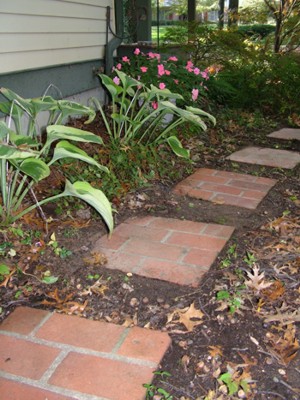
If you want to work with pavers, pick a small project like brick paver stepping stones. PHOTO CREDIT:  Tim Carter

If you want to work with pavers, pick a small project like brick paver stepping stones. PHOTO CREDIT: Tim Carter

A concrete paver is not too much different than a brick paver. The common concrete pavers that have been used to construct walkways, steps and patios are made from smaller stones, coarse sand, Portland cement and colored pigments. The colored pigments are what create the earth tones you see in these products. However, the color eventually dulls over a period of a few years. Over time, the colored cement paste wears off the top surface of the concrete pavers, and they usually develop a faded look when you start to see the actual color of the small stones and coarse sand.

You don't have this color issue when you use brick pavers. The clay that's mined and formed to make the pavers is the same color all the way through. So as the brick wear, the color always remains uniform. You just have to be very careful to purchase the correct pavers as some are not rated or certified to be used in a horizontal manner in climates like yours where you get frigid weather. Purchase the pavers from a real brick yard, and make sure they carry the severe-weathering rating.

The pavers that resist ice and snow for decades are fired longer in the kilns and sometimes at a hotter temperature. This heating process actually transforms the soft clay into an artificial stone. If you fire brick long enough, you can make them so hard and strong they'll resist heavy truck and car traffic when used in roadways. Visit downtown Athens, Ohio and you can see brick streets that have been in use and exposed to the weather for over 100 years.

When you go to install the pavers, you need to make a choice. You can set them in sand, a sand and Portland cement mix or you can mortar them directly to a concrete slab. My paver walkways and patios are all mortared to steel-reinforced concrete slabs. This is by far the hardest and most labor-intensive method, but I did so for a reason.

My first experience with pavers was a patio I built for my future mother-in-law. She had some instructions where you set the uniform pavers in a checkerboard pattern on top of compacted damp sand that was blended with Portland cement. The sand bed was 4-inches thick and it was easy to get it level after compacting it. I did that by dragging a straight 2x4 across the sand/cement mixture. The brick were set directly on the sand and then fine sand was swept into the cracks between the brick.

Those patio pavers have been down for 37 years, and they look fantastic. Over time, a few high and low spots have developed, but they add character to the patio.

A few years after this job, I tried to set thin pavers just on sand. It was a disaster. The brick drifted around on the sand, ants brought the sand to the surface, weeds grew in between the brick and we constantly tracked sand into the house.

To get pavers to stay put, have no humps and look good, I decided to mortar them to a concrete slab. As you can imagine, this requires more excavation depth, expensive concrete, lots of help to place the concrete and then countless hours of mixing mortar and carefully laying the brick pavers so they are in the same plane and shed water. If you have the desire and the time, it makes for a stunning look. I strongly advise you to experiment perhaps with a garden-pavers project so you can see how much work is involved.

Paver installation is going to be hard work no matter which method you choose. I can tell you how to install pavers, but the truth is you just need to start and see how much work you can accomplish in a weekend. Excavating earth is going to be your first hard task, and mechanical tools may be your best bet. You can rent miniature excavators or backhoes that allow you to scrape the earth, and they have a front bucket that you use to transport the dirt to a truck or low spot in your yard.

Paver patios are a popular project because they are do-it-yourself friendly and look positively stunning when the job is done. Your challenges are many, but they all can be overcome if you're determined to get this job done. The best way to get a taste of laying pavers is to just do a small area in another part of your yard. Get a feel for how much work and skill it requires to get the results you'll be proud of.

Column 763
Metal Roofing

Metal roofing is an amazing product. I've had the pleasure of working with this time-tested material for many years. Not only have I personally installed it, it was used on many of my jobs when I was still actively building. If you have a metal roof on your home or business, you know how durable they are and practically maintenance free. Older tin metal roofs need an occasional coat of paint, but more modern metal roofs have factory-applied paints that seem to wear like iron.

A sheet-metal roof can take many forms. The common style that you may be most familiar with is the standing-seam metal roof. This roofing product comes in long sheets and the joint between adjacent pieces of the roofing is formed with an interlocking vertical seam that stands above the flat area of the roofing panel.

Master roofers can take flat coils of tin-coated steel and make a flat-lock metal roof. The seams in this style are soldered to make them weather tight. Flat-lock roofing was very popular in the early 1900's, and was commonly used on low slope roofs that often were placed over large front porches. This style gets its name because the seams between pieces is hammered flat. When the roof is complete, it's nearly flat, with only minor humps at each soldered seam.

Another very popular material is corrugated metal roofing. This roofing material has a wavy shape and is used on shacks, sheds and sometimes pole buildings. It's not considered as weathertight as other metal-roofing materials when subjected to extreme wind-driven rain. This roofing is extremely do-it-yourself friendly, and it tends to work best on roofs that have steep slopes that shed water quickly. Corrugated metal roofing is the only material I would ever suggest a homeowner try to work with, and only on some outbuilding.

When you go to install a metal roof, you must pay attention to details. The slightest mistake can result in a leak. You need special tools to work the material. Most metal roofing can't be successfully installed by a rookie. I would venture to say that supply houses that sold most metal roofing would not in their right mind sell it to a beginner.

There are many things you must do when installing metal roofing to ensure you don't void the warranty. If you intend to have this installed on your home, I would encourage you to get the written instructions from the manufacturer and take the time to read how the job should be done. Make sure the roofer you hire will do the job as is called for in the instructions.

The metal roof cost estimate you receive may take your breath away. It's absolutely more expensive than asphalt roofing, even the top-of-the-line shingles that come with a superb warranty. But keep in mind that a metal roof could last 100 years or more and offer you complete peace of mind. In certain situations, metal roofing is a smart financial choice if you want to eliminate the need to ever have to install a second or third roof in your lifetime.

Part of the reason the cost is high is that metal roof installation is a somewhat slow process, and you need skilled craftsmen working with the metal. When you compare this to the simple laborers needed to install regular asphalt shingles, you can see why labor costs can be much higher.

If you're considering a roof like this and want to get different metal-roofing prices, be sure to compare systems that are nearly identical. There can be wildly differing prices when you look at a standing seam roof vs. a flat-lock or other metal roof. It also pays to study the warranty. Longer warranties often cause prices to be higher because better material is used or the replacement costs on future warranty claims is built into the cost of the material.

Residential metal roofing is appealing to many who look for it to keep them safe in addition to being dry. If you live in a part of the USA that is prone to wildfires, you know that metal roofing helps protect your home from fires started by glowing embers that drop from the sky during firestorms. Those with wood roofs or worn asphalt shingles have much to worry about, but if you have a metal roof, you can rest a little easier in the event you're forced to evacuate your home.

If you're serious about using metal roofing, give standing-seam metal roofing a serious look. This style has a classic look and looks stunning on certain homes. This roofing material is commonly used as a starter strip about four or five feet up from the lower edge of roofs for those who live in areas of heavy snow. The metal roofing is an excellent method of stopping the leaks that result from pesky ice dams. You won't make a mistake installing it on your home.

Screen Porch

All you have to do is come to my old neighborhood in Cincinnati, Ohio any month of the summer, and you can see why a screen porch is a great idea. The mosquitoes and flies are ferocious and make life miserable. The second home Kathy and I owned had a marvelous screened porch that we would sit on for hours by ourselves and then with our first child Meghan when she entered the world. It was also a wonderful place to relax with our friends and relatives.

Screen porches are popular in many areas of the USA. They are called by different names in different regions. For example, in Florida you might call one a lanai or a lanai enclosure. If you've never seen a Florida lanai, they are something to behold. Many are fabulous two-story screened enclosures that provide a wide-open feeling as if you're in the real outdoors sans bugs! Many Floridians install these screened enclosures over their swimming pools as well.

To screen a porch, you have to have a certain amount of skills assuming you want to do the job yourself. If that's not your plan, all you need to do is have a professional give you an estimate. There are many ways to achieve this, some of them very unique. One method I saw years ago consists of custom-measured screens that fit the openings on your porch. They attach to the horizontal beams and vertical posts with Velcro TM. This allows you to remove them when the screens are not needed. It also allows you to have a better view, as even the best and finest screens limit clear vistas.

This Velcro TM system also offered clear-plastic panels in case you wanted to cut down on wind and try to use the outdoor porch as a three-season room. That was a very nifty idea in my book.

You may want to discover how to screen a porch. To build a screen porch from scratch is a big task. One of the best ones I ever did started out as an ordinary outdoor deck. The architect drew the screen-porch plans with a treated-wood deck up off the ground about 30 inches. This way the floor of the screen porch was even with the first floor of the home. I then installed 4x4 wood posts at each corner and intermediate posts on each wall. On top of those were beams that supported a spacious hip roof that was left exposed. When painted a light gray, the underside of the roof look very good.

Screen porch designs are virtually unlimited. If you can dream it, in all likelihood it can be built. If you decide to go with a traditional design that calls for wood frames, be sure these frames are primed and painted on all sides and edges before the screening company installs the screening. A common mistake is to allow the frames to be screened then painted. If you do this, water will flow down the screens and soak into the  unpainted wood. This will cause premature failure of the paint and possibly wood rot.

An aluminum screen porch is probably the best way to go. They require virtually no maintenance, and they can be fabricated at a factory. Typically a salesman takes measurements of what you want, and then the screen panels and any support structure is computer designed. Your screen porch comes as a kit that professional installers can install in a day or less. The aluminum comes in different colors, so you can usually match just about any color scheme you have on your current home.

When you start to settle on your screen-porch design, don't make the fatal error I've seen so many times. All too often people make their screen porches too small. When you look at a plan and see what appears to be a massive 10-foot by 12-foot space, you think that's a great size. In reality, that's very small.

The best way I've discovered to size a screen porch is to take existing chairs and tables that you have and set them on your patio. If you desire to have a table with chairs, set that up as well making sure you love the arrangement and there is comfortable space between all the furniture. Then take a tape measure and see what the dimensions would be around this assortment of furniture. My guess is that you'll quickly discover that a screen porch should probably be 14 feet by 18 feet in size.

No matter what outdoor screen porch you build at your home, get ready to enjoy it. Be sure to plan for electric and some way to install an overhead paddle fan or other fans to move air. If you live in a humid environment, you'll want to be able to create a cooling breeze in the event Mother Nature takes the night off.

Cabinet Hardware

I'd hate to have to think how much cabinet hardware I've installed over the years. The primary location of most cabinet hardware is found in the kitchen, and I've installed more than my fair share of kitchen cabinets over the years. As you might expect, I've seen some amazingly gorgeous cabinet door hardware while doing some of these jobs.

Cabinet hardware knobs and cabinet hardware pulls can really make a kitchen or bathroom sizzle. You wouldn't think these common hardware items would do much for the large surface area of a cabinet door or drawer, but the best analogy I can give is makeup on a woman's face. Certain highlights, blush or just the right amount of eyeliner or eye shadow can pull your eyes to parts of a woman's face. These slight and subtle accents can completely transform what you see. The same is true for the small knobs, pulls and backplates you see on the large doors and drawers of cabinets.

You need to be very careful, though, when you go to install a cabinet hardware knob. I'll never forget ruining  an expensive cabinet early in my career as a carpenter. I thought it would be a brilliant idea to drill the hole for the knob starting on the backside of the door. My thought was that if the drill bit slipped, it would scar the inside of the cabinet.

I was ill prepared for the blowout splinter and chip that happened when the drill bit blasted through the front of the cabinet door. The base of the knob was not large enough to cover the imperfection, and I had to purchase a replacement door.  Years later, I discovered this was not necessary. I could have hired a furniture-repair wizard to come with his alcohol lamp and hard sticks of lacquer to make an invisible repair in minutes.

When you start to install cabinet door hardware, you need a few simple tools. You can buy a plastic marking template that allows to you locate, with great precision, the location of the hole for the door knobs or pulls. You can also purchase affordable brad-point drill bits that have a tiny point on the end of the drill bit. This point prevents the drill bit from drifting as you start the hole. It's best to use a variable-speed drill that allows you to drill slowly so you have maximum control.

If you desire the look of antique cabinet hardware, be aware that in many cities and towns there are specialty hardware stores. I'm not talking about a hardware store that sells nails, furnace filters and chicken wire. I'm talking about a business similar to Norwood Hardware in Cincinnati, OH. This is a place that has hundreds, no - thousands, of unique and magical pieces of cabinet hardware. Often these shops have a special area or product lines of authentic reproduction antique hardware. I have some of this exact hardware in my existing home, and plan to put it throughout my new home that I'm currently planning.

Bronze cabinet hardware as well as brass cabinet hardware seem to be timeless favorites. Not only are my wife and I attracted to these, but in all the years I was a builder, I would also venture to say that well over 80 percent of the cabinet hardware I installed was either polished brass, antique brass or a type of bronze. The comments that I heard from my customers was this hardware had a timeless look and feel and projected a sense of warmth in the room.

In some instances the hardware I would install was so beautiful, I would actually stop and stare at it after tightening the final screw. When you visit a real hardware store, not a home-center aisle that has hardware in giant bins, you'll see what I mean.

Be careful if you're attracted to discount cabinet hardware. It's often discounted for a reason. The overall quality may not be there. In the cases of hinges, they may be poorly engineered. The machining and finishing of knobs and pulls may be substandard. The hardware may be plated steel. If you want solid brass or bronze cabinet hardware, always take a small magnet with you when you shop. Test the metal to see if it's magnetic. If the knob sticks to your magnet, you know you're touching a plated item.

Some designers will often offer advice to make sure the hardware in a room matches other metals. For example, if you have a stainless-steel sink with a brushed-nickel faucet, you may be told that you need nickel cabinet hardware. While this may look great, you can mix and match metals in the same room, and the look can be stunning. We have antique bronze cabinet hardware in our current kitchen, yet we have a stainless-steel sink with nickel sink and pot-filler faucets.

Be sure to pay attention to cabinet drawer hardware. Make sure the actual knob or pull is comfortable to use. While form and style are very important, be sure the hardware doesn't become a hardship. Cabinet hardware for aging individuals is often pulls instead of knobs, as knobs can be challenging for older folks to grab. Imagine pulling out a heavy drawer using a tiny knob and you can see why it's easier to grab a looped D-shaped cabinet door or drawer pull.

Column QA

Repair Windows

You may think that repair windows means working on your frustrating Microsoft Windows TM software. Believe me, I've had my share of repairing windows problems in all my years of using personal computers. That's why I finally switched to an Apple computer so I could not have to deal with the constant hassles, bugs and crashes.

But in my world, repair windows means working on those wonderful inventions we have in our homes that allows us to see outdoors and often make an outdoor patio or vista become part of an interior room. How to repair windows and all of the issues that come with broken or leaking windows is my bailiwick.

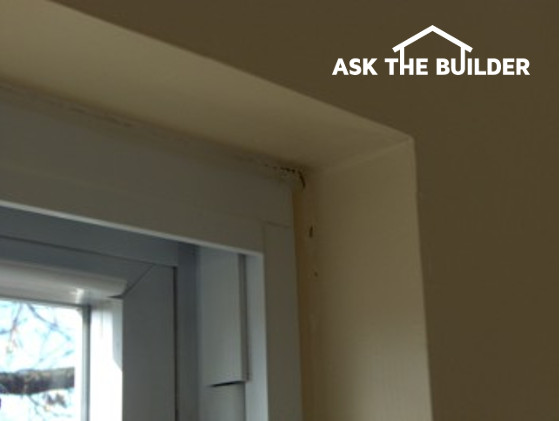
The caulk around this window is separating allowing cold air inside during the winter. PHOTO CREDIT: Roger Henthorn

Home windows repair can often be accomplished by you if you have a moderate degree of skills. Perhaps the most common repair you can do to extend the life of the windows around your home is to make sure the caulking that is used to seal the windows to the adjacent brick, stone, siding or stucco is always in good repair. Water that leaks in and around windows is often the root cause of larger and more troublesome repair issues down the road.

If your windows require periodic painting, this is the second-most frequent repair that you might be able to accomplish with ease. Paint can extend the life of a well-made window to well over 50 years. I prefer to use paints that have a mixture of both acrylic and urethane resins in them. Urethane paint is very sticky, and if you clean the window surface well and remove all loose paint chips, you can often get 15 or more years from a paint job.

Sash window repair or double-hung window repair is a common problem. Tens of thousands of homes have double-hung windows that consist of two sashes that move up and down independently in channels. A window sash is the actual wood, metal or other frame that surrounds the glass as well as the glass that is inside that frame.

In older double-hung windows that still have the cast-iron counter weights that assist in opening the windows and allow them to remain open, a common repair is the sash cords or rope that connects the cast-iron weight to the sash. If these ropes or cords break, the window is repaired by taking the window sash out of the channel so that you can gain access to the weight and the side of the sash where the new rope attaches.

Broken glass is also at the top of the list. Keep in mind if you're working on an old building, you can sometimes find old glass to match that in your historic home. There are architectural-salvage businesses that sometimes purchase old wood window sashes from replacement-window contractors. Some contractors may actually store the sashes themselves to sell to people who need both the old wood window as well as the glass. As more old buildings disappear, this very-old glass will become harder to get. People want the old glass because gravity actually pulls at a sheet of glass making it wavy over time. Old glass has tremendous amounts of character and often slight manufacturing imperfections.

If you have to do a glass window repair, be aware that some windows are disposable. That's really sad, as in the old days when I was just starting into the construction business, you bought a piece of glass, took some glazing pins and putty and installed the new glass. But thousands of people have to repair Anderson windows, and you can't  just replace the glass. If you need new glass, you have to replace the entire sash. This is especially true of many, if not all, of the vinyl-coated wood sashes made by Anderson during the 1980's and early 1990's.

The best windows repair you can do is one that will ensure your windows will last for a long time. Be aware that if you have a rotted wood window, you can purchase fantastic epoxies that are meant to restore wood. These materials bond permanently to the surrounding solid wood, and the dried epoxy can be sanded easily and painted. It's an amazing material.

If you are building your dream home, and you plan to live in it for a long time, it really pays to accumulate a few spare parts at the time you build. You may think this is a waste of time, but it's not. Over time, certain parts may be tough to come by. I regularly get emails from people looking for parts for sliding doors and windows. They need the rollers, locks, handles, etc.

It's easy to get the parts from the manufacturer when you order your windows. You can store these parts in a well-marked box in your garage or workshop. Believe me, you'll never regret getting spare parts, especially ones that get lots of use, like hinges on casement windows, the crank and gear box on casements and the internal springs in double-hung windows.

Column QA

Limestone

I had the good fortune to grow up surrounded by limestone. In fact, the limestone rock in Cincinnati, Ohio, is world famous. The interbedded layers of limestone and shale that are seen in road cuts in and around Cincinnati make up a series of rock formations that were created in the upper Ordovician period of geologic time. This was a very long time ago, and for those keeping time it was a little over 440-million years ago.

The fossils in this limestone are of such great quality and diversity, that these formations are the world-type section of rock for this period of time. In layman's terms, this means they are the best rocks of their time. That's first place, best-in-class, or the winner.

The limestone around my childhood home had many uses. Not only was it of great interest to paleontologists, the geologists who study fossils, but it was also was/is used heavily by builders and landscapers. The rock is very dense and hard and served as a foundation material for tens of thousands of businesses and homes in the area. It also was the material used for miles of limestone retaining walls.

There are many different types of limestone. The texture of the stone in Cincinnati is very coarse. The fossils in the limestone are abundant, and it was formed in an environment similar to what you would see if you visited the Great Barrier Reef on the northeast coast of Australia.

But just 125-miles west of Cincinnati in Bedford, Indiana, you can inspect the famous Indiana limestone. This limestone is extremely fine-grained an is called an oolitic limestone. This limestone is strong, durable and easily carved. Many of the buildings in Washington, DC, use Indiana limestone on their facades. Tens of thousands of commercial and residential buildings use this magnificent and gorgeous limestone. If you look closely at it, you can see tiny fossil remains in the stone.

Crushed limestone is used by contractors and builders everyday. It makes a fantastic base for asphalt driveways and roads. This crushed stone also can serve as an excellent gravel drive or roadway by itself. The angular shapes of the stone that result as the rock is crushed allow each piece to interlock to make a very stable roadbed.

Some primary limestone uses are:

  • limestone tile
  • limestone flooring
  • primary ingredient in Portland cement
  • limestone countertops
  • stone walls
  • building foundations
  • decorative building facades including columns, balusters, railings, etc.

Suffice it to say that limestone is used as a building material simply because of its hardness and long-term durability. Limestone is not as hard as granite, but it's hard enough that it can easily last centuries when exposed to weather.

In different parts of the Midwestern USA, you can readily see a limestone quarry or two as you drive along several interstate highways. There is a massive one southwest of downtown Chicago, several limestone quarries can be seen in northern Ohio, and there are the famous ones in Indiana. These surface mines are very distinctive as you can see the sheer faces of the limestone rock as well as active trucks, cranes and other machinery.

One other interesting characteristic of limestone is that it is the rock of choice that Mother Nature prefers to use when she constructs limestone caves. Limestone is alkaline, as it is primarily calcium carbonate. Rainwater itself can sometimes be slightly acidic and become more acidic after it falls to the ground. This acidic water seeps into the bedrock and dissolves away limestone creating massive underground caverns.

Just southeast of Cincinnati,in western Kentucky, you can visit Mammoth Cave National Park to see limestone caves that extend for miles. It's a humbling experience indeed to see how solid rock can be slowly melted away over time.

The next time you see limestone rocks, don't just brush them off. When you stop and think about it, limestone is one of the natural materials that has made America great. It's an abundant resource that's close to the surface of the earth, and we use millions of pounds of it each day in our homes, our roads and even on our roofs! Yes, limestone dust is often used to add weight to regular asphalt shingles. Can you believe that?

Column QA

Inspection Services

When you're buying or building a home, you'll absolutely have a much better experience if you use different inspection services. There simply is too much money on the line for you to hope everything is going to be okay, either in the existing home you're buying or the new home your builder is constructing. Home-inspection services cover a gambit of different specialties. You can hire an overall building inspector, a structural inspector who has a professional engineering license, a certified water inspector, a pest inspector, etc. It's best to make sure you hire an inspector that has the highest level of certification.

Inspection testing services are usually very easy to locate. If you're buying an existing home, realtors often know different inspectors. But always keep in mind that an inspector is called a different name by some licensed real-estate agents. They often call them deal killers. If an inspection uncovers many defects, or plants in the mind of the buyer all sorts of future expenses, the negotiations of buying the home can blow up. When that happens, the real-estate agent has to start all over on a different home. You can see how an unethical realtor would be inclined to suggest an inspector that had poor credentials or is known to do a low-quality inspection.

It's easy to do searches on the Internet to discover all of the inspection testing services you might need. I did this myself on the house I purchased in New Hampshire. Within minutes, I found a local inspector who had the best inspection credentials from the most-respected home-inspection association in the USA.


Purchase my Easy-to-Use Home Inspection Checklist Now. This Simple-To-Use Tool allows you to spot many defects before you have to hire a real inspector. You can then eliminate a house and move on to one with fewer defects.

You have nothing to lose. If my checklist doesn't work for you, I'll give you your money back. Oh, one more thing, it's an Instant Download! You can have the checklist in your hands just minutes from now!


Building-inspection services are almost always handled by a local government agency. Building inspectors exist to promote the public health and safety. Without laws covering building practices and minimum construction requirements, the quality of houses would be highly suspect. Natural disasters, like earthquakes, routinely bring this to the forefront. You'll hear about building collapses that were caused by the lack of building inspectors or corruption when in comes to government building-inspection services.

If your new home is going to be a sizable investment, it really pays to have an independent home-inspection service look at the house at different times during the construction process. I feel the most important inspections are:

  • soil inspection
  • foundation inspection - structural and to ensure it's square
  • rough framing
  • electrical and plumbing
  • insulation and air infiltration
  • heating and cooling system
  • roofing - including flashings
  • grading and drainage

You can't always count on the building inspector that works for the local government to do a thorough job on all these inspections. They have their own set of priorities as well as a workload of job sites to visit each day. Rarely can they spend an hour or two each time at your new home.

There are a number of different national and state associations that certify inspectors. It's very important that you spend lots of time going over the requirements that an inspector must fulfill to get a certificate that allows him to place a fancy acronym behind his name.

If you invest time investigating property inspection services, and the associations that represent them, you'll discover that it doesn't take much effort at all to get a certificate. In some instances, you just have to take a few free quick online tests and agree to some other terms. Do this and make a credit-card payment, and you're certified!

On the other hand, you'll discover that some who do real estate inspection services have to go through rigorous training, education and even periodic continuing education to qualify and maintain their certification. I used an inspector like this for my home in New Hampshire.

Take your time when deciding which inspection services you'll use. This is the last place you want to cut corners. Remember that if a defect shows up at a later date that isn't covered by a warranty, or the builder / previous homeowner will not fix it, then you have to repair the defect at your own cost or disclose it to the next person who buys your home. Imagine having a list of these defects all because you didn't think it was smart to spend a few hundred dollars on a top-notch inspection service. Please don't make that mistake.

EXTRA NEWS from Tim Carter:
Purchase my Easy-to-Use Home Inspection Checklist Now. This Simple-To-Use Tool allows you to spot many defects before you have to hire a real inspector. You can then eliminate a house and move on to one with fewer defects.

You have nothing to lose. If my checklist doesn't work for you, I'll give you your money back. Oh, one more thing, it's an Instant Download! You can have the checklist in your hands just minutes from now!

Column QA

Home Safety & Security

Home safety & security could be a top priority for you. If you're like me and my family, you want to know that any threat that could harm you or your possessions is minimal. When you're safe and secure, your stress level is low, and you can have a much higher quality of life.

Home security safety is not too hard to achieve. It's a broad topic that extends all the way from storing products and possessions in a safe manner to having sophisticated home-security systems that can alert you and others in the event of an emergency.

For example, if you have a pyromaniac in your family like I was as a child, then you want to store flammable liquids and matches in a locked metal cabinet. This sounds extreme, but if you would have seen the fire I started in my parents garage one day, you'd have that cabinet installed so fast you wouldn't believe it.

When you really start to think about home safety and security, it's easy to get overwhelmed. If you have little children, you're concerned about anything that's a threat to them. This could be a simple bottle of cleaning solution. You wouldn't drink it, but a toddler surely would like to sample it. Any heavy objects that can fall on a child are serious threats. Hot objects, regular wall outlets, even a partially filled bucket of water. Thousands of children are injured or killed each year in senseless accidents where obvious threats were not dealt with.

As you get older, home safety tends to gravitate to threats from intruders, fire, carbon monoxide, water leaks, etc. All of these things can be monitored by installing a home-security system. I've had one in my own home for years, and I can tell you they allow me to relax both when I'm home and when I'm away. I know the electronic sentry is going to alert police and fire departments in the event something goes wrong.

I've seen all sorts of issues at homes I've visited and worked in through the years. I've also been inside homes that have been ravaged by fire, so I know what to avoid if you want to minimize fires at your home. This is a very limited list of home security safety tips that just may protect you and your loved ones from danger:

  • Avoid storing flammable objects near furnaces or water heaters
  • Schedule a free inspection from your local crime and fire-prevention officers
  • Never place objects on stairs
  • Structural failures of foundation walls and wood rot can stress electric cables leading to fires
  • Consider installing motion-detecting exterior lights that deter trespassers
  • Be sure overhead garage doors are in perfect working order
  • Install secure locks on all windows and doors
  • Extension cords can be very dangerous - use them with great care
  • Never use flammable liquids indoors or in garages where open flames or pilot lights exist
  • Purchase gun locks or gun safes and use them
  • Consider a home-security system that alerts you to all dangers
  • Install grab bars in shower areas
  • Obey all building and electrical codes if you're a do-it-yourselfer

With more thought and help from other contributors, the above list could be miles long. You can see that home safety & security covers so many things, it's nearly impossible to name all the things you need to worry about.

Many are common sense, but you'd be surprised how that commodity is in short supply in many households. Mother Nature deals with this issue daily in the real world. Animals that make mistakes become someone's dinner. Don't let it happen to you.

Column QA